


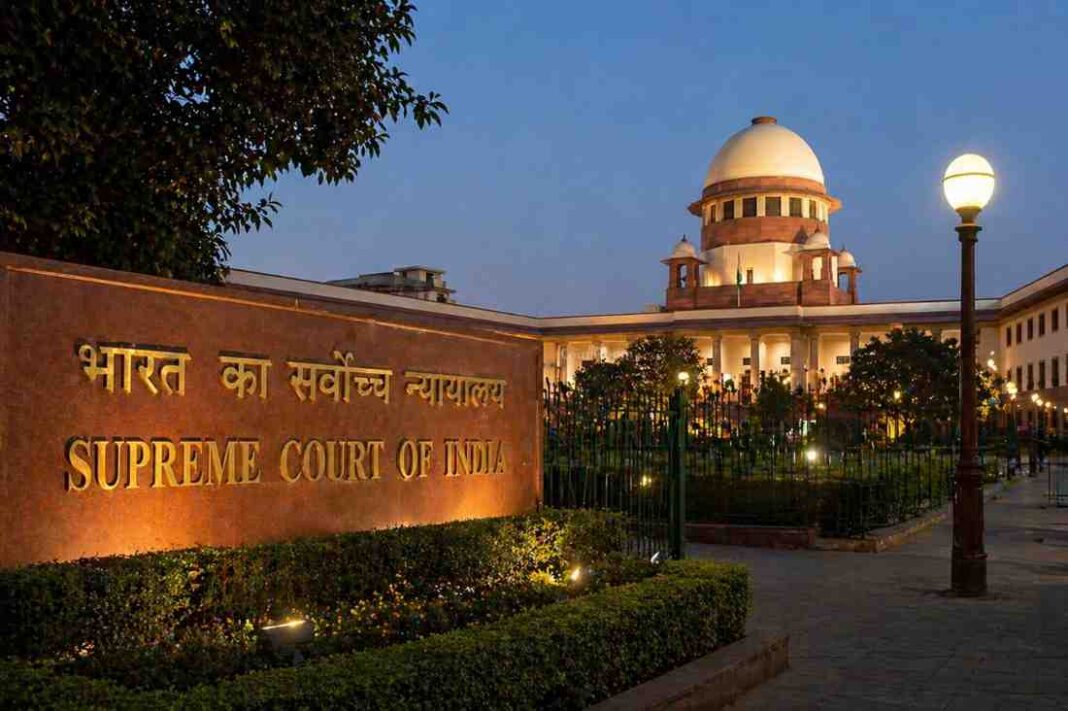
Introduction to District Judge Judicial Appointment and Seniority
District judge judicial appointment seniority has reached a decisive turning point after the Supreme Court of India issued binding consequential directions on March 12, 2026, enforcing its own landmark Constitution Bench ruling.
According to LiveLaw, a three-judge bench comprising Chief Justice of India Surya Kant, Justice Joymalya Bagchi, and Justice Pancholi passed a slew of directions regarding the appointment and seniority of District Judges in furtherance of the Constitution Bench judgment in Rejanish KV v. K Deepa.
Background: District Judge Judicial Appointment and the Road to Rejanish
The dispute traces its roots to the Supreme Court’s 2002 judgment in All India Judges Association, which established a 50-25-25 quota for District Judge appointments: 50% by merit-based promotion, 25% via limited departmental competitive examination, and 25% by direct recruitment from the Bar.
The fault line cracked open in 2020. In Dheeraj Mor v. High Court of Delhi, the Supreme Court restricted that 25% direct recruitment channel exclusively to practising advocates, shutting out in-service judicial officers entirely. The fallout was swift and severe — multiple judicial officers who had already been appointed as District Judges were reverted to their earlier posts.
- The Constitution Bench in Rejanish KV v. K Deepa (2025 INSC 1208) overruled Dheeraj Mor on October 9, 2025. The five-judge bench was headed by then-Chief Justice B.R. Gavai, with Justices M.M. Sundresh, Aravind Kumar, Satish Chandra Sharma, and K. Vinod Chandran as members, per SC Observer and CaseMine.
- The ruling opened direct recruitment to in-service judicial officers who possess at least seven years of combined Bar experience and have attained a minimum age of 35, with eligibility assessed at the time of application.
- The judgment also noted that recruitment rules across all States must be made as uniform as possible, and it applies prospectively — selection processes concluded before October 9, 2025 are not affected, per Drishti Judiciary.
What the Court Said
On March 12, 2026, as reported by Indian Masterminds, the three-judge bench led by CJI Surya Kant declared that the reversion of judicial officers from District Judge posts following the Dheeraj Mor judgment was illegal. The bench directed that such officers must be treated as District Judges from their original appointment dates, with notional pay and seniority benefits running from those dates.
Their reinstatement, however, takes operative effect from October 12, 2025 — one day after the Constitution Bench delivered its judgment — according to Indian Masterminds.
The bench also directed that each High Court must constitute a three-judge committee to examine inter se seniority disputes. That committee must hear all affected officers before making its recommendations, with the final decision resting with the Full Bench of the respective High Court. The entire exercise must be completed within three months, per the same report.
On Bar Association challenges, the court was unambiguous. Per Indian Masterminds, it directed that all pending cases filed by Bar Associations against the appointment of judicial officers as District Judges cannot survive after the Constitution Bench ruling and must be disposed of or dismissed.
As to ongoing recruitment, the Court directed High Courts to complete pending selection processes and appoint eligible candidates — but those candidates will receive only prospective seniority upon selection. The bench made clear that no deemed seniority can be granted based on selections contingent on incomplete processes or anticipated appointments.
The three-judge bench invoked the Supreme Court’s authority under Articles 32, 141, and 142 of the Constitution to issue these directions for a coherent national framework. The Constitution Bench had itself noted the stakes plainly, observing: “If we fail to correct the legal position, we will be perpetuating the injustice that has been meted out for decades.”
The bench also cautioned that “career progression to the higher echelons of the judiciary is neither a matter of right nor of entitlement,” per the Supreme Court’s directions cited by LiveLaw.
What It Means for You
For in-service judicial officers who were reverted after 2020, the March 12 directions offer long-overdue relief — reinstatement with notional pay and original-date seniority, subject to the High Court committee process.
For candidates in ongoing or future District Judge recruitment drives, seniority will count only from the date of actual selection — not backdated. No speculative or anticipated seniority claims will be entertained, per Indian Masterminds.
Bar Associations seeking to block the appointment of judicial officers as District Judges now face a closed door, with the Supreme Court directing dismissal of all such pending petitions.
Read more at The Courtroom.
What did the Supreme Court decide in Rejanish KV v. K Deepa?
A five-judge Constitution Bench headed by then-CJI B.R. Gavai decided Rejanish KV v. K Deepa (2025 INSC 1208) on October 9, 2025. It overruled Dheeraj Mor v. High Court of Delhi (2020) and held that in-service judicial officers with at least seven years of combined Bar experience and a minimum age of 35 are eligible for direct recruitment as District Judges. The judgment applies prospectively.
From which date are reverted judicial officers treated as District Judges?
According to Indian Masterminds, the Supreme Court directed that reverted judicial officers are to be treated as District Judges from their original appointment dates for purposes of seniority and notional pay. However, the operative effect of their reinstatement runs from October 12, 2025 — one day after the Constitution Bench judgment was delivered.
What happens to Bar Association petitions challenging judicial officer appointments as District Judges?
The Supreme Court has directed that all pending Bar Association challenges to the appointment of judicial officers as District Judges cannot survive after the Constitution Bench ruling in Rejanish v. Deepa and must be disposed of or dismissed, per Indian Masterminds.
Final Thoughts on District Judge Judicial Appointment and Seniority
The March 12, 2026 directions by CJI Surya Kant’s bench translate the Constitution Bench’s overruling of Dheeraj Mor into concrete, enforceable relief for hundreds of reverted judicial officers, while drawing a firm line against speculative seniority claims for future recruits.
With High Courts now under a three-month deadline to resolve seniority disputes, the Supreme Court has ensured this long-running chapter in India’s judicial appointment law moves toward a definitive close. Stay updated at The Courtroom.
Disclaimer
Disclaimer: This article is for general information only and does not constitute legal advice. Laws may change or vary by case — consult a qualified lawyer before acting. The Courtroom is not liable for any reliance on this content.

