


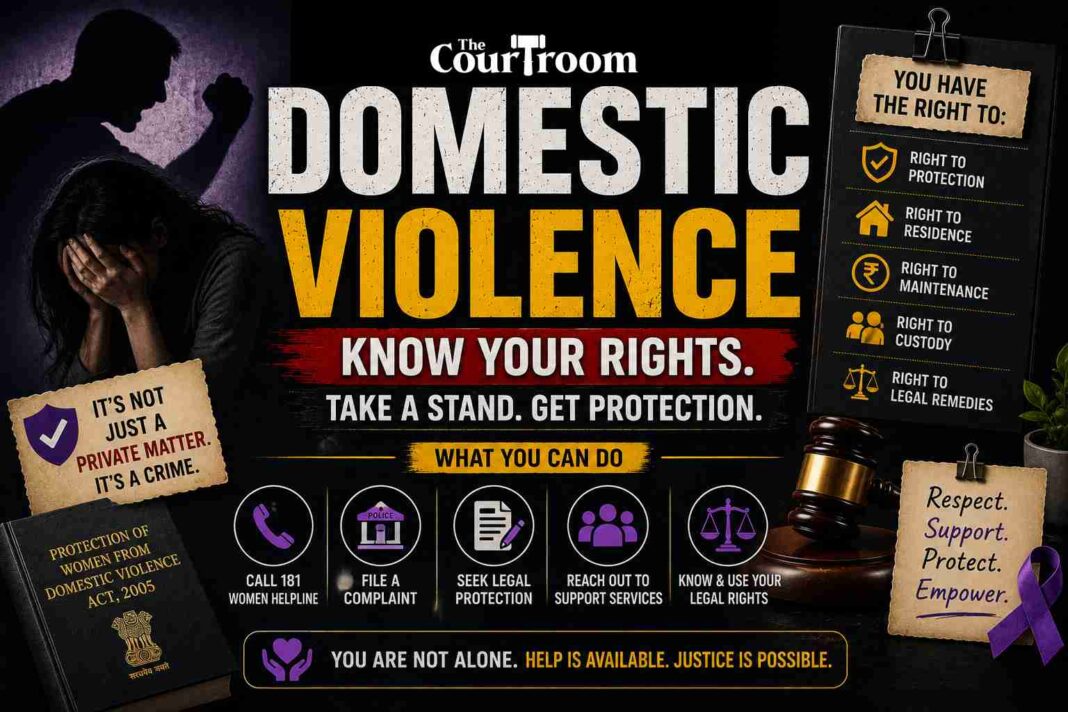
In short: When it comes to domestic violence, BNS Section 85 is a criminal provision that can send a husband or his relatives to prison for cruelty, while the Protection of Women from Domestic Violence Act, 2005 is a civil law focused on protection orders, shelter, and maintenance. Most women benefit from using both laws together.
Key points
- From 1 July 2024, Section 498A of the old Indian Penal Code was replaced by Section 85 of the Bharatiya Nyaya Sanhita, 2023 (BNS). The text of the provision is essentially the same; the BNS simply separates the definition of “cruelty” into its own Section 86.
- BNS Section 85 is cognizable (police can act without a warrant in prescribed circumstances), non-bailable, and triable by a First Class Magistrate — making it a serious criminal matter.
- Once a complaint is registered under BNS Section 85, it is non-compoundable, meaning you cannot privately withdraw the case after it is filed.
- The Protection of Women from Domestic Violence Act, 2005 (DV Act) covers a wider circle of women — wives, live-in partners, mothers, sisters, daughters — and focuses on fast civil remedies such as protection orders, residence rights, and monetary relief.
- The two laws are not mutually exclusive. A woman can pursue criminal action under BNS Section 85 and seek civil relief under the DV Act at the same time.
What changed on 1 July 2024?
India replaced three foundational laws on 1 July 2024. The Indian Penal Code, 1860 gave way to the Bharatiya Nyaya Sanhita, 2023 (BNS). The Code of Criminal Procedure, 1973 was replaced by the Bharatiya Nagarik Suraksha Sanhita, 2023 (BNSS). The Indian Evidence Act, 1872 was replaced by the Bharatiya Sakshya Adhiniyam, 2023 (BSA).
For women facing domestic cruelty, the most important change is that complaints for new offences from 1 July 2024 onwards must cite BNS Section 85 instead of IPC Section 498A. Cases that began before that date continue under the old IPC framework.
The Protection of Women from Domestic Violence Act, 2005 was not replaced. It remains fully in force and has been in effect since 26 October 2006.
What exactly does domestic violence BNS Section 85 say?
Section 85 of the BNS sits within Chapter V — Offences Against Women and Children. It states that whoever, being the husband or a relative of the husband, subjects a woman to cruelty, shall be punished with imprisonment for a term that may extend to three years, along with a fine.
How is “cruelty” defined under BNS Section 86?
Section 86 of the BNS defines cruelty for the purpose of Section 85. It covers two broad situations:
First, any wilful conduct that is likely to drive the woman to commit suicide or to cause grave injury or danger to her life, limb, or health — whether mental or physical.
Second, harassment of the woman aimed at coercing her, or any person related to her, to meet an unlawful demand for property or valuable security — or harassment because of a failure to meet such a demand. This second category directly captures dowry-related cruelty.
What are the practical consequences of filing under Section 85?
Because Section 85 is cognizable, a police officer can register a First Information Report (FIR) when the information is given by the aggrieved woman herself, or by a relative related by blood, marriage, or adoption, or, where no such relative exists, by a notified public servant.
Because it is non-bailable, the accused does not have an automatic right to bail and must apply before a Magistrate or court. Because it is non-compoundable, the case cannot be closed by a private settlement between the parties — the state is a party to the prosecution.
What does the Protection of Women from Domestic Violence Act, 2005 offer?
The DV Act is a civil law designed to deliver fast, practical relief. Unlike BNS Section 85, it is not limited to the wife-husband relationship. Any woman in a “domestic relationship” — including a live-in partner, mother-in-law, daughter, or sister — can seek protection under it.
The Act offers several types of relief through a Magistrate’s court, including protection orders, residence orders, custody orders, compensation, and monetary relief. A Protection Officer appointed under the Act helps women file applications and access support services.
For a fuller picture of remedies available to women across different situations, you can explore the Law for You guides on The Courtroom, which cover topics from matrimonial rights to workplace protections in plain language.
Which law should you use — or do you use both?
The two laws serve different purposes and are not in competition. Think of them this way: BNS Section 85 punishes the wrongdoer through the criminal justice system. The DV Act protects the survivor through civil orders that take effect quickly.
In practice, many women — and their lawyers — pursue both paths simultaneously. There is no legal bar to doing so.
| Feature | BNS Section 85 | DV Act, 2005 |
|---|---|---|
| Type of law | Criminal | Civil |
| Who is protected | Wife / woman in relation to husband and his relatives | Any woman in a domestic relationship (wife, live-in partner, mother, daughter, sister, etc.) |
| Who can be accused | Husband or relatives of the husband | Any adult male member of the household (and, in some cases, female relatives) |
| Maximum punishment | Imprisonment up to 3 years + fine | No imprisonment under the Act itself; breach of a DV order can attract imprisonment |
| Type of relief | Punishment of the accused | Protection orders, residence orders, custody, maintenance, compensation |
| Is it cognizable? | Yes (in prescribed circumstances) | Not applicable — civil application to Magistrate |
| Is it bailable? | Non-bailable | Not applicable |
| Can it be withdrawn? | Non-compoundable — cannot be privately withdrawn | Application can generally be withdrawn by the applicant |
| Replaced / came into force | Replaced IPC Section 498A from 1 July 2024 | In force since 26 October 2006; not replaced |
A note before you act
Because BNS Section 85 is non-compoundable, filing an FIR sets in motion a process that neither you nor the accused can easily stop. This is a serious protection — but it also means the decision deserves careful thought. Speaking with a qualified advocate before filing will help you understand what to expect at each stage.
The DV Act route, being civil, gives you more flexibility and faster interim relief while a longer-term resolution is worked out. Both paths can run together, and a lawyer can help you coordinate them effectively.
Frequently asked questions
Is domestic violence BNS Section 85 the same as the old IPC Section 498A?
Substantially yes. BNS Section 85 replicates what IPC Section 498A said. The main structural difference is that the definition of “cruelty,” which was part of the explanation in Section 498A, is now placed in a separate provision — BNS Section 86. The punishment (up to three years’ imprisonment and a fine), the cognizable and non-bailable classification, and the non-compoundable nature all remain the same. For offences committed from 1 July 2024 onwards, you cite BNS Section 85, not IPC Section 498A.
Can a live-in partner use the DV Act if she cannot file under BNS Section 85?
Yes. BNS Section 85 applies specifically where there is a husband-wife (or equivalent relative) relationship. The Protection of Women from Domestic Violence Act, 2005 uses the broader concept of a “domestic relationship,” which the Act extends to cover women in live-in relationships, among others. A live-in partner who faces abuse can seek protection orders, residence rights, and monetary relief under the DV Act even where the criminal provision does not directly apply to her situation.
What happens if I want to settle privately after filing an FIR under BNS Section 85?
Because Section 85 is non-compoundable, a private settlement between you and the accused does not automatically close the criminal case. Once an FIR is registered, the state becomes a party to the prosecution, and the case can proceed even if you later change your mind. You should discuss this with a qualified advocate before deciding how to proceed, as courts do have some discretion in exceptional circumstances, but there is no guaranteed right to withdraw.
Primary sources
- India Code (indiacode.nic.in) — the official repository for the Bharatiya Nyaya Sanhita, 2023, the Bharatiya Nagarik Suraksha Sanhita, 2023, and the Protection of Women from Domestic Violence Act, 2005 as currently in force
- Supreme Court of India (sci.gov.in) — judgments interpreting Section 498A IPC (applicable by analogy to BNS Section 85) and the DV Act
Written by Editorial Team, The Courtroom · Last verified 2026-07-09
This article is for general information only and is not legal advice. Laws change; verify against the primary sources cited and consult a qualified advocate for your situation.

