


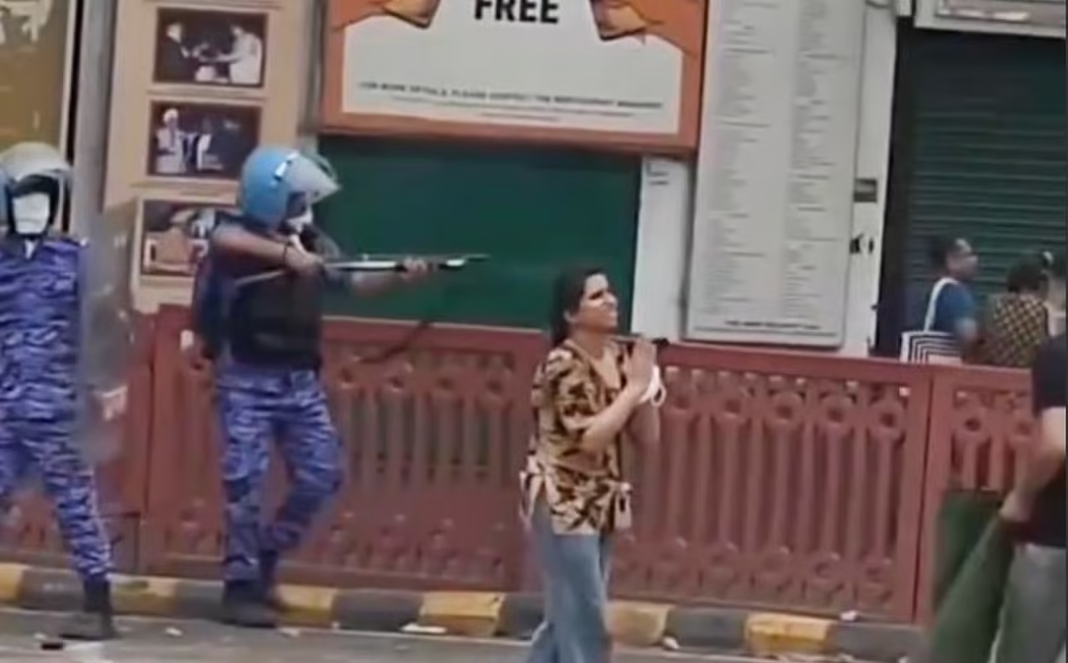
The Supreme Court of India on July 30, 2026, directed the Delhi government to ensure medical treatment for protestors injured by pellet guns during the July 20 ‘Sansad Chalo’ march at Jantar Mantar, New Delhi.
A three-judge bench led by Chief Justice of India Surya Kant, along with Justice Joymalya Bagchi and Justice V Mohana, also directed the Centre to preserve the ammunition log of the Rapid Action Force (RAF) deployed during the protest, according to Bar & Bench.
Background: How We Got Here
On July 20, 2026, protestors gathered at Jantar Mantar, New Delhi for a ‘Sansad Chalo’ march over the alleged NEET-UG paper leak. RAF personnel were deployed and allegedly fired pellet guns on the crowd, causing injuries to several individuals.
The PIL was filed under Article 32 of the Constitution by former IB Special Director and retired IPS officer Yashovardhan Azad — who also previously served as Central Information Commissioner — jointly with two injured co-petitioners, as reported by Tribune India and The News Minute.
- Co-petitioner Prashant Kumar Singh, 25, and Sheik Ishaad Mansoori, 26, allegedly sustained pellet injuries during the July 20 protest, per ANI and The News Minute.
- The petition also references 19-year-old Sahil Lochab, whose alleged eye injury was cited to demonstrate the severity of pellet gun use against civilians, according to The News Minute.
- According to official police records placed before the court, the RAF deployed 55 non-electrical shells, 15 electrical shells, 5 tear smoke grenades, 2 rounds from anti-riot guns, and 2 rounds of plastic pellet cartridges during the July 20 operation, as reported by The Week.
The Ruling — Key Findings
The bench ordered: “Government of Delhi shall provide medical treatment to the injured petitioner or other similarly placed individuals,” per the court’s bench order as reported by Bar & Bench.
The court simultaneously directed Delhi Police to place on record its Standard Operating Procedure (SOP) governing the use of pellet guns, and issued notice to the Centre seeking its response on existing rules, protocols, and SOPs, according to The Federal.
The bench declined, however, to impose a blanket ban on pellet guns at this stage. Justice Joymalya Bagchi observed that “police rules allows the use in exceptional circumstances unless you challenge the…” existing statutory provisions governing their deployment, as quoted by Bar & Bench.
The court noted that the petition, as filed, did not specifically challenge the existing statutory provisions or SOPs governing pellet gun use, making an interim blanket ban legally untenable at this point, per India Legal Live.
The Centre was represented by Solicitor General Tushar Mehta during the hearing, according to Tribune India and The Federal.
Reactions & What’s Next
Senior Advocate Vrinda Grover, appearing for the petitioners, argued before the bench that there is no standing order of Delhi Police mandating the use of pellets and emphasised the weapon’s nature: “It has a kinetic metallic projectile,” as reported by Bar & Bench.
The petition seeks a nationwide ban on wholly or partly metallic pellet ammunition fired from pump-action or projectile-action guns for civilian crowd dispersal, as well as exemplary compensation, comprehensive medical treatment, and rehabilitation for victims, per Tribune India and The Siasat Daily.
The petitioners also contend that pellet guns lack official sanction under the Ministry of Home Affairs’ approved SOP for crowd management, and cite the 2020 UN Guidance on Less-Lethal Weapons in Law Enforcement — which advises against such weapons for crowd control — as a persuasive international standard, according to The News Minute.
The matter remains sub judice. The court is continuing to scrutinise the legality of the force used and has sought the Centre’s response, meaning further hearings are anticipated. The court’s directions on preserving the RAF ammunition log signal that evidentiary scrutiny is already underway.
More legal news at The Courtroom.
Who filed the PIL about pellet guns used on Jantar Mantar protestors?
The PIL under Article 32 of the Constitution was filed by Yashovardhan Azad, former IB Special Director and retired IPS officer who also served as Central Information Commissioner, along with two injured co-petitioners — Prashant Kumar Singh (25) and Sheik Ishaad Mansoori (26) — who were allegedly injured during the July 20 protest at Jantar Mantar.
Did the Supreme Court ban pellet guns at the Jantar Mantar hearing?
No. The Supreme Court declined to impose a blanket ban on pellet guns at this stage. Justice Joymalya Bagchi observed that police rules permit their use in exceptional circumstances, and the bench noted that the petition did not specifically challenge the existing statutory provisions or SOPs governing their use, per India Legal Live and Bar & Bench.
What force did the RAF use during the July 20 Jantar Mantar protest?
According to official records submitted by police and reported by The Week, the RAF deployed 55 non-electrical shells, 15 electrical shells, 5 tear smoke grenades, 2 rounds from anti-riot guns, and 2 rounds of plastic pellet cartridges during the July 20 operation at Jantar Mantar.
Disclaimer
Disclaimer: This article is for general information only and does not constitute legal advice. Laws may change or vary by case — consult a qualified lawyer before acting. The Courtroom is not liable for any reliance on this content.

