


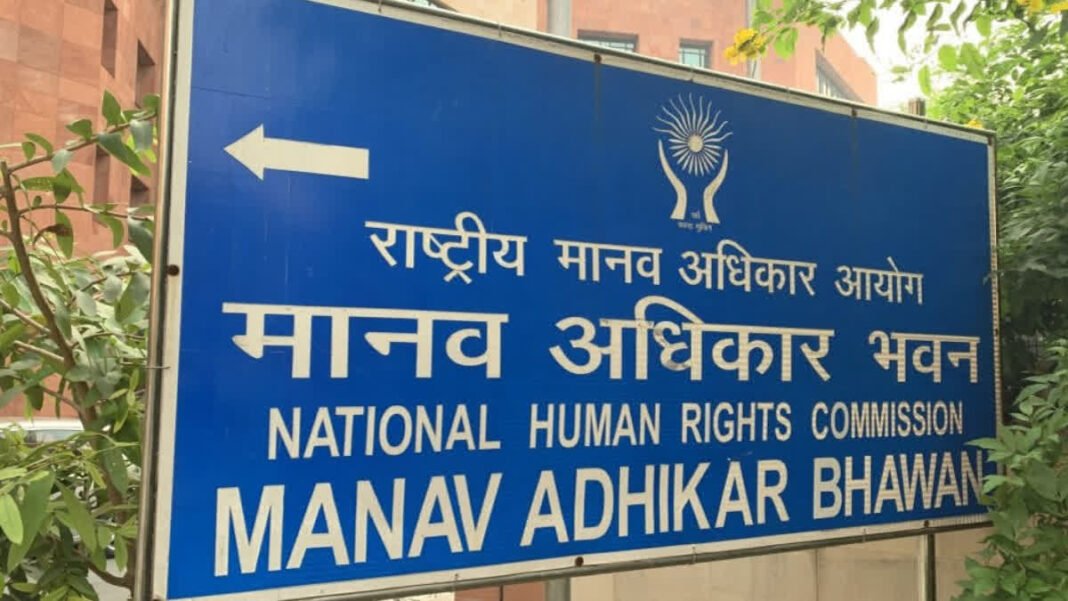
In short: NHRC complaint filing India is free, open to any citizen or concerned person, and can be done online, by post, by email, or via the new NHRC mobile app. There is no filing fee, no lawyer required, and complaints can be submitted in Hindi, English, or any Eighth Schedule language.
Key points
- The National Human Rights Commission was established on 12 October 1993 under the Protection of Human Rights Act, 1993 — a central statute that has since been amended, notably in 2006 and 2019.
- Anyone can file — the victim themselves or any other concerned person on their behalf.
- The official online portal is hrcnet.nic.in; after submitting, you receive a unique Diary Number to track your complaint.
- The NHRC ordinarily does not entertain complaints that are more than one year old, anonymous, vague, or pending before a court.
- Under Section 19 of the Protection of Human Rights Act, 1993, the NHRC cannot directly investigate complaints against the Armed Forces — it can only seek a report from the Central Government and make recommendations.
- A new NHRC India Mobile App, launched on 10 December 2025 by President Smt. Droupadi Murmu, lets you file and track complaints from your phone.
What is the NHRC and why does it matter?
The National Human Rights Commission is an independent statutory body created under the Protection of Human Rights Act, 1993. It began functioning on 12 October 1993 and is currently chaired by Justice V. Ramasubramanian.
The Commission’s core mandate is to inquire into violations of human rights committed by state or central government authorities. It is not a court, but its recommendations carry significant weight and are taken seriously by governments.
For citizens who cannot afford litigation or who face systemic violations, the NHRC offers a free, accessible avenue that does not require a lawyer. You can find related guides on access to justice in our Law for You hub.
Who can file an NHRC complaint?
The victim of a human rights violation can file directly. Equally, any other concerned person — a family member, a journalist, an activist, or a neighbour — can file on the victim’s behalf.
There is no filing fee. Legal representation is not mandatory at the complaint stage. The complaint may be written in English, Hindi, or any language listed in the Eighth Schedule of the Constitution of India.
What should your complaint include?
Whether you file online or by post, your complaint must contain certain mandatory information. Missing details can cause delays or lead to the complaint being returned.
| Category | What to provide |
|---|---|
| Complainant details | Full name, postal address, and contact number |
| Victim details | Name, demographic information, and relationship to the complainant |
| Incident specifics | Date of incident, location, factual summary, and the authority responsible |
| Relief or prayer | What remedy or action you are seeking from the Commission |
| Supporting documents | Copies of FIR, medical reports, government orders, or other evidence (PDF format for online submissions) |
How do you file an NHRC complaint online? (Step by step)
Step 1 — Visit the portal
Go to hrcnet.nic.in, which is the official NIC-hosted portal designated for online lodging of complaints related to human rights violations.
Step 2 — Select the incident state and commission
Choose the state where the incident took place. You will then be asked whether to submit the complaint to the NHRC or to the relevant State Human Rights Commission (SHRC). Pick the appropriate body.
Step 3 — Verify your mobile number
Enter your mobile number and confirm it via a one-time password (OTP). This step authenticates your submission and ensures the complaint is not anonymous.
Step 4 — Fill in all mandatory fields
Enter complainant details, victim details, incident particulars, the authority responsible, and the relief you seek. All mandatory fields must be completed before you can proceed.
Step 5 — Preview and upload documents
Click “Preview” to review the complaint before final submission. If you have supporting documents, upload them in PDF format at this stage. You will also be asked whether you consent to your name and the victim’s name being displayed on the Commission’s public website.
Step 6 — Submit and note your Diary Number
After successful submission, the portal generates a unique Diary Number. Keep this number safely — it is your primary tool for tracking the complaint’s status at any point.
Can you file offline?
Yes. If you prefer not to use the online portal, you can send a written complaint by post to the NHRC, or contact the Commission by email at cr.nhrc@nic.in. Filing by fax is also accepted.
Offline complaints must contain the same mandatory information listed in the table above. Ensure you keep a copy of everything you send, along with any postal acknowledgement or email delivery confirmation.
What about the NHRC mobile app?
On 10 December 2025, President Smt. Droupadi Murmu launched the NHRC India Mobile App. The app is available to the general public and allows you to both lodge new complaints and track the status of existing ones — directly from your smartphone, without needing to access a desktop browser.
How do you track your complaint?
Once filed, complaint status can be checked online using any of the following: your file number, Diary Number, complainant name, victim’s name, incident date, or place of incident. The tracking facility is available through the official government portal.
What complaints will the NHRC ordinarily NOT accept?
Knowing the limitations before you file saves time and prevents frustration. The Commission ordinarily does not entertain the following categories of complaint:
| Category | Why it is not entertained |
|---|---|
| Events more than one year old | Ordinarily outside the Commission’s limitation period |
| Sub-judice matters | Already pending before a court of law |
| Vague, anonymous, or pseudonymous complaints | Cannot be verified or acted upon without identifying the complainant |
| Service matters | Employment or service disputes fall outside the NHRC’s mandate |
| Complaints against the Armed Forces | Section 19 of the Protection of Human Rights Act, 1993 bars direct investigation; the Commission can only seek a report from the Central Government and make recommendations |
If your complaint falls into one of these categories, consider approaching the relevant court, tribunal, or service authority instead.
Frequently asked questions
Is there a fee for NHRC complaint filing in India?
No. Filing a complaint with the NHRC is completely free of charge. You also do not need to hire a lawyer to submit your complaint, though you may engage one if you wish.
What happens if my complaint is more than one year old?
The NHRC ordinarily does not entertain complaints about events that occurred more than one year before the date of filing. If your complaint is time-barred, you should state exceptional reasons clearly in your submission — the Commission may still consider it in appropriate circumstances, but this is not guaranteed.
Can I file an NHRC complaint against the Army or other Armed Forces?
Not directly. Section 19 of the Protection of Human Rights Act, 1993 explicitly bars the NHRC from conducting a direct investigation into complaints against the Armed Forces. In such cases, the Commission can only request a report from the Central Government and then make recommendations based on that report.
Primary sources
- Protection of Human Rights Act, 1993 — India Code (indiacode.nic.in): The bare text of the Act as amended, including the 2006 and 2019 amendments.
- National Human Rights Commission — Official Website (nhrc.nic.in): Commission orders, FAQs, composition, and the link to the HRCNet complaint portal.
- HRCNet Complaint Portal (hrcnet.nic.in): The designated NIC-hosted portal for online submission and tracking of NHRC complaints.
- Supreme Court of India (sci.gov.in): For judgments interpreting the Protection of Human Rights Act, 1993 and NHRC jurisdiction.
Written by Editorial Team, The Courtroom · Last verified 2026-07-13
This article is for general information only and is not legal advice. Laws change; verify against the primary sources cited and consult a qualified advocate for your situation.

