


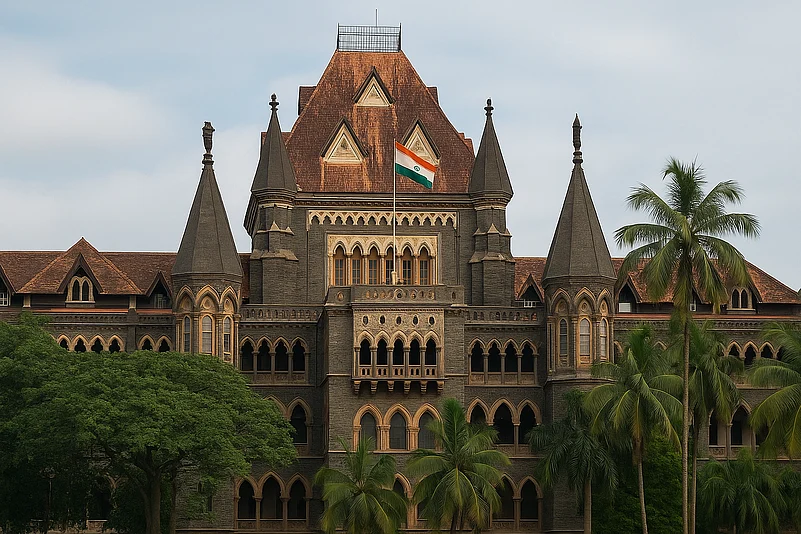
The Bombay High Court has ruled that merely filing a Vakalatnama — or submitting an affidavit-in-reply to an interim application — does not amount to a waiver of formal service of the writ of summons, and therefore does not trigger the limitation period for filing a written statement under Order VIII Rule 1 of the Code of Civil Procedure, 1908.
The ruling was delivered by Justice Gauri Godse of the Bombay High Court, according to LiveLaw, with the judgment published approximately on July 16, 2026.
Background: How We Got Here
The case arose in the context of a civil suit where a defendant’s advocate had filed a Vakalatnama and also filed an affidavit-in-reply to an interim application — both before the formal writ of summons had been properly served on the defendant.
The central question before the court was whether these procedural acts — entering appearance through a Vakalatnama or participating in an interim application — could be construed as a waiver of formal service, thereby starting the clock on the defendant’s obligation to file a written statement.
- Under Order VIII Rule 1 CPC, a defendant is required to file a written statement within 30 days of service of the summons, extendable to 90 days by court order.
- The Maharashtra Ownership Flats Act, 1963 (MOFA) was cited as contextually relevant to the underlying suit, according to LiveLaw.
- Justice Gauri Godse was appointed as an Additional Judge of the Bombay High Court on July 19, 2022, per the Bombay High Court’s official website, and has been enrolled with the Bar Council of Maharashtra and Goa since July 1, 1996.
The Bombay High Court has addressed this procedural question previously. In the Gautam Dham Co-operative Housing Society case, a coordinate bench comprising Justices K. R. Shriram and A. S. Doctor held that limitation for a written statement runs from the date of service of the writ of summons along with the copy of the plaint — not from the date of filing a Vakalatnama, as reported by LatestLaws.
That bench also clarified that Rule 84 of the Bombay High Court (Original Side Rules) merely provides a mechanism to prove service and does not alter the starting point of limitation, according to LatestLaws.
The Ruling — Key Findings
Justice Gauri Godse firmly reiterated the settled position, holding that proper service of the writ of summons is a mandatory procedural prerequisite that cannot be bypassed by an advocate’s appearance or any pre-service filing.
The court held, as reported by LiveLaw:
“Mere filing of a Vakalatnama or an affidavit-in-reply to an interim application does not, by itself, amount to a waiver of service of writ of summons.”
This means the limitation period under Order VIII Rule 1 CPC commences only from the date on which the writ of summons is formally and properly served on the defendant — not from an earlier act of participation in the proceedings.
The ruling is consistent with the position taken in the prior Bombay High Court decision, where Justices Shriram and Doctor had held, according to LatestLaws:
“Service of summons is a mandatory procedural requirement and is not dispensed with merely on account of the party entering appearance by filing a Vakalatnama.”
Taken together, these rulings establish a consistent line of Bombay High Court precedent that squarely addresses and resolves the procedural ambiguity that had troubled trial courts and practitioners.
Reactions & What’s Next
No specific statements from counsel or the parties have been reported in the publicly available portions of the LiveLaw coverage, as the article sits behind a subscription paywall beyond the headline and key excerpts.
The ruling is significant for defendants in Bombay High Court original-side suits who file Vakalatnamas early — often to participate in urgent interim hearings — without having yet received formal service of the summons and plaint.
Practitioners will need to take note that participation in interim proceedings, however active, does not substitute for proper service and does not compress the time available to file a considered written statement. The limitation clock starts only when summons is formally served.
Disclaimer
Disclaimer: This article is for general information only and does not constitute legal advice. Laws may change or vary by case — consult a qualified lawyer before acting. The Courtroom is not liable for any reliance on this content.

