


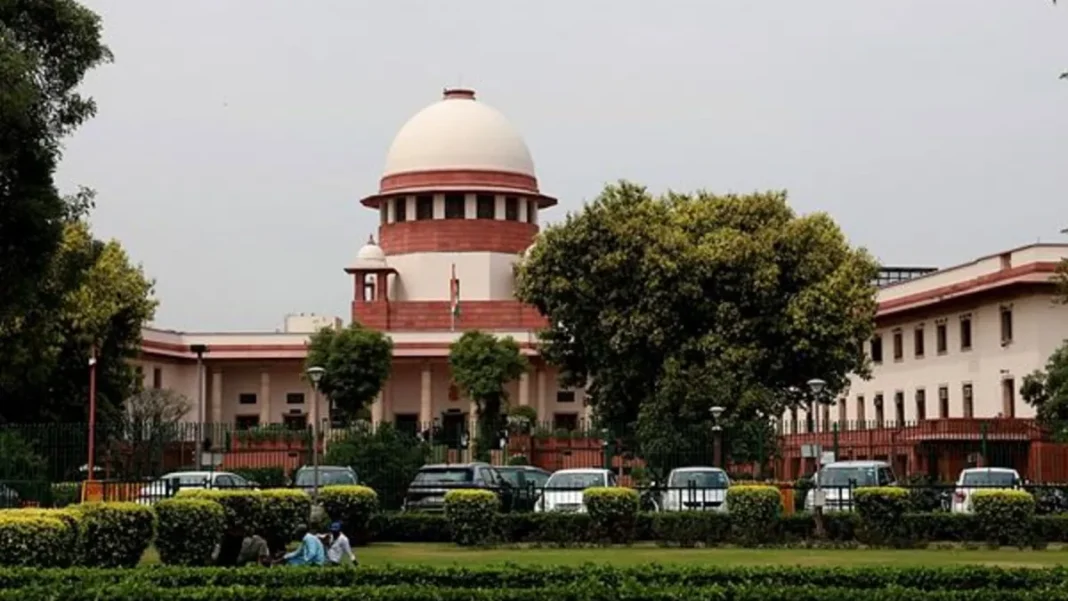
In a sweeping judicial efficiency move, the Supreme Court of India resolved on 15 July 2026 to take up approximately 100 bunch matters ready for final hearing, a step expected to trigger the disposal of around 9,177 connected cases in one coordinated exercise.
According to LiveLaw, the decisions emerged from a Full Court meeting held on 15 July 2026, attended by all Supreme Court judges, making it one of the most comprehensive administrative interventions by the Court in recent memory.
Background: How We Got Here
The Supreme Court of India has long grappled with a structural listing problem: the existing system gave precedence to fresh matters and post-notice cases, leaving old regular-hearing appeals with little court time, per The Federal.
As of 13 July 2026, the Court carried 96,045 pending cases — 74,244 civil and 21,801 criminal — according to GKToday. Chief Justice of India Surya Kant noted that roughly 10,000 of those are defective matters awaiting compliance by lawyers, placing effective pendency closer to 83,000.
- The oldest civil case on the Supreme Court’s docket was registered in 1986, and the oldest criminal case in 1991, per GKToday — meaning some litigants have waited over three decades for a hearing.
- About 800 of the oldest civil and criminal cases were identified for priority hearing, with each of the four newly constituted dedicated benches assigned around 200 matters initially, according to GKToday.
- On 16 July 2026, the Supreme Court’s official website published a circular titled “listing arrangement for expeditious disposal of oldest Regular hearing Service Matters,” confirmed as the top-pinned update on sci.gov.in/all-updates/ as of that date.
The Ruling — Key Findings
The Full Court meeting of 15 July 2026 produced several concrete resolutions. As reported by LiveLaw, after the batch-matter exercise is completed, the Court will prioritise hearing the oldest pending cases on Tuesdays, Wednesdays, and Thursdays — the Court’s non-miscellaneous hearing days.
LiveLaw reported that these matters “will be listed before appropriate benches for out-of-turn disposal,” directly quoting the Full Court’s resolution.
Operationalising this plan, Chief Justice of India Surya Kant had already notified a fresh roster effective 13 July 2026, constituting four dedicated Division Benches exclusively for the oldest pending civil and criminal cases, as reported by Bar & Bench and India Legal.
Two Division Benches — headed by Justice PK Mishra and Justice SVN Bhatti respectively — will exclusively hear the oldest pending civil matters on non-miscellaneous days, per Bar & Bench.
Two further Division Benches — headed by Justice Manoj Misra and Justice Ujjal Bhuyan — are dedicated exclusively to the oldest pending criminal cases on the same days, according to Bar & Bench and GKToday.
The Full Court also resolved to simplify the cause list and bring greater uniformity in the serial listing of daily matters, responding directly to grievances from bar bodies about cases not being called in sequence, per LiveLaw and Tribune India.
Reactions & What’s Next
The drive is part of a broader institutional campaign. All Supreme Court judges resolved to participate in the ongoing Samadhan Samaroh initiative — formally titled “Supreme Court Action for Mediated Adjudication and Disputes Harmonization Across Nation” — which commenced on 21 April 2026, per the Supreme Court’s official Samadhan Samaroh page.
The initiative will culminate in a Special Lok Adalat scheduled for 21, 22, and 23 August 2026, according to LiveLaw, Tribune India, and the Supreme Court’s official website.
A broader institutional paper from November 2025 had documented the Court’s case clearance rate reaching 104.05%, reflecting ongoing efforts including special benches, Lok Adalats, technology deployment, and scrutiny of defective and unregistered matters.
With a new roster already in force, four dedicated benches hearing decades-old disputes, and a Lok Adalat on the horizon, the Supreme Court’s judicial efficiency drive enters its most operationally intensive phase yet.
Disclaimer
Disclaimer: This article is for general information only and does not constitute legal advice. Laws may change or vary by case — consult a qualified lawyer before acting. The Courtroom is not liable for any reliance on this content.

