


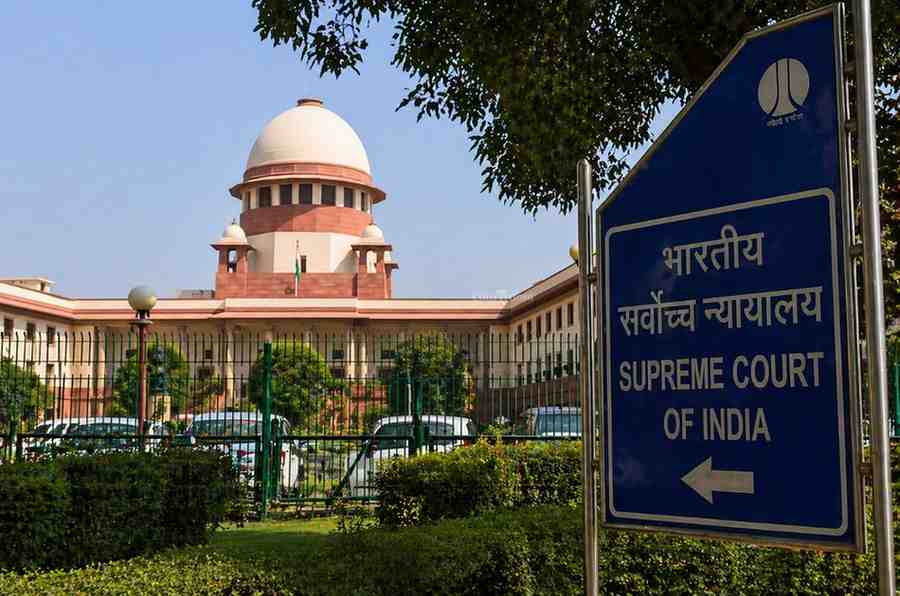
In a significant intervention for judicial welfare, the Supreme Court of India on July 20, 2026 directed the Union Government to constitute a committee within two weeks to frame uniform guidelines governing HC judges post-retirement benefits across all states.
The three-judge bench, led by Chief Justice of India Surya Kant and comprising Justice Joymalya Bagchi and Justice V Mohana, issued the direction while hearing a writ petition filed by Justice VS Dave, President of the Association of Retired Judges of the Supreme Court and High Courts, according to LiveLaw.
Background: How We Got Here
The petition — formally titled Justice V.S. Dave President, The Association of Retd. Judges of Supreme Court and High Courts v. Kusumjit Sidhu — arose after the Association first approached authorities directly and received no satisfactory resolution.
The Association subsequently invoked the writ jurisdiction of the Supreme Court, citing a persistent and glaring lack of uniformity in post-retirement facilities available to retired Chief Justices and judges of High Courts across different states, as reported by Bar & Bench.
- Facilities such as domestic help, driver, telephone, medical reimbursement, and transit stay in government accommodation currently vary from state to state, leaving many retired judges without adequate support.
- The absence of a national framework means a retired High Court judge’s entitlements depend entirely on which state they served in — a situation the petitioner’s association described as untenable.
- The Union Government, as a key stakeholder in any national framework, would also be required to share the financial burden with individual states — making Centre’s involvement essential, per ANI.
The Ruling — Key Findings
The bench left no room for ambiguity in its order. According to LiveLaw, the Supreme Court directed the Centre to constitute the committee within two weeks, with the committee required to submit its recommendations to both the Union Government and the Supreme Court within three months of its constitution.
The Court’s order stated plainly: “There can be no doubt that these facilities must be ensured on a uniform basis. There is no reason for such amenities to be at variance.”
The committee has also been tasked with recommending the manner and mechanism for sharing the financial burden between the Centre and the states, as reported by ANI and LiveLaw.
Chief Justice Surya Kant was pointed in his questioning, asking aloud: “In Rs 45,000-50,000, is it possible to get a driver and a security officer?” — pressing the adequacy of financial assistance currently provided by some states, per LiveLaw and Business Standard.
The Chief Justice also underscored a broader social value, remarking: “Looking after senior citizens is part of our culture also.”
Justice Joymalya Bagchi added to the bench’s reasoning, observing: “Security of one police officer for five years is reasonable for a High Court judge…because they deal with sensitive issues also,” as reported by Bar & Bench.
The CJI made clear what the consequences of inaction would be, warning Solicitor General Tushar Mehta directly: “If you don’t do it, I will have to constitute one.”
Reactions & What’s Next
Solicitor General Tushar Mehta, appearing on behalf of the Union of India, accepted the Court’s direction without reservation. He responded: “No difficulty. We can constitute. This is an issue which needs to be addressed. It will be addressed in the spirit expressed,” per LawBeat and Bar & Bench.
Mehta confirmed the government had no objection to constituting such a committee, signalling that the Centre is aligned with the Court’s intent to bring uniformity to HC judges post-retirement benefits across the country.
The matter has been directed to be listed again after three months — placing the next expected hearing around October 2026 — by which time the committee is expected to have placed its recommendations before the Court, according to ANI and LiveLaw.
The direction marks a decisive step toward resolving a long-standing disparity that has affected retired judges nationwide. With the Solicitor General’s assurance on record and a firm timeline in place, the ball is now firmly in the Centre’s court.
Disclaimer
Disclaimer: This article is for general information only and does not constitute legal advice. Laws may change or vary by case — consult a qualified lawyer before acting. The Courtroom is not liable for any reliance on this content.

