


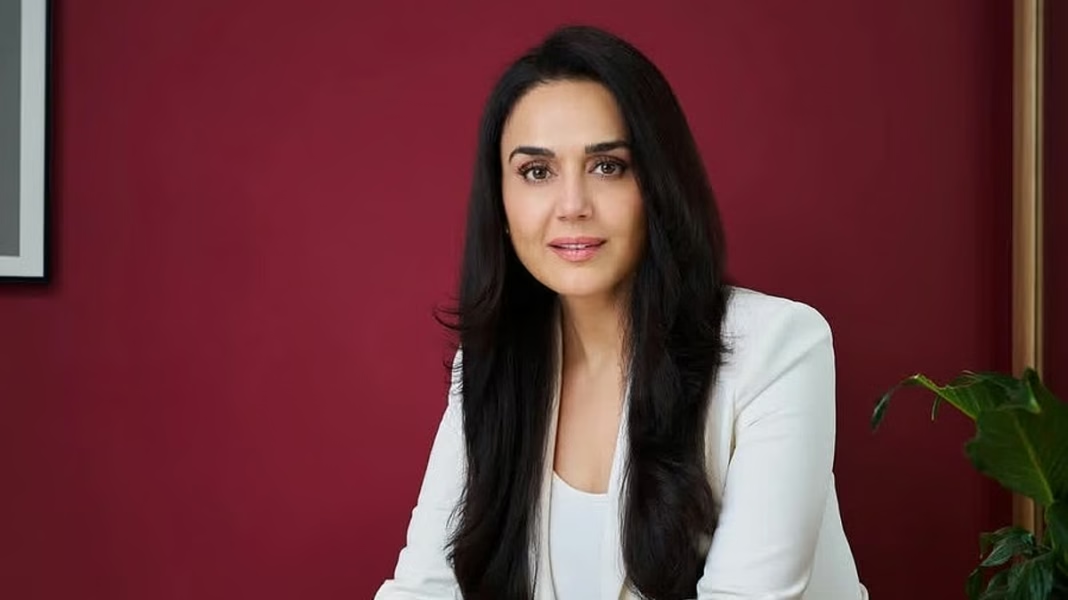
The Bombay High Court on July 3, 2026, found that Bollywood actor Preity Zinta had made out a case for protective relief in her civil suit against AI-generated deepfakes, with Justice Madhav Jamdar scheduling formal orders for July 6, 2026.
The suit — Preity Zinta v. Google LLC & Ors. — targets AI-generated deepfake images, morphed videos, and chatbot-style interactions using the actor’s likeness without her consent, according to Bar & Bench.
Background: How We Got Here
The case originates from a June 16, 2026 order by Justice Abhay Ahuja, who granted Zinta leave to file a civil suit under the Bombay High Court’s Clause XII original civil jurisdiction, as reported by Asianet Newsable.
The matter was then placed before Justice Madhav Jamdar as the presiding single judge. The respondents named in the suit include Google LLC, Meta, X Corp, domain name registrars, and other identified infringers, per Bar & Bench.
- The suit claims infringement of Zinta’s personality rights, copyright, and moral rights under Section 62 of the Copyright Act, 1957, according to Asianet Newsable.
- The plaintiff alleges that defendants created, uploaded, and disseminated AI-generated deepfake videos, morphed images, and chatbot-style personas using her likeness and voice without consent.
- Legal observers have noted the suit is broader than prior Indian personality-rights cases, combining personality rights, copyright, moral rights, goodwill, and intermediary-liability claims in a single action.
The Ruling — Key Findings
At the July 3, 2026 hearing, Justice Madhav Jamdar acknowledged that a case had been made out for protective relief and directed all parties to jointly devise a practical takedown protocol, as reported by the Free Press Journal.
The court’s direction, captured in the reported headline finding, was explicit: “Case Made Out For Protective Relief” — as attributed to Justice Jamdar by Bar & Bench and the Free Press Journal.
Justice Jamdar directed the parties to confer and design a protocol that would target genuinely infringing content while leaving lawful material undisturbed. Formal orders were scheduled for July 6, 2026, per Bar & Bench.
Senior Advocate Venkatesh Dhond, appearing for Zinta, sought urgent ex parte takedown orders, John Doe directions against unknown infringers, and a broader injunction against posting unauthorised AI-generated content featuring her, according to The Law Advice.
Dhond submitted to the court that the quality and sophistication of AI deepfakes was steadily improving, making it increasingly difficult for viewers to distinguish fake content from real, as reported by Bar & Bench and Asianet Newsable.
Counsel for Google and Meta stated they did not object to removing specific URLs identified by the plaintiff as containing morphed or obscene content. However, they opposed any blanket proactive-monitoring order, per Bar & Bench.
A domain name registrar separately submitted to the court that it only registers domain names and cannot act on URLs leading to content hosted on social media platforms, according to Bar & Bench.
Reactions & What’s Next
The position of the tech platforms going into the July 6 date is nuanced: willingness to act on specific URLs, but firm resistance to any sweeping proactive obligation. This sets up a significant question for the court when framing the precise terms of any interim order.
The case is also unfolding against the backdrop of the IT (Intermediary Guidelines and Digital Media Ethics Code) Amendment Rules, 2026, which require platforms to label AI-generated content and act on takedown requests — a regulatory context that may inform the court’s final directions.
Justice Jamdar indicated he would pass formal orders on July 6, 2026, per Bar & Bench and The Law Advice. The outcome is expected to set a significant precedent on personality rights, AI impersonation, and platform intermediary liability in India.
Disclaimer
Disclaimer: This article is for general information only and does not constitute legal advice. Laws may change or vary by case — consult a qualified lawyer before acting. The Courtroom is not liable for any reliance on this content.

