


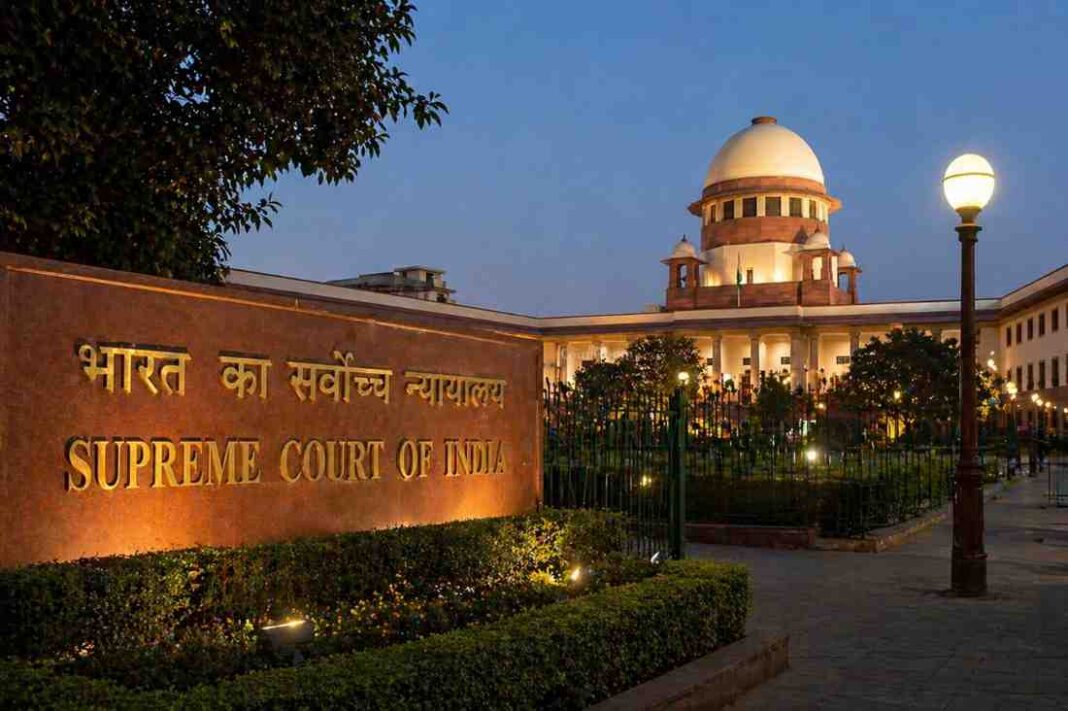
The Supreme Court of India on July 6, 2026 declined to urgently list a PIL seeking action against BJP Minority Morcha leader and social media influencer Nazia Elahi Khan over her alleged derogatory remarks about Prophet Muhammad and his family.
A bench of Justices Ahsanuddin Amanullah and Sheel Nagu refused to entertain the oral mentioning, directing the petitioner’s counsel to first file a formal petition and approach local and police authorities, according to Bar & Bench.
Background: How We Got Here
The controversy originates from an Instagram podcast reel uploaded around June 19, 2026, in which Nazia Elahi Khan allegedly made derogatory remarks about Prophet Muhammad and his family.
The viral spread of the clips triggered swift police action in Maharashtra. The first FIR was registered on June 22, 2026 at Shanti Nagar Police Station in Bhiwandi, followed by a second zero FIR on June 23, 2026 at JJ Marg Police Station in South Mumbai, as reported by Free Press Journal.
- Khan was booked under provisions of the Information Technology Act and sections related to deliberate and malicious acts intended to outrage religious sentiments under the IPC/BNS.
- The FIR cases are expected to be transferred to West Bengal, where Khan resides, as the alleged offence falls under that jurisdiction, per LiveLaw and Deccan Chronicle.
- Khan denied the allegations and has claimed in some reports that the viral videos are AI-generated.
The PIL, titled MD Anas Chaudhary v. Union of India Department of Home Principal Secretary (WP(Crl) Diary No. 39051/2026), was filed by Advocate-on-Record Ansar Ahmad Chaudhary and mentioned before the bench by Advocate Rajat Kumar, according to LiveLaw.
The petition names as respondents the Union of India’s Department of Home, MeitY, YouTube, Facebook, X (formerly Twitter), and Nazia Elahi Khan herself. It seeks directions to frame guidelines regulating online content derogatory towards revered religious figures and to remove such content from social media platforms.
The Ruling — Key Findings
The bench of Justices Amanullah and Sheel Nagu declined to urgently list the PIL on July 6, 2026, and passed no substantive order on the merits. The court instead directed the petitioner to file a formal petition and exhaust available remedies before local and police authorities first, as reported by Bar & Bench and LiveLaw.
Justice Ahsanuddin Amanullah was direct in his rebuke of the oral mentioning route, stating: “Have faith in our system. Why cannot you file a petition and take it up. This is the problem. Every institution in the country is being shaken and people take up short circuit methods.”
The bench collectively added: “We agree that the case is grave but take the lawful course and not a short circuit.”
Justice Amanullah further cautioned against inflaming an already sensitive matter, observing: “In sensitive cases you must understand the implications. If one person has done something unlawful then localise it and pin him down. But do not sensationalise it.”
The court’s directions make clear that petitioners must exhaust established legal channels — including approaching police authorities — before seeking extraordinary intervention from the apex court through urgent mentions.
Reactions & What’s Next
The BJP Minority Morcha publicly distanced itself from Nazia Elahi Khan following the controversy. BJP Jammu & Kashmir co-media in-charge Sajid Yousuf Shah stated that she has “no association whatsoever” with the BJP or BJP Minority Morcha, as reported by Deccan Chronicle.
The petitioner’s counsel, Advocate Rajat Kumar, was directed by the bench to file a proper petition before the court rather than pursuing urgent listing through an oral mention, according to LiveLaw. No next date of hearing has been reported, as no formal listing order was issued on July 6, 2026.
The FIRs registered in Maharashtra remain active, with a likely transfer to West Bengal anticipated given Khan’s place of residence and jurisdictional considerations, per LiveLaw.
Disclaimer
Disclaimer: This article is for general information only and does not constitute legal advice. Laws may change or vary by case — consult a qualified lawyer before acting. The Courtroom is not liable for any reliance on this content.

