


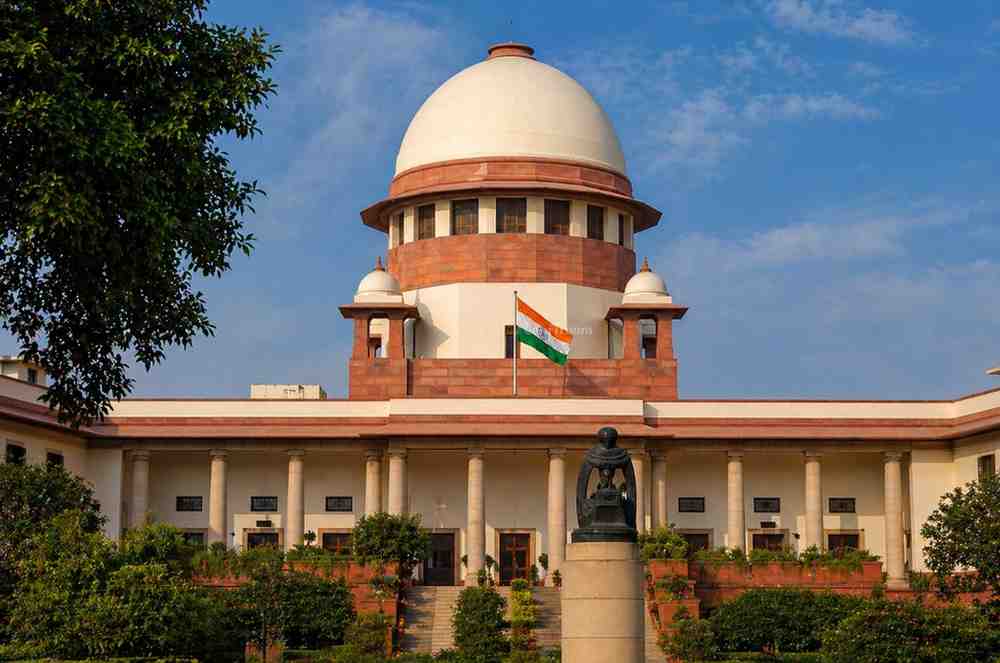
The Supreme Court of India on July 2, 2026, dismissed a civil appeal filed by an estranged husband seeking to block his wife from accessing his hotel booking records and call detail records (CDRs) to establish adultery in a matrimonial proceeding.
A bench of Justices Manmohan and K. Vinod Chandran refused to interfere with a Delhi High Court order that had upheld a Family Court direction for production of the records, according to LiveLaw.
Background: How We Got Here
The dispute originates from a divorce petition filed by a wife before a Delhi Family Court, alleging cruelty and adultery under Section 13(1)(i) of the Hindu Marriage Act, 1955. The parties were married on December 4, 1998, and have a daughter born in 2000.
The wife alleged that her husband stayed at Hotel Fairmont, Jaipur, between April 29 and May 1, 2022, with another woman and her daughter. When CCTV footage was found to be unavailable due to the hotel’s data retention policy, she sought hotel booking records, occupant identity documents, payment details, and CDRs for two mobile numbers belonging to her husband, as reported by Bar & Bench.
- On December 14, 2022, the Family Court allowed the application and directed that the hotel records and CDRs be produced before it in a sealed cover.
- The husband challenged that order before the Delhi High Court, arguing that compelled disclosure would infringe his right to privacy and raise questions about the reputation and paternity of another woman’s minor daughter.
- On May 10, 2023, a Delhi High Court bench headed by then-Justice Rekha Palli dismissed the husband’s challenge, holding that the right to privacy is not absolute and must yield to reasonable restrictions in the public interest.
The husband then filed Civil Appeal No. 400 of 2024 before the Supreme Court, which came up for final disposal on July 2, 2026, per LiveLaw.
The Ruling — Key Findings
The Supreme Court bench of Justices Manmohan and K. Vinod Chandran found no ground to interfere with the concurrent findings of both lower courts and dismissed the civil appeal along with all pending applications, according to Bar & Bench.
The bench’s order was terse but decisive: “Having heard learned counsel for the parties, this court is of the view that no interference is called for with the impugned judgment.”
The Court thereby affirmed the Delhi High Court’s reasoning that such production of records does not violate the constitutional right to privacy in the context of matrimonial proceedings.
The Delhi High Court, whose order now stands confirmed, had expressly invoked Section 14 of the Family Courts Act, 1984. That provision permits family courts to receive evidence that may not otherwise be admissible or relevant under the Indian Evidence Act, as reported by Tribune India.
Justice Rekha Palli’s High Court order had also drawn a sharp line on the privacy argument. The court had observed: “It is not as if the respondent is seeking information about any stranger staying in the hotel; her plea is only for records pertaining to her legally wedded husband.”
The High Court had further reasoned: “The Hindu Marriage Act specifically recognises adultery as a ground for divorce and therefore, it would not at all be in public interest that the court should on the ground of right to privacy, come to the aid of a married man.”
The records were ordered to be produced before the Family Court in a sealed cover, ensuring that sensitive information is handled with judicial oversight, per LiveLaw.
Reactions & What’s Next
The Supreme Court’s dismissal of Civil Appeal No. 400 of 2024 is final. No further appeal lies within the Indian court hierarchy against a Supreme Court order of this nature, and the underlying divorce petition will now proceed before the Delhi Family Court with the hotel and CDR records in its custody.
The ruling is being widely read as a significant affirmation that a spouse’s right to adduce evidence in a matrimonial court can, in appropriate circumstances, override claims of privacy by the other spouse — a balance courts have long been asked to strike.
No party statements or counsel reactions beyond the court record were reported in the verified sources.
Disclaimer
Disclaimer: This article is for general information only and does not constitute legal advice. Laws may change or vary by case — consult a qualified lawyer before acting. The Courtroom is not liable for any reliance on this content.

