


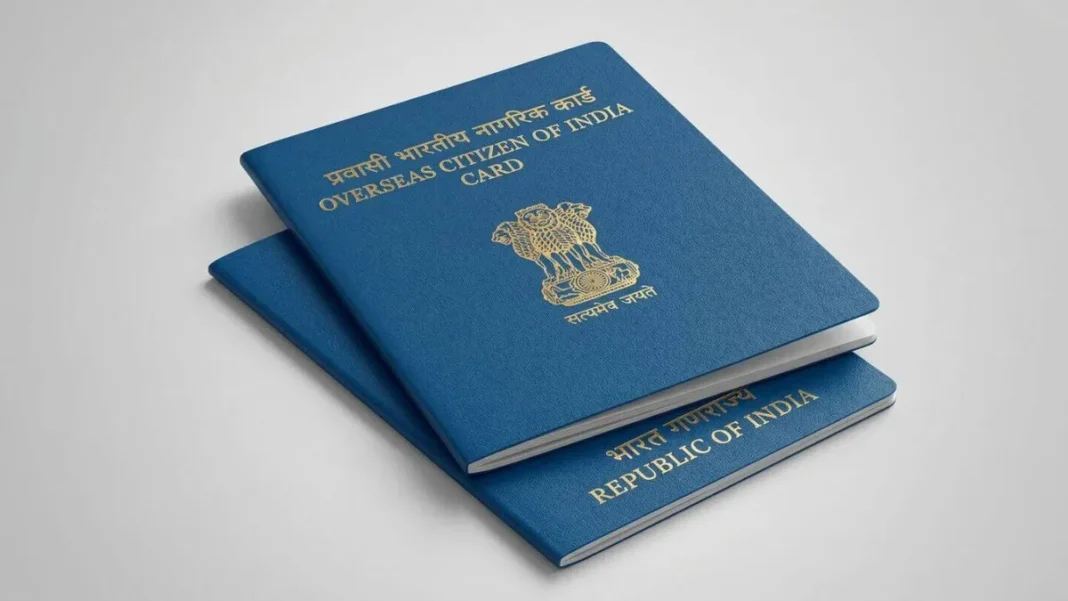
In short: OCI card legal rights India can be summarised as this: your OCI card gives you a lifelong visa, near-NRI economic rights, and the freedom to work and invest in India — but it is not dual citizenship, and it does not give you the right to vote, hold public office, or buy agricultural land.
Key points
- OCI is a lifelong multipurpose visa, not citizenship. India’s Constitution does not permit dual citizenship, and the OCI card is not recognised as citizenship by India or by most other countries.
- You can live, work, invest, open bank accounts, and buy residential or commercial property in India without prior RBI approval — but you cannot buy agricultural land, plantation property, or farmhouse property.
- OCI card holders are exempt from police registration regardless of how long they stay in India, and are entitled to domestic airfare rates.
- You can appear for national entrance tests such as NEET and JEE, but only against NRI or supernumerary seats — not general category seats.
- You cannot vote in Indian elections, contest for President or Vice-President, or hold constitutionally reserved public employment positions.
- After holding OCI status for five years and residing in India for twelve months immediately before applying, you may apply for Indian citizenship by registration under the Citizenship Act, 1955.
What exactly is an OCI card — and what it is not
The name “Overseas Citizenship of India” is genuinely misleading. The Ministry of External Affairs itself is clear: OCI must not be misconstrued as dual citizenship.
India’s Constitution, under Article 9, does not permit dual citizenship. OCI is therefore best understood as a special, permanent, multipurpose visa — one that comes with significant economic benefits, but no political rights whatsoever.
Your OCI card is also only valid when combined with a valid foreign passport. If your foreign passport expires or changes, you need to update your OCI details accordingly.
The recent change for spouses
Most OCI cards carry lifelong validity. However, if you were registered as an OCI cardholder as the spouse of an Indian citizen or person of Indian origin on or after 3 September 2025, your card has an initial validity of five years. It is then extendable to lifelong validity, subject to further scrutiny.
OCI card legal rights India: what you are entitled to do
Entry and stay in India
Your OCI card functions as a multiple-entry, multipurpose, lifelong visa for India. You may travel to India as many times as you like, for any lawful purpose, without needing a separate visa.
You are also fully exempt from registering with the Foreigners Regional Registration Office (FRRO) or any local police authority, no matter how long you stay. This is a significant practical benefit over ordinary long-term visas.
Work and professional rights
OCI card holders can work in India without a separate work visa. You have the same economic, financial, and educational rights as Non-Resident Indians.
If you are a qualified professional, you can practice in India in several regulated fields — including as a doctor, dentist, nurse, pharmacist, advocate, architect, or chartered accountant — subject to the relevant professional Acts governing each field.
OCI cardholders are also eligible to be appointed as teaching faculty at premier institutions including IITs, NITs, IIMs, IISERs, IISc, central universities, and the new AIIMS established under the Pradhan Mantri Swasthya Suraksha Yojana.
Financial and banking rights
You may open and operate bank accounts in India, invest in Indian securities, and access domestic airfare rates. Your OCI card can also be used as identity proof when applying for a PAN card or a driving licence, and for opening a bank account if you are residing in India.
Property rights
OCI cardholders have the same property rights as NRIs in India, with one firm restriction. The table below summarises what you can and cannot buy.
| Type of property | OCI cardholder’s position | Prior RBI approval needed? |
|---|---|---|
| Residential property | Permitted | No |
| Commercial property | Permitted | No |
| Agricultural land | Not permitted | N/A — prohibited outright |
| Plantation property | Not permitted | N/A — prohibited outright |
| Farmhouse property | Not permitted | N/A — prohibited outright |
Education: entrance tests and admissions
OCI cardholders have parity with NRIs in appearing for all-India entrance tests including NEET, JEE (Mains), and JEE (Advanced). However, this parity is specifically for eligibility against NRI seats or supernumerary seats only — not against general category seats.
For a broader look at how Indian law treats NRIs and OCIs across different areas of life, the guides at The Courtroom’s Law for You section are a useful starting point for navigating your rights and obligations in plain language.
What an OCI card does NOT let you do
No political rights — at all
This is the sharpest boundary in OCI law. You have no right to vote in any Indian election. You cannot stand for election as President or Vice-President of India. You are not entitled to equality of opportunity in public employment under the constitutional provisions that apply to Indian citizens.
These are not administrative restrictions that can be waived — they flow directly from the fact that OCI is not citizenship, and from specific provisions of the Constitution of India.
No agricultural or plantation land
As noted above, the prohibition on buying agricultural land, plantation property, and farmhouse property applies to OCI cardholders in the same way it applies to NRIs. This restriction cannot be worked around through prior RBI approval — it is an outright prohibition.
Can an OCI cardholder become an Indian citizen?
Yes — but through a separate, formal process. You may apply for Indian citizenship by registration under section 5(1)(g) of the Citizenship Act, 1955 if you meet two conditions: you have been registered as an OCI cardholder for at least five years, and you have been ordinarily resident in India for twelve months immediately before making your application. You must also have attained full age (18 years).
Naturalisation as an Indian citizen would require you to give up your foreign citizenship, since India does not permit dual citizenship.
Frequently asked questions
Can an OCI cardholder buy property in India?
Yes, OCI cardholders can buy residential and commercial property in India without prior RBI approval, and have the same property rights as NRIs. However, they cannot purchase agricultural land, plantation property, or farmhouse property — this is an outright prohibition, not something that can be approved by the RBI.
Can an OCI cardholder vote in Indian elections?
No. OCI does not confer political rights. OCI cardholders cannot vote in Indian elections, contest for President or Vice-President, or hold positions of public employment that the Constitution reserves for Indian citizens. These restrictions exist because OCI is a visa status, not citizenship, and India’s Constitution does not permit dual citizenship.
Is an OCI card the same as dual citizenship?
No. Despite the name “Overseas Citizenship of India,” OCI is not dual citizenship. The Ministry of External Affairs explicitly states it must not be misconstrued as such. India’s Constitution does not permit dual citizenship, and OCI is not recognised as citizenship by India or by most other countries. It is best understood as a permanent, multipurpose lifelong visa with economic benefits.
This article is for general information only and is not legal advice. Laws change; verify against the primary sources cited and consult a qualified advocate for your situation.

