


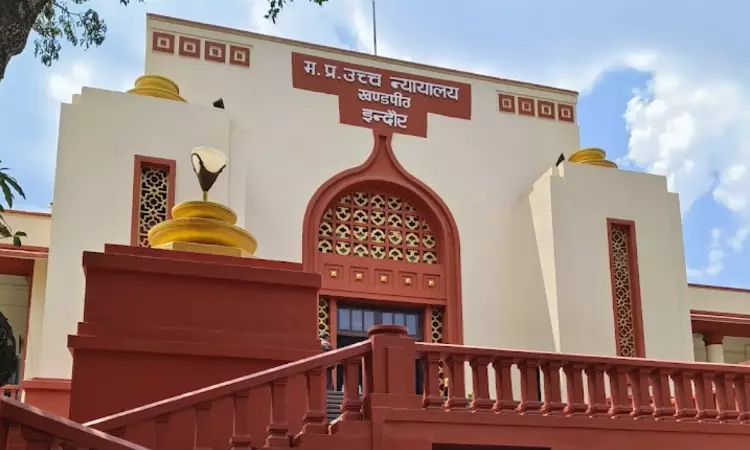
Anticipatory Bail Journalist Extortion MP High Court: Gwalior Bench Refuses Relief
The Madhya Pradesh High Court, Gwalior Bench, has denied anticipatory bail to Pradeep Kumar Jatav, a man claiming to be a journalist, who stands accused of extorting an Assistant Commissioner of GST by threatening to post defamatory content about her on Facebook.
According to LiveLaw, the order was passed by Justice Ratnesh Kumar Gupta, who found the allegations against the applicant to be serious in nature and declined to grant pre-arrest protection.
Background & Case History
The dispute originated on 18 July 2025, when the GST registration application filed by the applicant, Pradeep Kumar Jatav, was rejected by the complainant, who serves as an Assistant Commissioner of GST.
According to LiveLaw, following the rejection, Jatav did not pursue the matter through legitimate administrative channels. Instead, the prosecution alleged that he embarked on a sustained campaign of blackmail and harassment targeting the officer personally.
The case, cited as Pradeep Kumar Jatav v State of Madhya Pradesh — 2026 LiveLaw (MP) 250, was heard before the Madhya Pradesh High Court’s Gwalior Bench. The applicant sought anticipatory bail, apprehending arrest in connection with the extortion allegations.
- 18 July 2025: The complainant, an Assistant Commissioner of GST, rejects Jatav’s GST registration application, citing lack of adequate documents.
- Post-rejection: The prosecution alleges Jatav continuously blackmailed and harassed the complainant with the intention of extorting money from her, according to LiveLaw.
- Social media threats: Jatav allegedly threatened to post defamatory and derogatory news against the complainant on Facebook, leveraging his claimed identity as a journalist.
- 4 July 2026: The Madhya Pradesh High Court, Gwalior Bench, passes its order denying anticipatory bail; the ruling is reported by LiveLaw and headlined by Supreme Today AI on the same date.
Arguments & Submissions
The defence counsel contended before the court that there was no independent and cogent material available on record to demonstrate the commission of the alleged offences, according to LiveLaw. The argument, in essence, was that the prosecution’s case rested on insufficient evidentiary foundation to justify denying bail at the pre-arrest stage.
The State, however, firmly opposed the anticipatory bail application. The prosecution’s case, as reported by LiveLaw, was that since the rejection of his GST registration application, Jatav continuously blackmailed and harassed the complainant with the deliberate intention of extorting money from her.
The prosecution further submitted that Jatav not only sought to get his pending work done on the basis of incomplete documents but also attempted to intimidate a public servant by threatening to malign her dignity through social media posts — a particularly serious aggravating factor given his claimed press identity.
The Ruling: Key Findings
Justice Ratnesh Kumar Gupta of the Madhya Pradesh High Court’s Gwalior Bench dismissed the anticipatory bail plea filed by Pradeep Kumar Jatav, according to Supreme Today AI and LiveLaw.
The court’s observation, as reported by LiveLaw, was unambiguous: “The allegations against the present applicant are serious in nature.”
The court took note that the applicant had attempted to weaponise his claimed status as a journalist to intimidate a public servant — threatening to publish defamatory and derogatory content on Facebook unless his demands were met.
The finding that the allegations were serious in nature formed the operative basis for refusing pre-arrest protection. The anticipatory bail application was dismissed accordingly, as reported by LiveLaw in the case citation 2026 LiveLaw (MP) 250.
Legal Analysis & Implications
The case squarely engages the law governing anticipatory bail under the Code of Criminal Procedure, where courts must assess the nature and gravity of the accusation, the applicant’s antecedents, and the possibility of the accused fleeing justice, among other factors. The court’s emphasis on the seriousness of the allegations reflects established judicial reasoning in pre-arrest bail jurisprudence.
Significantly, the alleged conduct involves threatening a public servant — an Assistant Commissioner — with social media exposure as a coercive tool. Courts across India have consistently viewed attempts to intimidate public servants with particular seriousness, and this ruling reaffirms that posture.
The ruling also carries a pointed message about the misuse of journalistic identity. The court’s framing — consistently placing “journalist” in doubt by characterising him as a man “claiming to be a journalist” — signals judicial awareness of the phenomenon of individuals leveraging press credentials, real or fabricated, as instruments of extortion.
The case underscores that freedom of the press does not extend to using the threat of media exposure as a bargaining chip to extract money or administrative favours from government officials. Any such conduct, the court’s reasoning implies, is amenable to criminal prosecution irrespective of the accused’s professional identity.
Reactions & Stakeholder Response
The State of Madhya Pradesh actively opposed the anticipatory bail application before the Gwalior Bench, according to LiveLaw, signalling the prosecution’s intent to pursue the matter vigorously once the pre-arrest protection has been denied.
No formal reactions from press freedom bodies, Bar associations, or civil society organisations have been reported in the sources available at the time of publication. The defence’s position — that no cogent material existed on record — was rejected by the court in substance, though the matter may yet see further proceedings.
What’s Next
With the anticipatory bail application dismissed, Pradeep Kumar Jatav is now exposed to arrest by the investigating authorities. No next hearing date or specific procedural step has been reported in the sources at the time of publication.
It remains open to the applicant to approach the court afresh if circumstances change, or to challenge the Gwalior Bench’s order before a higher forum. The case will continue to be watched as it raises important questions about the criminal accountability of individuals who exploit press identity for extortion.
More legal news at The Courtroom.
Disclaimer
Disclaimer: This article is for general information only and does not constitute legal advice. Laws may change or vary by case — consult a qualified lawyer before acting. The Courtroom is not liable for any reliance on this content.

