


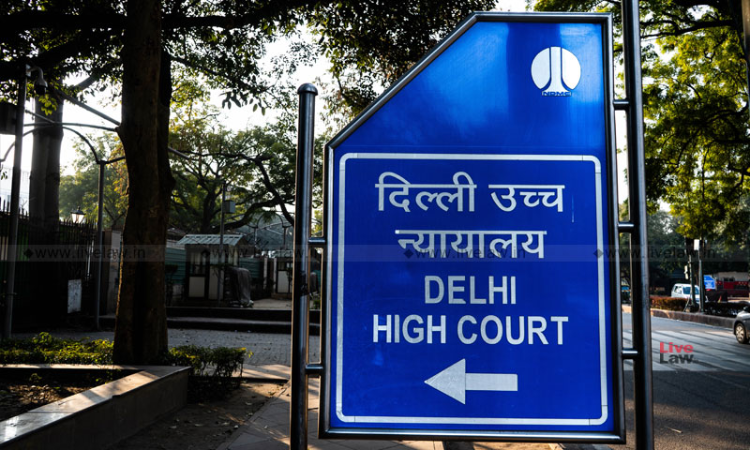
On July 1, 2026, a Division Bench of the Delhi High Court ruled that BSNL and MTNL employees permanently absorbed from the Department of Telecommunications (DoT) are not entitled to revision of pension under the 7th Central Pay Commission (CPC) recommendations.
The bench of Justices C. Hari Shankar and Om Prakash Shukla set aside a batch of orders passed by the Central Administrative Tribunal (CAT), allowing writ petitions filed by the Union of India, according to LiveLaw.
Background & Case History
The dispute traces its origins to the corporatisation of India’s telecom sector around the year 2000. Group C and Group D DoT employees were absorbed into MTNL on November 1, 1998, while Group A and Group B officers were permanently absorbed into BSNL and MTNL on October 1, 2000.
Following permanent absorption, these employees became what are legally termed “combined service pensioners” — individuals whose pension is calculated on the basis of both their government service and their PSU service, governed by Rule 37A of the Central Civil Services (Pension) Rules, 1972.
Because absorbed employees moved to the Industrial Dearness Allowance (IDA) pay structure applicable to Public Sector Undertakings, their pay and pension revisions became linked to the Pay Revision Committee (PRC) rather than successive Central Pay Commissions.
The lead writ petition before the Delhi High Court was W.P.(C) 4946/2024 and connected matters, including W.P.(C) 4985/2024 for MTNL pensioners, per the Delhi High Court judgment PDF.
- November 1, 1998: Group C and Group D DoT employees permanently absorbed into MTNL.
- October 1, 2000: Group A and Group B DoT officers permanently absorbed into BSNL and MTNL.
- September 20, 2023: CAT Principal Bench directed the Union Government to revise pension of BSNL and MTNL combined service pensioners with effect from January 1, 2017, applying the fitment formula under the 7th CPC.
- July 1, 2026: Delhi High Court pronounced judgment setting aside the CAT order and allowing the Union of India’s writ petitions.
Arguments & Submissions
The Union of India, through the Department of Telecommunication, argued before the Division Bench that permanently absorbed employees ceased to be Central Government servants upon absorption. As such, they were governed by the PRC framework applicable to PSUs, and not entitled to benefits flowing from subsequent CPC recommendations.
The Union further contended that the 3rd Pay Revision Committee recommendations were never implemented in BSNL and MTNL owing to the dire financial condition of both PSUs. There was therefore no revised IDA pay structure in place that could serve as a basis for any pension revision, according to reporting by Communications Today.
The respondent pensioners, on the other hand, relied on Rule 37A of the CCS (Pension) Rules, 1972 and certain Office Memoranda to argue that parity with Central Government servants — including entitlement to 7th CPC pension revision — was a continuing statutory right that survived permanent absorption.
The Ruling: Key Findings
The Division Bench held unequivocally that the 7th CPC recommendations apply only to Central Government employees and to absorbees of BSNL and MTNL who draw pension on a pro-rata basis from the Government.
The Court stated: “Recommendations of the 7th CPC only apply to Central Government employees and absorbees of BSNL/MTNL who draw pension on pro-rata basis from the Government.”
On the scope of Rule 37A, the bench clarified: “The Rule only extends a limited promise, i.e., when absorbees retire from a PSU their pension will be calculated like that of Central Government servants at the time of their retirement by employing the same formula.”
The Court further held: “Neither Rule 37A nor any of the Office memoranda relied upon by the respondents confer a right upon combined service pensioners governed by the IDA regime to claim revision of pension pursuant to the recommendations of the 7th CPC.”
The bench also noted that while certain limited pensionary benefits — such as revised pension calculation and enhanced death gratuity — had been extended to BSNL and MTNL absorbees through specific Office Memoranda, no executive instruction had extended 7th CPC pension revision to combined service pensioners.
Legal Analysis & Implications
The pivot of the ruling is the interpretation of Rule 37A of the CCS (Pension) Rules, 1972. The Court read the provision narrowly: it guarantees parity only in the method of pension calculation at the moment of retirement, not a forward-looking entitlement to every benefit that subsequent CPCs may confer on active Central Government servants.
The Court concluded there was no statutory mandate, executive direction, or constitutional basis to extend the 7th CPC benefits to BSNL and MTNL combined service pensioners, as reported by LiveLaw and Courtbook.in.
The ruling carries significant practical weight. Because the 3rd PRC recommendations were never implemented in BSNL and MTNL, the basic pension of many combined service pensioners stagnated from 2007 onwards. The High Court’s ruling forecloses any CPC-linked remedy, leaving the PRC route as the only applicable framework — one that has itself remained unimplemented for over a decade.
The decision also creates a direct conflict with a Kerala High Court ruling that had extended pension revision benefits to at least one BSNL retiree who retired before 2006, producing a split between High Courts on this issue, per pensioner associations cited by BDPA-India.
Reactions & Stakeholder Response
Pensioner associations, including the SNPWACHQ and BDPA-India, have publicly noted the conflict between this Delhi High Court ruling and the Kerala High Court decision. The inter-court divergence, they contend, itself creates a compelling ground for Supreme Court intervention.
Both associations have indicated that affected pensioner groups plan to file a Special Leave Petition (SLP) before the Supreme Court challenging the Delhi High Court judgment, seeking a final authoritative ruling on the pension revision entitlements of BSNL and MTNL combined service pensioners.
What’s Next
With the July 1, 2026 judgment now on record, the immediate next step for affected pensioners is the preparation and filing of an SLP before the Supreme Court of India. Pensioner bodies have already signalled their intent to do so, per BDPA-India and SNPWACHQ.
The conflicting Kerala High Court ruling on a similar issue involving a pre-2006 BSNL retiree will likely be cited before the Supreme Court as a ground for urgency and for a definitive resolution of the High Court split. Until then, the Delhi High Court’s ruling stands as the operative precedent for combined service pensioners within its jurisdiction.
More legal news at The Courtroom.
Disclaimer
Disclaimer: This article is for general information only and does not constitute legal advice. Laws may change or vary by case — consult a qualified lawyer before acting. The Courtroom is not liable for any reliance on this content.

