


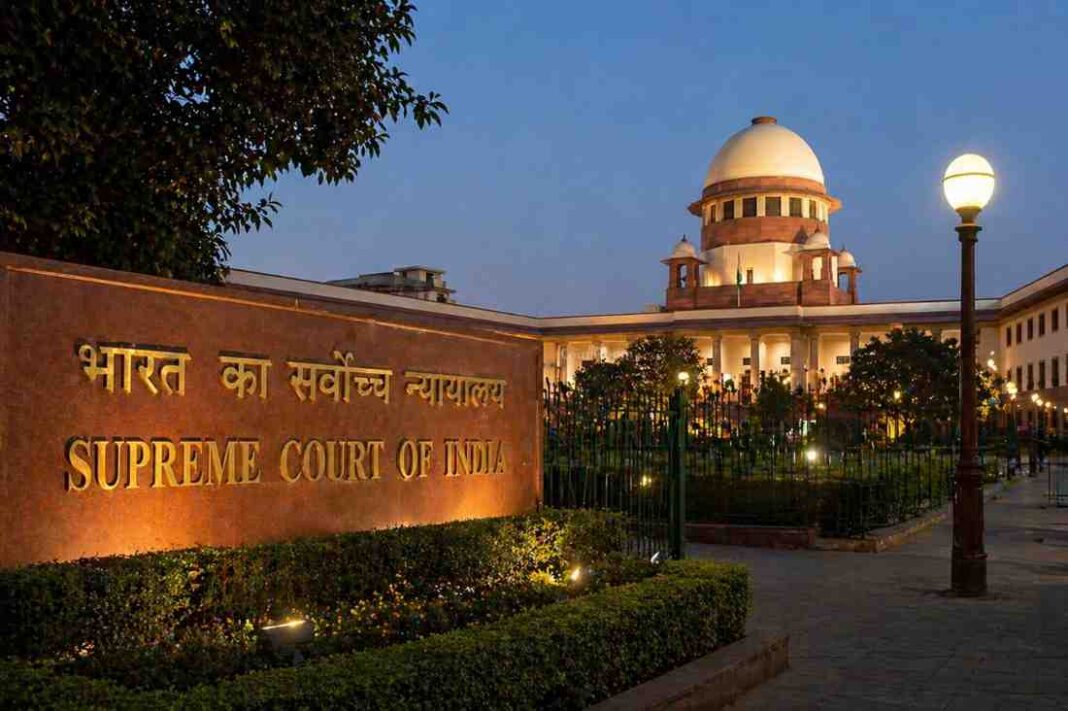
On June 23, 2026, a Supreme Court vacation bench declined to urgently list a writ petition challenging West Bengal’s move to strip ration benefits from persons excluded during the Special Intensive Revision (SIR) of electoral rolls, directing the petitioner instead to approach the Calcutta High Court.
The bench comprising Justice BV Nagarathna and Justice Joymalya Bagchi refused the oral mention for urgent listing and held that the matter was more appropriately suited for the High Court, according to LiveLaw.
Background: How We Got Here
West Bengal conducted a Special Intensive Revision of its electoral rolls beginning around November 2025. The process resulted in the deletion of approximately 9 million names from voter lists, with roughly 27.16 lakh deletions in the ‘Logical Discrepancy’ phase alone.
On May 27, 2026, the Supreme Court upheld the legality of the SIR process in Association for Democratic Reforms v Election Commission of India, while clarifying that electoral exclusions do not determine citizenship, as reported by LawChakra.
Following that ruling, the West Bengal government issued two orders tying electoral classifications to welfare eligibility. The sequence of challenged government action is as follows:
- On May 19, 2026, the Department of Women and Child Development and Social Welfare issued a notification linking SIR-based electoral classifications — covering persons marked dead, shifted, deleted, or absentee — to eligibility under the Annapurna Yojana welfare scheme, per Bar & Bench.
- On June 4, 2026, the West Bengal Food and Supplies Department issued an order applying the same SIR classifications to Public Distribution System (PDS) beneficiary status, according to Bar & Bench.
- The petition, filed by agricultural workers’ union Paschim Banga Khet Majoor Samity under Article 32 of the Constitution, warns that between 35 lakh and 60 lakh ration cards could become inactive if the State applies the linkage mechanically without individual verification.
The Ruling — Key Findings
The vacation bench comprising Justices BV Nagarathna and Joymalya Bagchi declined the oral mention for urgent listing of the Article 32 writ petition and directed the petitioner to seek relief before the Calcutta High Court, as confirmed by multiple sources including LiveLaw and The Federal.
Justice BV Nagarathna questioned why the petition had been filed directly in the Supreme Court under Article 32 rather than before the High Court, according to Bar & Bench.
The bench held that the ration card exclusion issue constituted a separate cause of action from the earlier SIR electoral-roll challenge that the Supreme Court had already decided, making it more appropriate for High Court adjudication, per Bar & Bench and LawChakra.
When counsel pressed the pan-India dimension of the issue, the bench was unequivocal. As reported by The Federal, the court stated: “The Calcutta High Court is functioning. Go there.”
Reactions & What’s Next
Advocate S. Prasanna, appearing for the petitioner Paschim Banga Khet Majoor Samity, urged the court to treat the matter as one of national importance. He argued before the bench that other states were also linking SIR outcomes to welfare entitlements, according to Bar & Bench and LiveLaw.
Counsel submitted: “All those people whose names have been excluded from the SIR are sought to be excluded from the ration list, and this has caused a lot of problems.”
The petitioner had argued that the governmental linkage violates Articles 14 and 21 of the Constitution and amounts to impermissible use of data collected for one statutory purpose — electoral roll revision — for an entirely different purpose, namely welfare eligibility determination, per Bar & Bench and LawChakra.
Despite this argument, the bench was unpersuaded that the matter warranted direct invocation of the Supreme Court’s original jurisdiction under Article 32.
The immediate next step for Paschim Banga Khet Majoor Samity is to file a fresh petition before the Calcutta High Court. No further date has been set before the Supreme Court, as the bench declined to retain the matter, according to LiveLaw.
With the West Bengal government’s orders of May 19 and June 4, 2026 currently operative, the fate of potentially 35 lakh to 60 lakh ration card holders remains unresolved pending any High Court intervention.
More legal news at The Courtroom.
What is the West Bengal SIR ration PDS exclusion issue about?
West Bengal issued orders in May and June 2026 linking SIR electoral classifications — marking individuals as dead, shifted, deleted, or absentee — to their eligibility under the PDS and Annapurna Yojana. The petition warns this could deactivate between 35 lakh and 60 lakh ration cards without individual verification, as reported by Bar & Bench.
Why did the Supreme Court refuse to hear the petition directly?
The vacation bench of Justices BV Nagarathna and Joymalya Bagchi held that the ration card exclusion issue is a separate cause of action from the earlier SIR electoral-roll challenge already decided by the Supreme Court, and is more appropriately suited for the Calcutta High Court, according to Bar & Bench and LawChakra.
Who filed the petition challenging the West Bengal ration exclusion orders?
The petition was filed by Paschim Banga Khet Majoor Samity, an agricultural workers’ union, under Article 32 of the Constitution of India, as confirmed by Bar & Bench and LiveLaw.
What did the Supreme Court previously hold on the SIR process?
On May 27, 2026, the Supreme Court upheld the legality of the SIR process in Association for Democratic Reforms v Election Commission of India, but clarified that electoral exclusions do not determine citizenship, per LawChakra.
Disclaimer
Disclaimer: This article is for general information only and does not constitute legal advice. Laws may change or vary by case — consult a qualified lawyer before acting. The Courtroom is not liable for any reliance on this content.

