


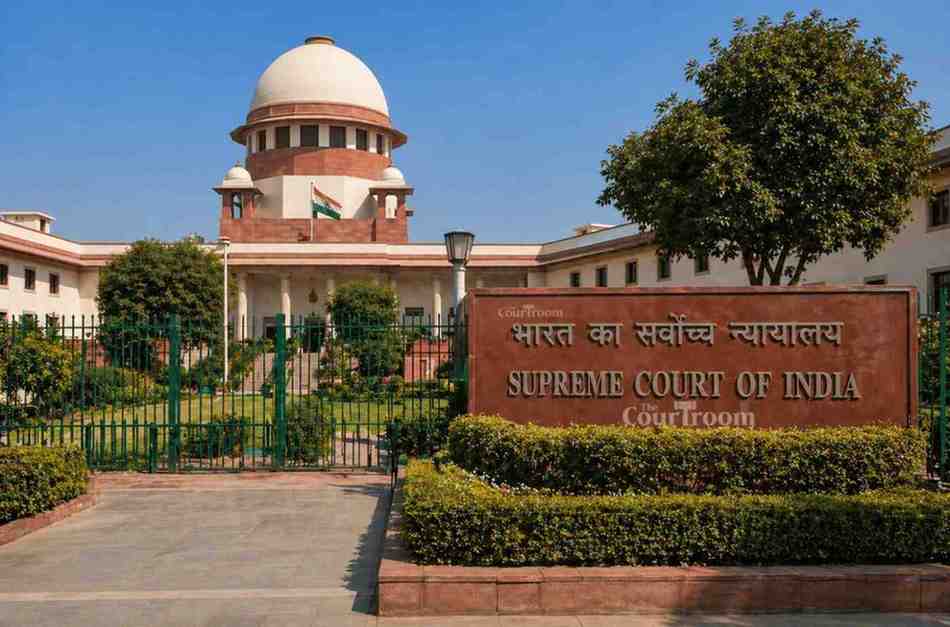
The Supreme Court of India on June 23, 2026, dismissed a long-pending civil appeal in Mohammed Khaleel (D) through LRs & Ors. v. Jayamma, holding that specific performance financial readiness must be demonstrated from the date of the agreement — not through documents created after the suit is filed.
A bench of Justice Prashant Kumar Mishra and Justice N.V. Anjaria upheld the Karnataka High Court’s 2009 reversal of a trial court decree, ruling that Fixed Deposit Receipts generated years after institution of the suit cannot establish readiness and willingness under the Specific Relief Act, 1963, according to LiveLaw.
Background & Case History
The dispute traces its origins to December 20, 1990, when the original plaintiff Mohammed Khaleel entered into an agreement to sell with the defendant Jayamma for a vacant site, at a total consideration of Rs. 3,00,000. Khaleel paid Rs. 25,000 as earnest money, with the balance due within four months at the time of registration, as reported by Law Trend.
The defendant subsequently rescinded the agreement. Rather than moving swiftly, Khaleel filed the suit for specific performance only on December 20, 1993 — nearly two years and nine months after the rescission — according to LiveLaw.
The case bore Civil Appeal No. 2187 of 2011, arising from Diary Number 7250/2010, and was listed on the Supreme Court of India’s official website (sci.gov.in) with its order uploaded on June 23, 2026.
- December 20, 1990: Agreement to sell executed between Mohammed Khaleel and Jayamma for Rs. 3,00,000; Rs. 25,000 paid as earnest money.
- December 20, 1993: Suit for specific performance filed by the plaintiff — nearly two years and nine months after rescission.
- 2002: Trial court decreed the suit in favour of the plaintiff.
- 2009: Karnataka High Court reversed the trial court’s decree, finding the plaintiff had failed to establish continuous readiness and willingness.
- 2011: Civil Appeal No. 2187 of 2011 filed before the Supreme Court by the legal representatives of Mohammed Khaleel.
- June 23, 2026: Supreme Court dismissed the appeal, upholding the High Court’s order.
Arguments & Submissions
The appellants — legal representatives of the deceased plaintiff Mohammed Khaleel — sought to establish financial readiness by placing on record four Fixed Deposit Receipts (FDRs), each worth Rs. 70,000, aggregating Rs. 2.80 lakh, according to LiveLaw.
The appellants contended that they were not required to physically deposit the consideration amount before the court, and that the FDRs were sufficient proof that the necessary funds were available to complete the transaction.
The respondent Jayamma’s side challenged the evidentiary value of the FDRs, pointing to the critical fact that those documents post-dated the filing of the suit by several years, making them unreliable indicators of readiness at the time the agreement was in force and the suit was instituted, as per Law Trend.
The Ruling: Key Findings
The Supreme Court bench of Justice Prashant Kumar Mishra and Justice N.V. Anjaria emphatically rejected the FDRs as evidence of financial readiness. The four FDRs were dated October 4, 1999; November 22, 1999; April 3, 2001; and August 23, 2001 — all created years after the suit was filed in December 1993, according to LiveLaw.
The bench stated: “the availability of funds must be proved with reference to the relevant point of time and not by relying upon financial documents generated long after the filing of the suit.”
The Court further clarified that while physical deposit of the amount is not mandatory, reliable evidence of possession of sufficient funds at the relevant time is indispensable. As the bench held: “though it was not necessary for the appellants to physically deposit the consideration amount before the Court, they must nevertheless have to place reliable and acceptable evidence on record to show that they possessed sufficient funds to complete the transaction at the relevant time.”
On the question of delay, the Court held that the unexplained gap of nearly two years and nine months in filing the suit was an independent and fatal circumstance. In its operative conclusion, the bench stated: “Keeping in view the twin statutory mandate of ‘readiness’ and ‘willingness’, the appellants not only failed to demonstrate their readiness and willingness but also failed to approach the Court with quite promptitude, which disentitle them from grant of the equitable relief of specific performance.”
Legal Analysis & Implications
The judgment turns on Section 16(c) of the Specific Relief Act, 1963 — the unamended version applicable prior to the amendment effective October 1, 2018. That provision requires a plaintiff seeking specific performance to aver and prove continuous readiness and willingness to perform their part of the contract from the date of the agreement onwards, according to Law Trend.
The Court drew a critical distinction between two components of this requirement: readiness, which refers to financial capacity to perform the contract, and willingness, which pertains to the conduct and intention of the party throughout the relevant period.
By holding that post-suit financial documents cannot plug the evidentiary gap, the Court has reinforced that plaintiffs in specific performance suits bear a continuous and contemporaneous evidentiary burden — they must be able to demonstrate, through documents contemporaneous to the agreement and the period leading to the suit, that they had the actual financial wherewithal to complete the transaction. The ruling also underscores that delay in approaching the court — even if within the limitation period — is a relevant factor for courts exercising this discretionary and equitable jurisdiction, per LiveLaw.
The case also touched upon questions relating to permissions under the Urban Land (Ceiling and Regulation) Act, 1976 (ULCRA), with arguments raised about which party bore primary responsibility to obtain necessary clearances under that statute.
Reactions & Stakeholder Response
No formal reactions from Bar associations, senior counsel on record, or civil society bodies have been reported in the verified sources available at the time of publication.
The ruling, however, is expected to be closely studied by property lawyers and litigants across India, given its clear articulation of the evidentiary standard required to sustain a claim for specific performance — particularly in long-pending disputes where original documents may be sparse.
What’s Next
With the Supreme Court’s dismissal of Civil Appeal No. 2187 of 2011 on June 23, 2026, the Karnataka High Court’s 2009 order stands restored as the final word on the dispute between the parties. No further appeal lies beyond the Supreme Court in this matter, bringing the three-decade-long litigation to a close.
The judgment is now part of the Supreme Court’s official record, uploaded on sci.gov.in on June 23, 2026, and is cited as 2026 LiveLaw (SC) 638 in legal databases, according to LiveLaw.
More legal news at The Courtroom.
Disclaimer
Disclaimer: This article is for general information only and does not constitute legal advice. Laws may change or vary by case — consult a qualified lawyer before acting. The Courtroom is not liable for any reliance on this content.

