


Jammu Municipal Corporation Audit & Uniform Enforcement: High Court Intervenes
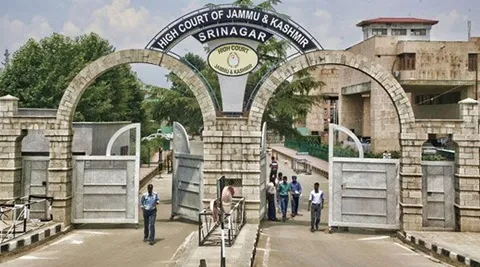
The High Court of Jammu & Kashmir and Ladakh, on July 3, 2026, directed the Jammu Municipal Corporation to conduct a comprehensive city-wide survey of hotels, coaching institutes, banquet halls and all commercial establishments to identify violations of building, parking and fire safety laws.
Justice Wasim Sadiq Nargal found that the JMC’s pattern of action raised serious constitutional concerns under Article 14 of the Constitution, holding that municipal laws must be enforced uniformly and without discrimination, according to LiveLaw.
Background & Case History
The roots of this order stretch back more than two decades. The writ petition, Administrator, Jammu Municipality & Anr. v. Surat Singh & Anr., has been pending before the High Court since 2002, when it was filed challenging an order of the Jammu and Kashmir Special Tribunal concerning municipal proceedings against a hotel owned by respondent Surat Singh.
Over the course of protracted litigation, the case transformed from a narrow municipal dispute into a broader constitutional challenge touching on the JMC’s enforcement practices across the entire city, as reported by Daily Excelsior.
The matter is being heard by Justice Wasim Sadiq Nargal at the Jammu bench of the High Court of Jammu & Kashmir and Ladakh.
- 2002: Writ petition filed, challenging Jammu Municipal authorities’ action against Surat Singh’s hotel before the J&K Special Tribunal.
- August 21, 2023: Court issued directions requiring the respondent to file a supplementary affidavit detailing similarly situated establishments.
- May 20, 2024: JMC issued fresh notices to commercial establishments identified in the supplementary affidavit — but took no consequential follow-up action.
- July 3, 2026: High Court issued the landmark city-wide survey order and directed the Commissioner, JMC, to file a comprehensive affidavit within two weeks.
Arguments & Submissions
The respondent, Surat Singh, argued that his hotel was being singled out for municipal action while numerous similarly situated — and in several cases more seriously violating — commercial establishments continued to operate without any interference from the JMC.
To substantiate the allegation of selective enforcement, the respondent relied on data obtained under the Right to Information Act, 2005, which he claimed revealed widespread non-compliance with building bye-laws, parking requirements and fire safety norms across Jammu municipal limits, as reported by LiveLaw and Daily Excelsior.
On its part, the JMC filed only a one-page generalised response, failing to address each establishment named in the respondent’s supplementary affidavit on an entity-wise basis. The Court sharply criticised this approach, according to Kashmir Observer.
The Ruling: Key Findings
Justice Wasim Sadiq Nargal held that the allegations of selective enforcement were not merely procedural grievances but raised serious concerns touching upon Article 14 of the Constitution of India — the fundamental right to equality before law and equal protection of laws — as reported by LiveLaw.
The Court stated directly: “Merely issuance of notice… does not suffice that the order passed by this Court… stands complied with in its letter and spirit, when no consequential action has been taken.”
The Court further directed: “The affidavit must also specify the timeline within which the entire exercise of survey, identification of defaulting establishments, issuance of notices and consequential action will be completed.”
The Commissioner, JMC, was directed to coordinate with the Director of Fire and Emergency Services, the Vice Chairman of the Jammu Development Authority, and the Inspector General of Police (Traffic), among other concerned departments, to carry out the survey exercise comprehensively, per Kashmir Observer.
The survey is to cover violations relating to sanctioned building plans, mandatory parking facilities as required under the Building Bye-laws and the Master Plan, and fire safety clearances and No Objection Certificates under applicable fire safety statutes.
Legal Analysis & Implications
The order engages Article 14 of the Constitution in a municipal enforcement context — an application that underscores how the equality clause operates not only against discriminatory legislation but also against arbitrary or selective administrative action by statutory bodies.
The respondent’s use of the Right to Information Act, 2005 to extract JMC data and place it before the Court illustrates the statute’s potency as an accountability tool in public-interest litigation and writ proceedings.
By requiring the JMC to specify an action timeline and warning of personal appearance by the Commissioner, the Court has moved beyond declaratory directions into enforceable compliance monitoring — a step that signals judicial impatience with institutional inertia in municipal governance, as The Kashmir Images reported.
The direction to coordinate across departments — JDA, Fire Services and Traffic Police — reflects the Court’s recognition that building, parking and safety violations are multi-agency failures, not problems amenable to single-department resolution.
Reactions & Stakeholder Response
No formal statement from the JMC Commissioner or the municipal administration was cited in the sources reviewed at the time of publication.
The order has drawn attention to the broader pattern of infrastructural non-compliance among commercial establishments in Jammu, with observers noting that the RTI-backed evidentiary approach adopted by the respondent may offer a replicable model for future public-interest challenges against selective municipal enforcement elsewhere in the region.
What’s Next
The Commissioner, JMC, has been given two weeks from July 3, 2026 to file a comprehensive, establishment-wise affidavit detailing survey findings, notices issued and a concrete action timeline. The matter has been listed for further hearing on July 30, 2026, per Kashmir Observer and The Kashmir Images.
If the Commissioner fails to comply with the Court’s directions, the High Court has warned that the Commissioner shall remain personally present before the Court with all relevant records — a measure that significantly raises the institutional stakes of non-compliance.
More legal news at The Courtroom.
Disclaimer
Disclaimer: This article is for general information only and does not constitute legal advice. Laws may change or vary by case — consult a qualified lawyer before acting. The Courtroom is not liable for any reliance on this content.

