


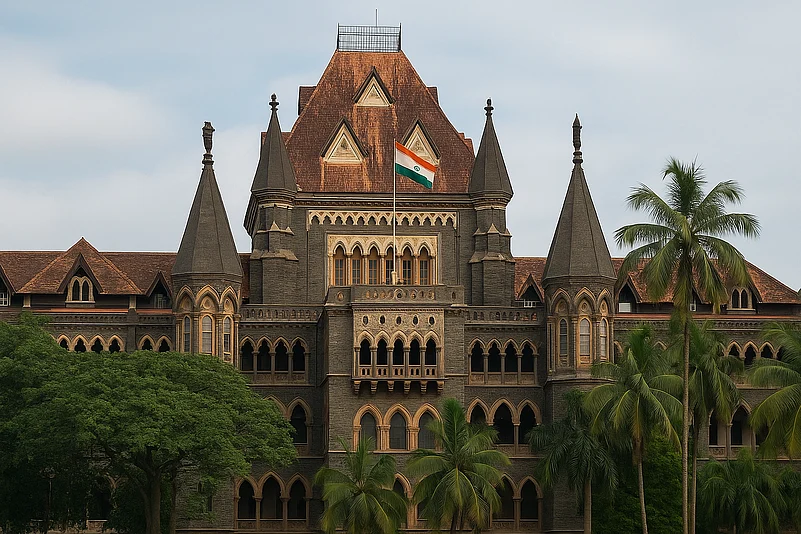
In a sharp rebuke to Mumbai Police, the Bombay High Court on July 2, 2026 quashed a one-year externment order against Saeed Ahmad Abdul Wahid Chaudhary, 49, General Secretary of the Social Democratic Party of India (SDPI), holding that organising protests against government decisions cannot justify externment.
Justice Madhav J. Jamdar, sitting as a single-judge bench, declared the entire externment proceedings “vitiated” and “mala fide,” according to LiveLaw, affirming that the action directly infringed the petitioner’s fundamental rights under Articles 19 and 21 of the Constitution of India.
Background & Case History
Chaudhary, a leader of the SDPI — a political party registered with the Election Commission of India under Section 29A of the Representation of the People Act, 1951 — had been organising protests, morchas, and dharnas since 2019 on issues including the Citizenship Amendment Act (CAA), National Register of Citizens (NRC), the Babri Masjid matter, and the Gyanvapi mosque controversy.
Between 2019 and 2024, Mumbai Police registered multiple FIRs against Chaudhary, all under Section 188 of the Indian Penal Code, for allegedly holding protests without prior police permission. A show-cause notice initiating externment proceedings was issued to him in October 2025, as reported by the Free Press Journal.
The Deputy Commissioner of Police, Zone-6, Chembur, Mumbai thereafter passed Externment Order No. 472/C/43 on December 3, 2025, directing Chaudhary to stay out of Mumbai for one year. Chaudhary challenged the order before the Divisional Commissioner, Konkan Division, but the appellate authority upheld the externment on March 27, 2026, according to SabrangIndia.
He then approached the Bombay High Court by filing Writ Petition No. 1700 of 2026 under Articles 226 and 227 of the Constitution of India, challenging both orders. The case is cited as 2026 LiveLaw (Bom) 305.
- 2019–2024: Multiple FIRs registered under Section 188 IPC for protest-related activities without police permission.
- October 2025: Show-cause notice issued to Chaudhary initiating externment proceedings.
- December 3, 2025: Externment Order No. 472/C/43 passed by DCP, Zone-6, Chembur.
- March 27, 2026: Appellate order by Divisional Commissioner, Konkan Division, upholding the externment.
- July 2, 2026: Bombay High Court quashes both orders; Writ Petition No. 1700 of 2026 disposed of in the petitioner’s favour.
Arguments & Submissions
Chaudhary’s advocates, Payoshi Roy and Ibraheem Harbat, argued before Justice Jamdar that all the FIRs underpinning the externment were for protest activities protected under Articles 19 and 21 of the Constitution. They contended that the externment orders effectively kept Chaudhary out of Mumbai during civic elections, compounding the prejudice caused to him.
The State defended the police action on the ground that the protests had been organised without obtaining prior permission from the police authorities, and that this repeated conduct justified the extraordinary measure of externment under Section 56 of the Maharashtra Police Act.
The petitioner countered that the maximum punishment under Section 188 IPC — the sole provision under which all FIRs were filed — is one month’s simple imprisonment, making it constitutionally disproportionate to use the severe remedy of externment as a response, per LiveLaw’s detailed report.
The Ruling: Key Findings
Justice Jamdar held squarely that there was no material on record to establish that Chaudhary’s activities caused, or were calculated to cause, alarm, danger, or harm to persons or property — the threshold mandated under Section 56(1)(a) and (b) of the Maharashtra Police Act for passing an externment order.
In his written order, Justice Jamdar stated: “As per the Articles 19 and 21 of the Constitution of India not only citizens have the freedom to express their opinion but also to live with dignity.”
He further held: “The action taken by the respondents against the petitioner for merely opposing certain decisions of the Government of India affects his fundamental rights.”
The written order also noted: “The petitioner, acting in his capacity, has arranged morchas and dharnas against certain decisions taken by the Government of India. That cannot be a ground for a person to be externed under the Maharashtra Police Act.”
Separately, in pointed oral observations during the hearing, Justice Jamdar said: “All citizens are being made slaves of the Indian Government. They cannot stage protests, they cannot agitate – what is all this?”
The judge further observed orally: “Police isn’t the servants of the Chief Minister or the Prime Minister — they are public servants.” He also questioned: “Petitioner has just raised slogans like BJP Government Murdabad, Amit Shah Murdabad… Why citizens can’t raise such slogans? Why externment orders for such slogans?”
The Court declared the authorities had failed to demonstrate the “subjective satisfaction” required under Section 56 of the Maharashtra Police Act, and held the proceedings mala fide. Justice Jamdar also orally indicated that he would impose hefty costs on the police officers who signed the externment order, according to LiveLaw.
Legal Analysis & Implications
The judgment engages a critical tension in Indian law: the scope of Section 56 of the Maharashtra Police Act, which empowers authorities to extern individuals whose presence is deemed dangerous, versus the constitutional guarantees of free speech and dignified life under Articles 19 and 21.
Justice Jamdar’s finding that Section 188 IPC offences — carrying a maximum sentence of one month’s simple imprisonment — cannot furnish the statutory basis for an externment order draws a sharp proportionality line. Using a sweeping police-power measure to punish conduct that the legislature itself treated as a minor offence, the Court held, cannot withstand constitutional scrutiny.
The ruling carries significant implications for political activists and civil society organisations across Maharashtra. As SabrangIndia reported, the Court’s condemnation of externment as a tool to silence political dissent signals that opposition to government policies cannot be treated as a criminal or security threat under the Maharashtra Police Act. The judgment reinforces that registered political parties and their leaders retain full constitutional protection when organising peaceful protests, regardless of whether prior police permission was obtained.
Reactions & Stakeholder Response
The petitioner’s legal team, led by advocates Payoshi Roy and Ibraheem Harbat, welcomed the ruling as a vindication of constitutional rights. The verdict has been widely noted by legal commentators as a significant pushback against the use of externment provisions to suppress political dissent, according to reporting by SabrangIndia and the Free Press Journal.
Mumbai Police had defended the externment on procedural grounds — citing the absence of prior permission for the protests — but the High Court found this rationale wholly insufficient to meet the statutory threshold, according to LiveLaw. No formal statement from the police or the State government was reported following the ruling.
What’s Next
With Writ Petition No. 1700 of 2026 now disposed of in the petitioner’s favour, Chaudhary is free to return to Mumbai. The question of costs against the police officers who signed the externment order — flagged by Justice Jamdar during oral observations — remains a point to watch, as LiveLaw noted the judge’s stated intent to impose hefty penalties.
The State of Maharashtra retains the option to challenge the ruling before a division bench of the Bombay High Court or, ultimately, before the Supreme Court of India. No appeal had been reported as of the date of this publication. The ruling may also prompt scrutiny of other pending externment orders issued against political activists in Maharashtra on similar grounds.
More legal news at The Courtroom.
Disclaimer
Disclaimer: This article is for general information only and does not constitute legal advice. Laws may change or vary by case — consult a qualified lawyer before acting. The Courtroom is not liable for any reliance on this content.

