


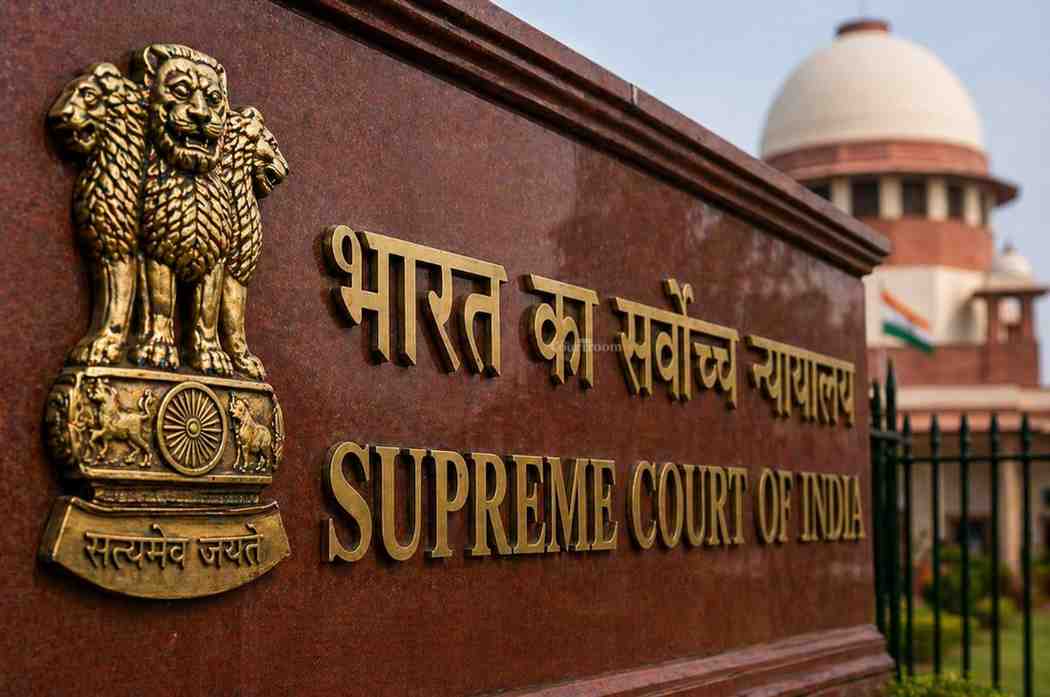
The Supreme Court of India on June 25, 2025, dismissed a Special Leave Petition filed by an EWS NEET-UG 2025 candidate challenging the high tuition fees charged by private medical colleges in Rajasthan, declining to direct that private institutions charge only government-level fees.
The bench of Justices BV Nagarathna and Joymalya Bagchi upheld the Rajasthan High Court’s ruling and warned that forcing fee parity would risk closure of private medical colleges across the country, according to LiveLaw.
Background & Case History
The petitioner, Harshvardhan Singh, is a 22-year-old Rajasthan domicile candidate from the general category holding a valid EWS certificate, who appeared in NEET-UG 2025. He sought judicial intervention against private medical college fees he argued were wholly unaffordable for EWS candidates.
Private medical colleges in Rajasthan charge annual tuition fees ranging from Rs 18.9 lakh to Rs 25 lakh. The EWS income ceiling is Rs 8 lakh per annum — creating a stark structural mismatch that the petitioner argued rendered the 10% EWS quota practically meaningless, as reported by Bar & Bench.
Singh did not opt for private medical colleges in the first two NEET-UG counselling rounds due to the high fees. In the third round, following an interim order from the Rajasthan High Court, he submitted preferences for 73 colleges but was ultimately allotted only a general seat in a private college, according to LiveLaw.
- 2025 (NEET-UG exam cycle): Harshvardhan Singh appears in NEET-UG 2025 as an EWS certificate holder from Rajasthan.
- First and second counselling rounds: Petitioner declines to submit private college preferences due to fee unaffordability.
- Third counselling round: Rajasthan High Court passes interim order; Singh submits preferences for 73 colleges and is allotted a general seat in a private institution.
- May 2025: A Division Bench of the Rajasthan High Court comprising Justices Arun Monga and Sandeep Shah dismisses Singh’s appeal.
- June 25, 2025: Supreme Court bench of Justices BV Nagarathna and Joymalya Bagchi dismisses the SLP in the matter of Harshvardhan Singh v. State of Rajasthan and Ors.
Arguments & Submissions
The petitioner argued that EWS reservation under the Constitution (103rd Amendment) Act, 2019, is rendered illusory in private medical colleges when annual fees far exceed the maximum annual family income prescribed under the EWS income ceiling of Rs 8 lakh, according to LiveLaw.
Singh also relied upon an Office Memorandum issued by the National Medical Commission, contending it directed that government-equivalent fees be charged for a proportion of seats in private medical colleges. He submitted this OM carried statutory force under Section 10 of the NMC Act.
The State of Rajasthan countered that the fee structure had been fixed by the State Fee Regulatory Committee in accordance with the Supreme Court’s binding precedent in Islamic Academy of Education v. State of Karnataka, as reported by Bar & Bench. The state had also not adopted the NMC Office Memorandum cited by the petitioner.
The Ruling: Key Findings
The Supreme Court declined to interfere with the Rajasthan High Court’s order, holding that private educational institutions cannot be compelled to charge fees at par with government institutions. The bench’s operative order, as reported by Bar & Bench, was unambiguous:
“We don’t find any reason to interfere with the impugned order passed by the high court. The special leave petition is dismissed. Question of law, if any, is kept open.”
Justice Nagarathna underscored the practical consequences of the petitioner’s prayer in pointed terms, observing: “Otherwise…all these private institutions…their assistance to the State in the matter of medical education will become nil. They will all close down and diversify. We need doctors in this country.”
The bench also told the petitioner directly: “Those who have, will pay…this one person cannot say that it is exorbitant in the private institution, make it on par with the govt institution.” Justice Nagarathna further advised Singh to “get a scholarship or subvention or get into a government college,” per LawBeat.
Justice Bagchi noted from the case paperbook that Rajasthan had not adopted the NMC Office Memorandum relied upon by the petitioner. The bench was also not persuaded that the NMC OM carried statutory force under Section 10 of the NMC Act, according to LiveLaw.
Legal Analysis & Implications
The constitutional basis of the petitioner’s case was the Constitution (103rd Amendment) Act, 2019, which introduced a 10% reservation for Economically Weaker Sections — defined as those with annual family income below Rs 8 lakh — in educational institutions including private unaided colleges.
The Rajasthan High Court Division Bench had held in May 2025 that EWS reservation “does not, in the absence of an enforceable statutory provision or binding directive, create any right to concessional fees in private medical colleges.” The Supreme Court’s dismissal affirms this reading, per the FreePressJournal.
The fee structure fixed by Rajasthan’s State Fee Regulatory Committee was found by the High Court to be in compliance with the Supreme Court’s framework laid down in Islamic Academy of Education v. State of Karnataka — the foundational precedent governing fee regulation in private professional colleges, as reported by Bar & Bench.
The ruling draws a firm line: EWS reservation operates at the point of admission alone and does not extend to subsidising fees in self-financing institutions. The bench’s express preservation of questions of law, however, signals that the broader constitutional question remains unresolved and may be revisited in future proceedings.
Reactions & Stakeholder Response
No formal reactions from Bar Council bodies, medical associations, or civil society organisations were reported by the primary sources covering this ruling. The court’s own remarks — particularly the bench’s suggestion that the petitioner seek a scholarship or secure a government college seat — effectively framed the institutional response to the access-versus-autonomy tension at the heart of the case.
The petitioner’s allotment of a general seat in a private college, despite submitting preferences for 73 institutions in the third counselling round, underlines the systemic difficulty EWS candidates face in translating a constitutionally guaranteed quota into an affordable medical education, as noted across coverage by LiveLaw and Deccan Herald.
What’s Next
The Supreme Court expressly kept all questions of law open while dismissing the SLP, leaving the door ajar for a future constitutional challenge on the scope and content of EWS reservation rights in private educational institutions.
Critically, a separate writ petition challenging the NMC Office Memorandum — which, if upheld, would mandate government-level fees for 50% of seats in private medical colleges — remains pending before the Supreme Court, according to LiveLaw. That proceeding could directly determine the systemic question Singh’s case raised but could not resolve.
\More legal news at The Courtroom.
Disclaimer
Disclaimer: This article is for general information only and does not constitute legal advice. Laws may change or vary by case — consult a qualified lawyer before acting. The Courtroom is not liable for any reliance on this content.

