


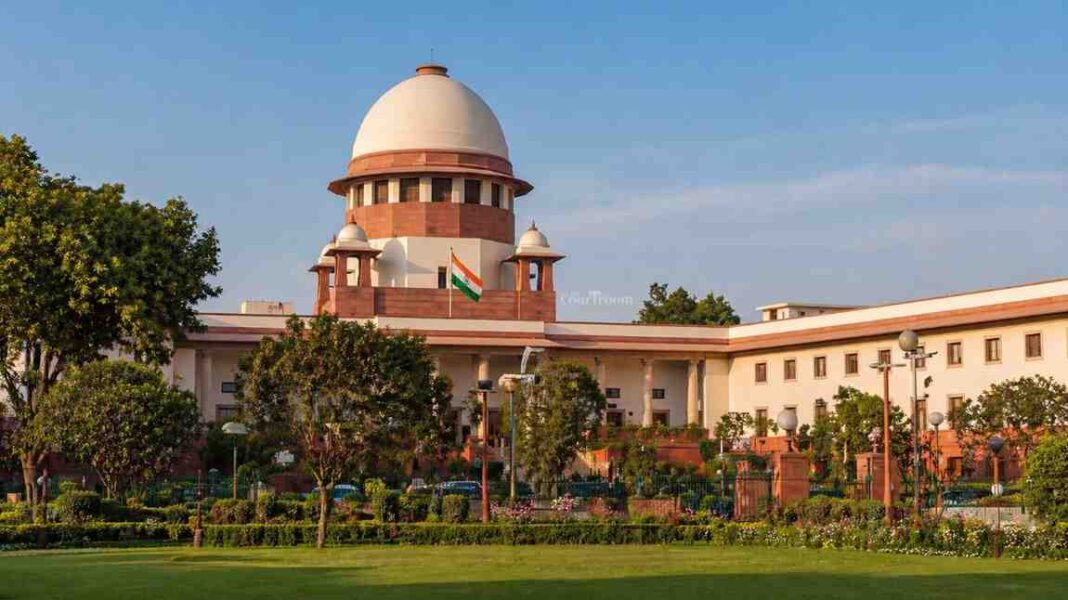
The child trafficking IVF surrogacy ART SOP debate has reached India’s highest court, with the Supreme Court directing the Union Government to respond to a damning report on regulatory gaps in fertility clinics.
According to India Legal, the bench of Justice JB Pardiwala and Justice K Viswanathan was hearing compliance matters arising from its April 2025 judgment in Pinki vs State of Uttar Pradesh (2025 INSC 482) when the issue came to a head.
Background: Child Trafficking IVF Surrogacy ART SOP
The crisis traces back to a major inter-state trafficking ring uncovered in Varanasi, Uttar Pradesh. FIR No. 201/2023 and FIR No. 193/2023 were registered at P.S. Bhelupur and P.S. Cantt., Varanasi respectively.
During that investigation, accused persons allegedly claimed to be egg donors associated with an IVF centre — a detail that alerted the Court to deeper systemic risks inside the ART and surrogacy ecosystem, per India Legal.
- On March 20, 2025, a trafficked child was rescued from the custody of accused Anil Prasad Baranwal in Kolkata following Supreme Court intervention, according to court records cited by Tribune India.
- On April 15, 2025, the Supreme Court pronounced its judgment in Pinki vs State of Uttar Pradesh — Criminal Appeal No. 1927 of 2025 — cancelling bail for the accused persons, per court records.
- In August 2025, the Court separately directed Delhi Police to investigate the concerned fertility centre and its compliance with the ART statutory framework, as reported by India Legal.
The NCRB Report 2024 data placed before the Court is staggering. Tribune India reports the figures show over 6,000 trafficking cases registered in a single year, missing children cases rising by 7.8%, and 1,47,175 children remaining untraced across the country.
The Assisted Reproductive Technology (Regulation) Act, 2021 and the Surrogacy (Regulation) Act, 2021 govern registration, infrastructure, and eligibility for fertility services. However, per India Legal, neither statute specifically addresses child trafficking risks or the potential misuse of fertility services for trafficking purposes.
What the Court Said
The bench of Justice JB Pardiwala and Justice K Viswanathan directed the Union Government to formally respond to the amicus curiae’s report, noting the complete absence of any SOP to address child trafficking through ART and surrogacy centres, according to India Legal.
Senior Advocate Aparna Bhat, serving as amicus curiae, was unsparing in her assessment. She told the Court: “There is no SOP currently existing for inter-state coordination in cases involving missing and trafficked children.”
She went further, stating: “A roadmap to prevent trafficking, a rehabilitation plan with adequate resources, and a SOP to prevent trafficking in the ART/surrogacy centres is a dire need.”
The amicus also acknowledged government intent, noting: “It is clear that there is an acknowledgment of the magnitude of trafficking, and the Union of India has shown intent to address the problem of trafficking.”
Critically, the Union Government’s own status reports filed before the Court admitted that no SOP existed for inter-state coordination in cases involving missing or trafficked children, per India Legal.
Senior Advocate Bhat proposed the constitution of a specialised committee headed by a retired Supreme Court judge. The committee would include an IVF expert, a senior police officer, a legal expert, and a social worker experienced in trafficking matters, as reported by India Legal.
While all States and Union Territories have constituted review committees and filed compliance reports, most have not specified the functions, reporting structures, or scope of these committees. Gujarat was cited as the lone exception, having framed detailed terms of reference and operational guidelines, per India Legal.
Additional Solicitor General Archana Dave Pathak, representing the Union of India, was asked by the bench to respond to the amicus’s report by August 19, 2026 — the next date of hearing, as reported by Tribune India.
What It Means for You
The absence of a child trafficking IVF surrogacy ART SOP means that one of India’s fastest-growing medical sectors currently operates without any specific safeguard against being exploited by traffickers — a gap the Supreme Court is now moving urgently to close.
For legal practitioners, child rights advocates, and fertility clinics, this ruling signals that comprehensive compliance obligations are imminent. Read more at The Courtroom. Original report: India Legal.
What is the Supreme Court directing in the child trafficking IVF surrogacy ART SOP case?
The Supreme Court bench of Justice JB Pardiwala and Justice K Viswanathan has directed the Union Government to respond to the amicus curiae’s report flagging the total absence of any SOP to prevent child trafficking through ART clinics and surrogacy facilities. The next hearing is on August 19, 2026, per Tribune India.
What did amicus curiae Senior Advocate Aparna Bhat propose to the Court?
Senior Advocate Aparna Bhat proposed constituting a specialised committee headed by a retired Supreme Court judge, to include an IVF expert, a senior police officer, a legal expert, and a social worker experienced in trafficking matters, as reported by India Legal.
What do NCRB 2024 figures say about child trafficking in India?
NCRB Report 2024 data placed before the Court shows over 6,000 trafficking cases registered during the year, a 7.8% rise in missing children cases, and 1,47,175 children remaining untraced across the country, according to Tribune India.
Final Thoughts on Child Trafficking IVF Surrogacy ART SOP
The Supreme Court’s intervention makes clear that India’s ART and surrogacy regulatory framework has a critical blind spot — neither the ART (Regulation) Act, 2021 nor the Surrogacy (Regulation) Act, 2021 addresses the trafficking risks that the Pinki vs State of Uttar Pradesh case has dramatically exposed.
With 1,47,175 children untraced nationally and no inter-state coordination SOP in place, the urgency of the Court’s direction cannot be overstated. Stay updated at The Courtroom.
Disclaimer
Disclaimer: This article is for general information only and does not constitute legal advice. Laws may change or vary by case — consult a qualified lawyer before acting. The Courtroom is not liable for any reliance on this content.

