


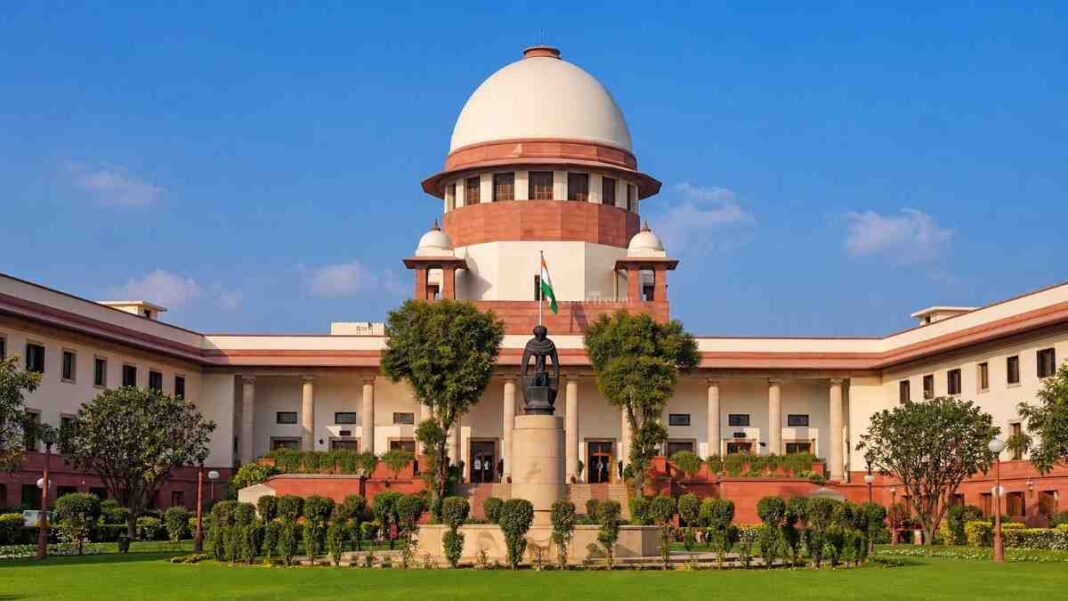
An Article 21 investigation delay spanning nearly two decades has forced the Supreme Court of India to intervene directly, issuing a landmark order against the State of Gujarat and Police Station Bhiloda on June 4–5, 2026.
According to LiveLaw, the bench of Justices Sanjay Karol and Augustine George Masih directed that the investigation be concluded within six weeks and a comprehensive report be filed before the Judicial Magistrate First Class (JMFC) at Bhiloda.
The ruling, carrying neutral citation 2026 INSC 626, arose from SLP(Crl) No. 17479/2025 and sent a sharp message to investigating agencies across the country: the Constitution does not permit investigations to drift on indefinitely.
Background: Article 21 Investigation Delay in the Bhiloda Case
The saga began on September 14, 2007, when the father of the appellants filed a criminal complaint before the JMFC at Bhiloda, as reported by Law Trend.
The complaint alleged that while the complainant was on Haj pilgrimage between February 5, 2002 and March 21, 2002, the accused forged his signatures and fabricated a partition deed and a sale deed for Survey No. 761 in Bhiloda Village, Gujarat, subsequently mutating their names in Revenue Records.
Charges were framed under multiple provisions of the Indian Penal Code, 1860, including Sections 120B (criminal conspiracy), 406 (criminal breach of trust), 420 (cheating), 463, 468, and 471 (forgery-related offences), and 114 (abettor present when offence is committed).
The timeline of institutional failure that followed is deeply troubling:
- On July 20, 2017, the Gujarat High Court directed preparation of an investigation report within six weeks, noting that seized materials had gone missing from police custody.
- By August 29, 2017, a Forensic Science Laboratory (FSL) report was prepared and forwarded to the JMFC on November 27, 2017, confirming that the accused had indeed forged the complainant’s signatures.
- On September 14, 2022, the Additional Judicial Magistrate, Bhiloda, again directed the investigating officer to carry out the investigation and file a chargesheet — yet no chargesheet was filed.
The State of Gujarat claimed that critical case papers were misplaced in transit via Outward No. 564/15 and that original records remained completely untraceable — a justification the Supreme Court squarely rejected.
What the Court Said
Per the Supreme Court’s judgment in Sahil Abdulsattar Mansuri v. Safimahamad Fafirbhai Mansuri (2026 INSC 626), the bench allowed the appeal and set aside the Gujarat High Court’s order that had refused to intervene, according to Verdictum.
The Court was unsparing in its assessment. In the words of Justices Sanjay Karol and Augustine George Masih:
“The case at hand is an unfortunate occasion where despite repeatedly knocking the doors of the Courts below, there has been an inordinate delay of nearly two decades in the investigation of the criminal complaint, which compels interference by this Court.”
The bench further observed: “From a bare perusal of the record, it is evident that the original complainant had run from pillar to post, for filing of a chargesheet in connection with his complaint, but to no avail.”
The Court anchored its reasoning firmly in constitutional guarantees, declaring: “The right to speedy trial is intrinsically linked to Article 21 of the Constitution.”
The Court relied on its own November 2025 precedent in Robert Lalchungnunga Chongthu v. State of Bihar (2025 SCC OnLine SC 2511), which had similarly emphasised the need for judicial oversight over prolonged investigations.
Beyond directing the six-week conclusion of the probe, the Court also ordered the State of Gujarat to file an affidavit specifying the action taken against the officer responsible for the loss of records, the reasons the JMFC was not informed of the inability to reconstruct the records, and the current compliance status. The matter has been listed for further hearing on July 14, 2026.
What It Means for You
This ruling reinforces that the right to speedy trial — enshrined under Article 21 — protects not just the accused but also complainants and victims who are entitled to see investigations completed without interminable delay.
Police departments and state governments are now on clear notice that misplacement of records, administrative lapses, or repeated non-compliance with magistrate orders will not shield them from Supreme Court intervention and accountability proceedings.
Citizens whose complaints remain uninvestigated for years may draw strength from this precedent to approach higher courts seeking time-bound directions, as the appellants did successfully in this case.
Read more at The Courtroom.
What is the neutral citation of the Supreme Court’s judgment in this case?
The neutral citation of the judgment is 2026 INSC 626, arising from SLP(Crl) No. 17479/2025 (Diary Number 50799/2025), heard on June 4, 2026, per the Supreme Court of India’s case listing.
Which judges presided over the Bhiloda investigation delay case?
The bench comprised Justice Sanjay Karol and Justice Augustine George Masih of the Supreme Court of India. Justice Karol authored the judgment, as reported by the Daily Pioneer and Verdictum.
What deadline did the Supreme Court set for Gujarat Police to conclude the investigation?
The Court directed the State of Gujarat and Police Station Bhiloda to conclude the investigation within six weeks and file a comprehensive report containing all available investigative material with the JMFC, according to LiveLaw. The compliance hearing is on July 14, 2026.
Final Thoughts on Article 21 Investigation Delay
The Supreme Court’s ruling in Sahil Abdulsattar Mansuri v. Safimahamad Fafirbhai Mansuri (2026 INSC 626) draws a clear constitutional line: an article 21 investigation delay of nearly two decades is not an administrative inconvenience — it is a fundamental rights violation that courts must remedy.
With the next compliance date set for July 14, 2026, the State of Gujarat and Police Station Bhiloda are now under the Supreme Court’s direct watch, and the judgment stands as a powerful reminder that justice delayed at the investigation stage is justice denied in the truest sense.
Stay updated at The Courtroom.
Disclaimer
Disclaimer: This article is for general information only and does not constitute legal advice. Laws may change or vary by case — consult a qualified lawyer before acting. The Courtroom is not liable for any reliance on this content.

