


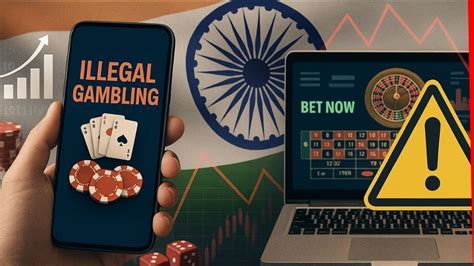
The online gaming ban India debate reached its sharpest inflection point on May 27, 2026, when the Supreme Court upheld state laws that prohibit wagering and betting on online games — including games of skill.
Delivered by a bench of Justice JB Pardiwala and Justice R Mahadevan, the judgment in State of Tamil Nadu & Ors. v. Junglee Games India Pvt. Ltd. & Ors. (2026 INSC 594) has immediate consequences for every Indian who plays on Dream11, MPL, or any similar platform.
Online Gaming Ban India: The Background
The online gaming ban India story began at the state level. Tamil Nadu first promulgated an Ordinance in November 2020, which was replaced by the Tamil Nadu Gaming and Police Laws (Amendment) Act, 2021.
Karnataka followed with its own Karnataka Police (Amendment) Act, 2021. Both laws were challenged before their respective High Courts, which struck down key provisions — setting the stage for the Supreme Court battle.
- The Madras High Court struck down portions of the Tamil Nadu legislation, prompting the State to appeal to the Supreme Court.
- The Karnataka High Court similarly struck down provisions of the Karnataka amendment, which was also challenged before the apex court.
- Tamil Nadu subsequently enacted the Tamil Nadu Prohibition of Online Gambling and Regulation of Online Gaming Act, 2022, reinforcing its regulatory framework while litigation continued.
Read our guide to understanding Indian law for broader context.
Key Developments in Online Gaming Ban India
The Supreme Court’s May 27, 2026 ruling resolved years of legal uncertainty in one sweeping judgment. Here are the three most consequential developments every online gaming user must understand.
- High Court judgments set aside: The Supreme Court held that the Madras High Court and Karnataka High Court had erred by adopting a narrow interpretation of Entry 34 of List II of the Constitution, which governs “betting and gambling.” Both rulings were reversed in their entirety.
- State laws declared constitutionally valid: The Court declared Part II of the Tamil Nadu Gaming and Police Laws (Amendment) Act, 2021; Sections 2(i), 21(iv), and Schedule II of the Tamil Nadu Prohibition of Online Gambling and Regulation of Online Gaming Act, 2022; and Sections 2, 3, 6, 8, and 9 of the Karnataka Police (Amendment) Act, 2021 to be intra vires the Constitution.
- Online betting via smartphones brought under state control: The Court explicitly noted that technological advancements have transformed every smartphone into a “virtual common gambling house,” giving states a direct legal hook to regulate and prohibit such activity under their public order powers.
Source: Supreme Court of India and India Code.
Legal Analysis: What Online Gaming Ban India Means
The judgment draws a sharp constitutional line. Playing a game of skill is protected commercial activity under Article 19(1)(g) of the Constitution. But wagering money on the outcome of that game — however skillful — is a different matter entirely.
The Court held that staking money on the uncertain outcome of any game, regardless of the skill involved, amounts to “betting” within Entry 34 of List II. Such activity is res extra commercium — outside the domain of trade protected by the Constitution — and states may prohibit it outright.
Crucially, the Court also held that states can invoke their power over “public order” under Entry 1 of List II of the Seventh Schedule to regulate and prohibit online betting and gambling. This dual constitutional basis — Entry 34 and Entry 1 — gives state legislatures exceptionally broad authority.
The practical implication is stark: the “skill game” defence, which platforms like Dream11 and MPL have long relied upon to distinguish themselves from gambling, does not protect the wagering element of their business model from state prohibition.
Why Online Gaming Ban India Matters to You
- Tamil Nadu and Karnataka users face the sharpest immediate impact. The laws now confirmed as constitutional contain provisions — including Section 3A of the Tamil Nadu amendment — that specifically prohibit wagering or betting in cyberspace. Users in these states playing for stakes on any platform operate in legally prohibited territory.
- The “game of skill” shield is gone for wagering. Platforms cannot argue that Dream11 fantasy cricket or MPL cash contests are protected commercial activity simply because they involve skill. The Supreme Court has severed the act of playing from the act of staking money on the outcome.
- Every smartphone is now a potential gambling house in law. The Supreme Court’s observation that smartphones have become “virtual common gambling houses” signals that courts will apply traditional gambling-house jurisprudence to app-based platforms going forward.
- Other states may now legislate freely. With the constitutional validity of the Tamil Nadu and Karnataka approach confirmed, other state governments have a clear legal template to enact similar prohibitions. Users on Dream11, MPL, and comparable platforms across India should watch for new state-level laws closely.
What is the online gaming ban India ruling?
The online gaming ban India ruling refers to the Supreme Court judgment in State of Tamil Nadu & Ors. v. Junglee Games India Pvt. Ltd. & Ors. (2026 INSC 594), delivered on May 27, 2026 by Justice JB Pardiwala and Justice R Mahadevan. The Court upheld Tamil Nadu and Karnataka laws that prohibit wagering and betting on online games, including games of skill, and reversed the High Court judgments that had struck those laws down.
How does the online gaming ban India affect me?
If you use platforms like Dream11 or MPL for cash contests while residing in Tamil Nadu or Karnataka, the laws upheld by the Supreme Court specifically prohibit wagering or betting in cyberspace in those states. The “game of skill” argument no longer shields the wagering component from state prohibition. Users in other states should monitor whether their state governments enact similar legislation following this ruling.
What is the legal framework for the online gaming ban India?
The primary legislative instruments confirmed as constitutional are: Part II of the Tamil Nadu Gaming and Police Laws (Amendment) Act, 2021; Sections 2(i), 21(iv), and Schedule II of the Tamil Nadu Prohibition of Online Gambling and Regulation of Online Gaming Act, 2022; and Sections 2, 3, 6, 8, and 9 of the Karnataka Police (Amendment) Act, 2021. The constitutional basis rests on Entry 34 (betting and gambling) and Entry 1 (public order) of List II of the Seventh Schedule.
What should I do if the online gaming ban India affects me?
First, check whether your state has enacted legislation similar to the Tamil Nadu or Karnataka laws. Avoid playing cash-stakes games on any platform if such laws apply in your state, as the Supreme Court has confirmed that wagering on game outcomes — even skill games — can be validly prohibited. Given the complexity of this evolving area of law, you should consult a qualified legal professional before taking any action that may have legal consequences.
Conclusion
The online gaming ban India ruling of May 27, 2026 is not a peripheral development — it is a structural shift in how Indian constitutional law treats the online gaming industry.
The Supreme Court has drawn an unambiguous line: playing a skill game is protected; staking money on its outcome is not. States now have constitutional authority — confirmed at the highest level — to shut down the wagering element of platforms like Dream11 and MPL within their borders.
For users, the immediate priority is understanding which state laws apply to them. For the industry, the judgment removes the legal foundation that sustained the cash-contest model in Tamil Nadu and Karnataka, and signals serious risk wherever similar legislation is introduced.
Stay ahead of Indian legal developments at The Courtroom — India’s sharpest legal news platform.
Disclaimer: This article is for general informational purposes only and does not constitute legal advice. Laws and regulations are subject to change. Readers are strongly advised to consult a qualified legal professional. The Courtroom makes no warranties regarding the accuracy or completeness of this information.

