


Table of Contents
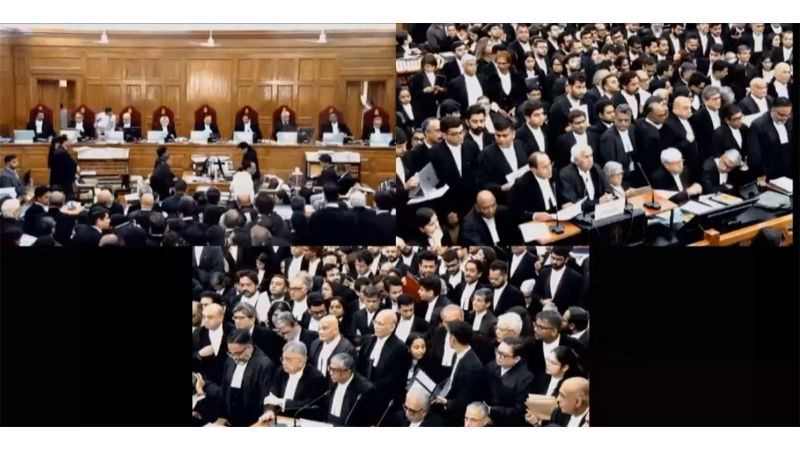
The Supreme Court’s nine-judge Constitution Bench resumed its landmark Sabarimala reference hearing on Day 8, with arguments intensifying around whether pre-constitutional religious customs can survive constitutional scrutiny under Article 25 and Article 26. The Sabarimala 9-Judge Constitution Bench hearing Day 8 brought into sharp focus the contested boundary between protected religious practice and constitutionally guaranteed equality.
What Happened
Senior counsel appearing for the Travancore Devaswom Board and associated interveners advanced arguments asserting that the exclusion of women of menstruating age from the Sabarimala temple constitutes an essential religious practice predating the Constitution itself. The Bench, presided over by the Chief Justice, questioned whether antiquity alone confers constitutional protection upon a custom that facially discriminates on grounds of physiological characteristics. Counsel for the petitioners countered that no pre-constitutional practice rooted in gender exclusion can claim shelter under Part III once the Constitution came into force in 1950.
Legal Context
The Sabarimala reference originated from the 2018 five-judge majority ruling permitting entry of women between ages 10 and 50, which was subsequently referred to a larger bench to resolve broader questions on religious autonomy. The nine-judge bench is tasked with authoritatively determining the scope of essential religious practices, the interplay between Articles 25 and 26, and whether religious denominations can maintain exclusionary practices against constitutional equality norms.
The doctrinal debate draws heavily from the essential religious practices test first articulated in Commissioner, Hindu Religious Endowments v. Shirur Mutt (1954), which held that only practices integral to a religion receive constitutional protection. The Durgah Committee v. Syed Hussain Ali (1961) ruling further refined this test by excluding superstitious or extraneous accretions from protected status — a precedent petitioners actively deploy against the Sabarimala exclusion.
Key Developments
- The Bench pressed respondents on whether a practice documented only through temple custom records, without scriptural basis, qualifies as “essential” under the Shirur Mutt standard.
- Arguments addressed whether Rule 3(b) of the Kerala Hindu Places of Public Worship (Authorisation of Entry) Rules, 1965 — which permits exclusion based on custom — is ultra vires the parent Act and unconstitutional.
- Counsel raised the comparative constitutional dimension, noting that Article 25’s guarantee of religious freedom is explicitly subordinated to public order, morality, and health, suggesting physiological exclusion cannot escape morality review.
- The Bench observed parallels with ongoing religious autonomy disputes in mosque-entry matters and Ayodhya review proceedings, signalling potential harmonised constitutional principles across cases.
Quick Answer
The Sabarimala 9-Judge Constitution Bench Day 8 hearing debated whether pre-constitutional temple customs excluding women constitute essential religious practices protected under Articles 25 and 26, or are overridden by constitutional equality and non-discrimination guarantees.
Impact
- A ruling that pre-constitutional customs must satisfy the essential practices test will significantly limit religious bodies’ capacity to enforce exclusionary traditions against women and marginalised groups across India’s diverse denominational landscape.
- The Bench’s engagement with comparative cases signals that the eventual judgment may provide unified constitutional guidance governing religious autonomy across Sabarimala, mosque-entry, and related matters simultaneously.
- The sustained scrutiny of Rule 3(b) suggests subordinate legislation enabling custom-based exclusion faces serious constitutional vulnerability regardless of the broader Article 25 outcome.
FAQ
Why does the pre-constitutional origin of a custom matter legally?
Pre-constitutional customs are not automatically protected. Post-1950, all practices must conform to fundamental rights, meaning antiquity provides historical context but not constitutional immunity.
How does Shirur Mutt apply to Sabarimala?
Shirur Mutt requires courts to determine whether a disputed practice is essential and integral to the religion itself — a threshold the Sabarimala exclusion must independently satisfy.
Conclusion
Day 8 confirmed that the nine-judge bench is conducting a rigorous doctrinal examination that may reshape religious autonomy jurisprudence well beyond Sabarimala itself. Follow thecourtroom.in’s serialised daily brief for continuous coverage of each hearing day.
Disclaimer: This article is based on publicly available information. Readers are advised to independently verify details.

