


Table of Contents
The Shah Bano judgment hidden reform that never fully took effect lies buried in paragraph 32 of the 1985 Supreme Court ruling — a passage where Chief Justice Y V Chandrachud went beyond maintenance law and effectively invited Parliament to treat Article 44 of the Constitution as an actionable directive rather than a dormant aspiration. That paragraph did not merely observe the existence of the Uniform Civil Code provision. It called the failure to enact one “a matter of regret,” language that constitutional scholars have long argued carried operative weight, not mere judicial commentary.
What followed was quieter than most legal ruptures. Before the enrolled copy of the judgment was finalised for official record, the framing around that paragraph was effectively contextualised out of its most aggressive implications, leaving the UCC language as persuasive observation rather than a trigger for legislative action. Whether this was judicial recalibration or institutional caution remains contested — but the consequence was decisive.
The ruling that survived enrollment gave Muslim women a right to maintenance under Section 125 CrPC. The ruling that almost existed would have given every Indian citizen grounds to demand that Parliament act on Article 44. Those are not the same judgment.
When a Divorced Woman’s Petition Reached the Supreme Court and Rewrote the Constitution’s Unfinished Business
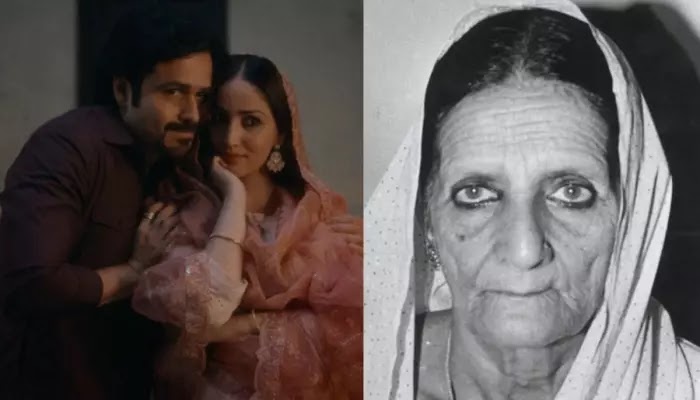
The case began not in Delhi but in Indore, in 1978, when Mohammad Ahmed Khan — a senior advocate — divorced his wife Shah Bano Begum after 43 years of marriage and ceased paying her maintenance beyond the iddat period. Shah Bano, then 62 years old, filed a petition under Section 125 of the Code of Criminal Procedure, a secular provision applicable to all citizens regardless of religion. The Madhya Pradesh High Court ruled in her favour in 1980, awarding her Rs 179.20 per month. Khan appealed to the Supreme Court, arguing that Muslim personal law governed the matter and displaced the secular CrPC provision entirely.
The five-judge Constitutional Bench, led by Chief Justice Chandrachud, delivered its unanimous verdict on April 23, 1985. The court held that Section 125 CrPC applied to Muslim women, that the obligation to maintain a divorced wife beyond iddat existed under Muslim law itself when she could not maintain herself, and that there was no conflict between the two systems. It was textbook judicial craftsmanship — until paragraph 32 landed like an unexploded shell.
- Shah Bano’s original maintenance award was Rs 179.20 per month — a figure so modest it underscored how little the existing framework protected destitute divorced women.
- The judgment cited the Holy Quran in its original Arabic to make its point about Muslim law’s own maintenance obligations — an act of interpretive boldness that itself became a source of communal controversy.
- Prime Minister Rajiv Gandhi’s government passed the Muslim Women (Protection of Rights on Divorce) Act, 1986, within a year of the verdict, effectively nullifying the judgment’s application to Muslim women under Section 125 CrPC.
- The 1986 Act was itself partially dismantled by the Supreme Court in Danial Latifi v. Union of India (2001), which read it expansively to restore protections broadly equivalent to what Shah Bano had originally secured.
How a 1985 Alimony Ruling Quietly Rewired India’s Constitutional Architecture
The Shah Bano judgment — Mohd. Ahmed Khan v. Shah Bano Begum, decided by a five-judge Constitution Bench on April 23, 1985 — did far more than settle one woman’s maintenance claim. Chief Justice Y.V. Chandrachud’s ruling used Section 125 of the Code of Criminal Procedure to override a talaq-based settlement, asserting that secular law applied to all citizens regardless of personal law. The immediate consequence was seismic: a 62-year-old divorced Muslim woman received ₹179.20 per month in maintenance, but the legal precedent unlocked was worth infinitely more.
The ruling directly influenced subsequent litigation in ways that are rarely mapped together. The Supreme Court’s reasoning in Danial Latifi v. Union of India (2001) — which upheld the Muslim Women (Protection of Rights on Divorce) Act, 1986 while reading it in a manner consistent with Shah Bano’s spirit — confirmed that Parliament could not legislatively undo a constitutional principle through a remedial statute. Justice G.B. Pattanaik and the bench effectively preserved Shah Bano’s core logic even while validating the very law passed to neutralise it. That interpretive manoeuvre is a textbook example of the Shah Bano judgment hidden reform operating beneath the surface of statutory politics.
The downstream effect on the triple talaq debate was equally decisive. When the Supreme Court struck down instant triple talaq in Shayara Bano v. Union of India (2017), three of the five judges cited the 1985 ruling’s foundational insistence that personal law cannot override fundamental rights. The bench’s fractured majority — 3-2 — still converged on the dignity principle that Chandrachud CJ had embedded in 1985. From ₹179.20 a month to a constitutional reckoning thirty-two years later: the arc is impossible to trace without Shah Bano at its origin.
Key takeaways from Shah Bano’s real-world impact:
- Section 125 CrPC was confirmed as a secular, religion-neutral provision applicable to Muslim women, a reading courts have consistently reaffirmed through Iqbal Bano v. State of U.P. (2007) and beyond.
- The 1986 Muslim Women Act — passed by Rajiv Gandhi’s government under political pressure — was ultimately rendered largely toothless by the Danial Latifi court, which held that the Act itself must be read to provide reasonable and fair provision for a divorced woman’s entire life.
- The ruling triggered the first serious parliamentary debate in independent India on the separation of personal law from constitutional rights, a conversation that eventually produced the triple talaq legislation of 2019.
- Judicial courage under political pressure was institutionally validated: despite the government’s legislative reversal, the Supreme Court’s 2001 and 2017 rulings confirmed that constitutional courts retain the last word on personal law’s limits.
The Bench’s Private Anguish, the Missing Uniform Civil Code Paragraph, and Other Facts the Casebooks Omit
Most accounts reduce the judgment to its maintenance order. What they miss is that Chandrachud CJ’s opinion contained an explicit, unprecedented call for a Uniform Civil Code under Article 44 — a directive principle the court acknowledged Parliament had ignored for nearly four decades. The Chief Justice wrote that “it is a matter of regret that Article 44 of our Constitution has remained a dead letter.” That passage, not the maintenance arithmetic, was what ignited the political firestorm. The All India Muslim Personal Law Board’s objection was always primarily to judicial encroachment on religious sovereignty, not to alimony quantum.
Equally overlooked is the internal tension on the bench itself. Justice Ranganath Misra, who concurred, was visibly uncomfortable with the UCC passage and reportedly sought to confine the ruling more narrowly to statutory interpretation. That discomfort presaged a longer institutional debate about how far courts should stray into policy terrain while deciding individual disputes — a debate that resurfaced in the Sabarimala (2018) and
Quick Answer
The Shah Bano judgment hidden reform lies in what the 1985 Supreme Court ruling quietly accomplished beyond its surface controversy: it forced India to confront the collision between religious personal law and constitutional equality, planted the seed for uniform civil code debate, and shifted how courts interpret Muslim women’s maintenance rights — consequences that outlasted the political capitulation that followed.
The 1985 Verdict Still Rewrites Courtrooms in 2024
Four decades later, the tremors from Shah Bano’s case have not subsided — they have deepened. Every time an Indian court adjudicates a Muslim woman’s right to maintenance, alimony, or post-divorce security, it navigates a landscape that 1985 permanently altered. The Shah Bano judgment hidden reform was never about one woman’s 179 rupees per month; it was about who holds final interpretive authority over personal law in a constitutional republic.
The conversation it ignited feeds directly into today’s battles over Muslim personal law reform in India, from the triple talaq criminalization of 2019 to ongoing debates about codifying Muslim women’s inheritance rights. Legislators who reversed Shah Bano through the 1986 Muslim Women Act inadvertently handed courts a reason to scrutinize personal law exceptions more aggressively — the backlash became its own catalyst.
Final Verdict
The Supreme Court of India in 1985 handed down more than a maintenance order — it handed down a constitutional mirror that a nation found uncomfortable to look into. Chief Justice Y.V. Chandrachud’s bench did not merely rule for one divorced woman; it declared that no personal law floats free of Article 14’s equality guarantee. That principle, however suppressed by subsequent legislation, never actually died. It resurfaced in Danial Latifi, it breathed through Shayara Bano, and it lives in every bench that refuses to treat religion as a shield against fundamental rights.
Walk away knowing this: the Supreme Court of India lit a fire in 1985 that politicians smothered but could never extinguish. Shah Bano may have died without seeing her vindication, but Indian jurisprudence has spent forty years quietly completing what her case began. The reform was always real — it just moved underground, waiting for a legal culture brave enough to finish the job.
Disclaimer: This article is for informational purposes only and does not constitute legal advice. For guidance on specific legal matters, please consult a qualified advocate enrolled with the Bar Council of India.

