


Table of Contents
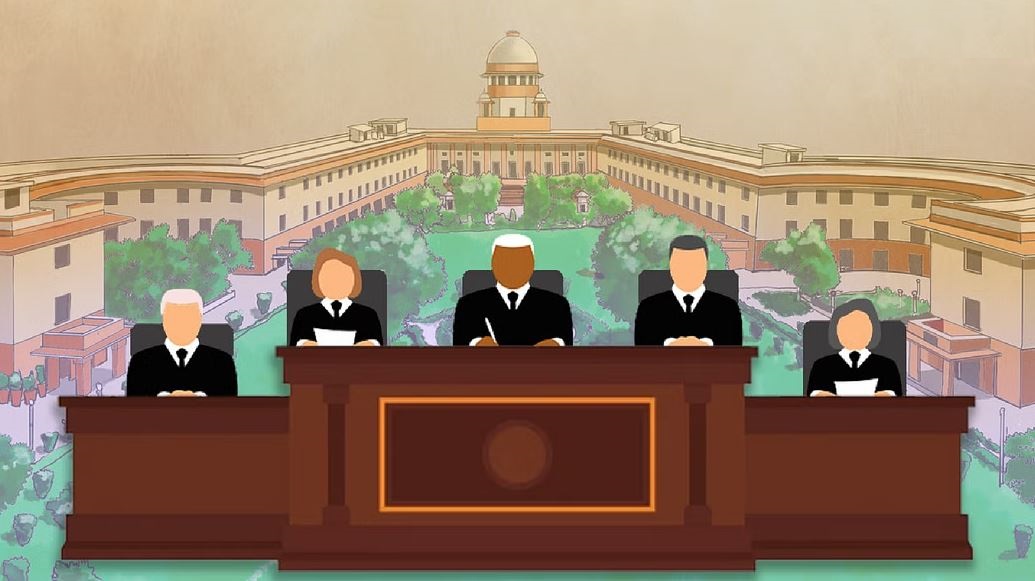
A single 1973 Supreme Court ruling — delivered by a bench of thirteen judges — secretly stripped Parliament of its unlimited power to rewrite the Constitution. The case was Kesavananda Bharati v. State of Kerala, and it remains the most consequential of all famous constitutional cases India has ever produced.
The petitioner was a Kerala religious head fighting a land acquisition order. What began as a property dispute ended with the Supreme Court inventing a doctrine that no textbook had yet named: the Basic Structure doctrine. Parliament could amend the Constitution, the judges held, but it could never destroy its soul.
The verdict came down 7-6 — razor thin, politically explosive. Prime Minister Indira Gandhi’s government had been pushing hard for unfettered amendment power. Three of the judges who ruled against her were quietly superseded in appointments just days later, a judicial crisis that shook the institution to its foundation.
From a Kerala Monastery to the Courtroom That Shook New Delhi
The seeds of Kesavananda were planted in the turbulent decade between 1951 and 1967, when Parliament kept amending the Constitution to shield land reform laws from judicial review. The Supreme Court had already drawn a line in Golak Nath v. State of Punjab (1967), ruling that Fundamental Rights could not be amended at all — a ruling so absolute that it pushed the government toward confrontation.
Indira Gandhi’s government responded with the 24th, 25th, and 29th Constitutional Amendments, deliberately designed to overrule Golak Nath and restore Parliament’s supremacy. Swami Kesavananda Bharati’s petition, filed in 1970, became the vehicle through which the Supreme Court was forced to draw a definitive line between amendment and destruction.
Four facts that define this constitutional moment:
- The Kesavananda bench of thirteen judges remains the largest ever assembled in the Supreme Court of India.
- The final judgment runs to over 700 pages across eleven separate opinions, making it one of the longest in Indian legal history.
- Justice H.R. Khanna, who cast the decisive vote, later paid a career price — superseded for Chief Justice by Indira Gandhi’s government during the Emergency.
- The Basic Structure doctrine born in this case was later used in Minerva Mills (1980) and S.R. Bommai (1994) to strike down constitutional amendments and protect federalism.
When the Supreme Court Rewrote the Rules of Power: Landmark Rulings That Shook India’s Constitution
The 1973 Kesavananda Bharati verdict didn’t just resolve a land dispute — it invented the Basic Structure doctrine, a legal shield that no Parliament has been able to pierce since. Chief Justice S.M. Sikri led a 13-judge bench, the largest in Supreme Court history, and the 7-6 split decision permanently limited Parliament’s power to amend the Constitution. Prime Minister Indira Gandhi was so rattled by the ruling that she superseded three senior judges to appoint A.N. Ray as Chief Justice — a brazen act of judicial interference that itself became a constitutional flashpoint.
The 1980 Minerva Mills case pushed back even harder. Justice Y.V. Chandrachud struck down clauses 4 and 5 of the 42nd Amendment, which Indira Gandhi’s government had inserted during the Emergency to make Parliament’s amending power absolute. The Court held that destroying judicial review was equivalent to destroying the Constitution itself. These famous constitutional cases India has produced form a living legal architecture — each ruling built on the last, shaping how fundamental rights and state power interact to this day.
Then came the 2017 Puttaswamy judgment, where a nine-judge bench unanimously declared privacy a fundamental right under Article 21. Justice D.Y. Chandrachud’s concurring opinion explicitly overruled the 1954 M.P. Sharma case and the 1961 Kharak Singh ruling that had denied privacy that status for over six decades. The judgment has since anchored challenges to Aadhaar, surveillance laws, and data protection legislation — making it arguably the most consequential ruling of the 21st century so far.
Key Takeaways:
- The Basic Structure doctrine from Kesavananda Bharati remains the single most powerful check on Parliament’s constitutional authority, even 52 years later.
- The Emergency-era 42nd Amendment attempted to make India a parliamentary supremacy state; the Supreme Court reversed that transformation within four years.
- Privacy was not a recognised fundamental right in India for 63 years — from 1954 until Puttaswamy in 2017.
- Every major data governance debate in India today — from Aadhaar to surveillance — flows directly from a constitutional ruling, not legislation.
The Verdicts Lawyers Know But Textbooks Forget
Most people can name Maneka Gandhi v. Union of India (1978) as the case that expanded Article 21, but few know exactly what it dismantled. Justice P.N. Bhagwati and the bench rejected the narrow “procedure established by law” interpretation that had prevailed since A.K. Gopalan v. State of Madras (1950) — a ruling that had for 28 years allowed the state to detain citizens so long as any procedure existed on paper, however arbitrary. The Maneka Gandhi verdict introduced the requirement that procedure must also be “right, just and fair,” importing a substantive due process standard that American constitutional law had debated for a century.
The Shankari Prasad case of 1951 is equally overlooked despite being foundational. It was the first time Parliament’s power to amend fundamental rights was directly challenged, and the Supreme Court upheld it — a position it would reverse 22 years later in Kesavananda. Between 1951 and 1973, Parliament amended the Constitution 24 times, many touching fundamental rights, under the assumption the Court had blessed unlimited amending power. Kesavananda retroactively reframed that entire period as constitutionally precarious.
Hidden Facts Most People Miss:
- The Golaknath case (1967) created a legal paradox that lasted six years. Justice K. Subba Rao’s majority held that Parliament could not amend fundamental rights at all — a position so extreme that it forced Parliament to pass the 24th Amendment in 1971 just to restore its own powers, which then triggered Kesavananda in 1973.
- **The ADM Jabalpur case (1976) had four of five judges rule against habeas corpus during the Emergency
Quick Answer
The most famous constitutional cases India has produced—from Kesavananda Bharati’s Basic Structure doctrine to ADM Jabalpur’s dark chapter on personal liberty—have fundamentally rewritten how citizens relate to state power. These ten landmark disputes didn’t just settle legal arguments; they drew the permanent boundaries of democracy, fundamental rights, and judicial independence that govern 1.4 billion lives today.
Why These Verdicts Still Echo in Every Courtroom, Parliament, and Protest Sign
The famous constitutional cases India witnessed across five decades weren’t historical accidents. They emerged from real political pressure, Emergency-era fear, caste discrimination, and economic inequality—forces that haven’t disappeared. When the Supreme Court today rules on electoral bonds, sedition laws, or reservation policies, it is still arguing with Maneka Gandhi, still answering Golaknath, still building on the scaffolding these cases erected. Studying them isn’t nostalgia; it’s a map of ongoing power struggles.
For readers who want to trace this living constitutional thread further, the landmark judgments that changed Indian law extend well beyond these ten cases into criminal procedure, environmental rights, and gender justice. Each ruling referenced in those pages carries the fingerprints of the constitutional battles covered here, reminding us that law is never written once—it is rewritten every time a judge picks up the pen.
Final Verdict
If there is one non-negotiable takeaway, it is this: the Indian Constitution survives not because it is a perfect document, but because ordinary citizens and fearless lawyers kept dragging it back from the edge when power tried to hollow it out. Kesavananda stopped a government from dismantling fundamental rights. Vishaka forced the state to acknowledge workplace dignity. Navtej Singh Johar told millions of citizens they belong. None of these victories arrived without cost, and none are permanent without vigilance.
The Supreme Court of India remains the arena where these battles continue in real time, case by docket-heavy case. The ten decisions explored in this article are not museum pieces—they are loaded precedents that lawyers cite this morning, that judges weigh tonight, and that citizens will need again tomorrow. Constitutional democracy in India is an argument that never fully closes. The wisest thing a reader can do is stay in the room.
Disclaimer: This article is for informational purposes only and does not constitute legal advice. For guidance on specific legal matters, please consult a qualified advocate enrolled with the Bar Council of India.

