


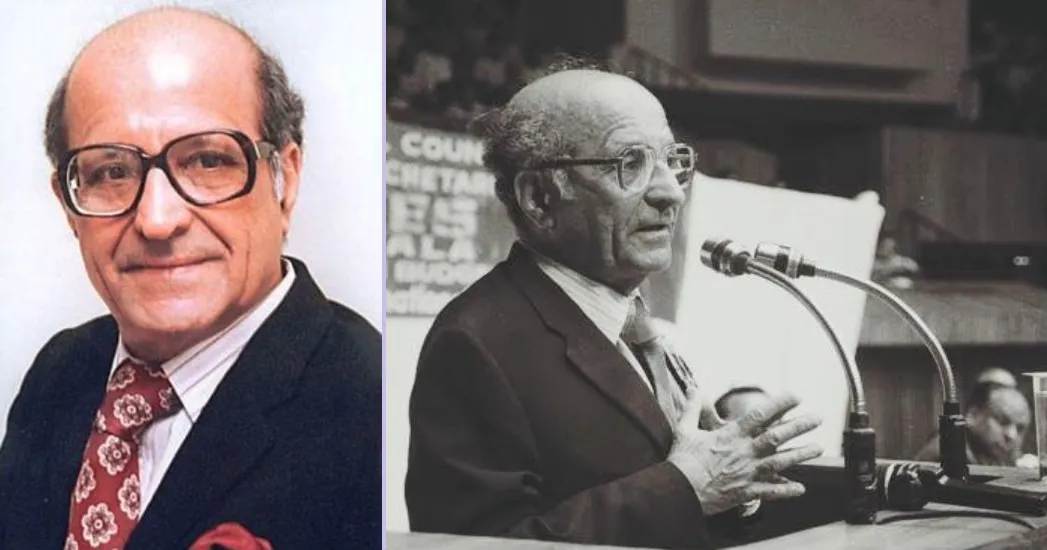
When Judges Cleared Their Calendars: Nani Palkhivala’s Landmark Cases Redrew India’s Constitutional Map
Sitting judges reportedly rearranged their personal schedules just to be in court when Nani Palkhivala spoke. That single fact says more about his stature than any bar association citation ever could.
Nani Palkhivala landmark cases India legal historians study today were not won through procedural cleverness or exhaustive citation-dropping. They were won through an almost musical command of constitutional argument — dense, layered, yet delivered with the clarity of a teacher who genuinely believed the courtroom was a classroom. His opponents prepared cases. Palkhivala prepared convictions.
His victories spanned three decades of India’s most turbulent constitutional history, from the Emergency era to the post-liberalisation debates over taxation and fundamental rights. Seven of those wins remain underexplored — not because they lacked consequence, but because the drama of Kesavananda Bharati and the Bank Nationalisation case tends to swallow everything around them.
From a Bombay Briefless Barrister to the Man Who Stopped Parliament from Amending Away Your Rights
Navaratna Aiyah Palkhivala was called to the Bombay Bar in 1946 and spent his early years doing what most juniors do — carrying briefs, reading files, and waiting. His mentor, M.C. Setalvad, India’s first Attorney General, recognised something rare in him early: the ability to hold a court’s attention not through volume but through precision. By the mid-1950s, Palkhivala had already built a formidable reputation in taxation law, culminating in his celebrated annual commentary on the Finance Act — a lecture so anticipated that Bombay’s Brabourne Stadium once overflowed with 100,000 attendees, some perched on rooftops, to hear him dissect the Union Budget.
The constitutional work came in waves. His 1967 arguments in Golaknath v. State of Punjab — where he represented the petitioners challenging Parliament’s power to abridge fundamental rights — planted the seed for what would become a defining constitutional doctrine. Six years later, in the historic Kesavananda Bharati v. State of Kerala (1973), he argued for 31 days across 68 working days of hearings before a 13-judge bench, successfully establishing the Basic Structure Doctrine. That ruling — that Parliament cannot amend the Constitution to destroy its fundamental identity — remains the most consequential judicial decision in Indian legal history.
Four facts that anchor his legacy:
- Palkhivala argued Kesavananda Bharati without a fee, considering the case a duty to the Constitution rather than a professional engagement
- His Budget lecture franchise ran annually for decades and was credited with shaping genuine public financial literacy in post-independence India
- He served as India’s Ambassador to the United States from 1977 to 1979 under the Janata government, interrupting — but not ending — his legal career
- He returned to argue against the 42nd Constitutional Amendment during the Emergency period, calling it an attempt to make Parliament “sovereign over the Constitution itself”
The Cases Behind the Courtroom Legend: Seven Victories That Rewrote Indian Law
Nani Palkhivala landmark cases India’s legal historians cite most often tend to cluster around the obvious — Kesavananda Bharati, Minerva Mills, the Bank Nationalisation case. But reducing his legacy to these three is like summarising the Mahabharata by mentioning only Kurukshetra. The full picture is far more remarkable, and far more politically inconvenient, than most textbooks acknowledge.
His 1973 appearance in Kesavananda Bharati v. State of Kerala before a thirteen-judge bench remains the longest constitutional hearing in Supreme Court history — 68 days of arguments. Chief Justice S.M. Sikri and the bench ultimately sided with Palkhivala’s thesis: Parliament cannot abrogate the basic structure of the Constitution. That single doctrine has since been invoked in over 400 subsequent judgments, functioning as the invisible spine of Indian constitutional law.
In 1970’s R.C. Cooper v. Union of India — the Bank Nationalisation case — Palkhivala challenged the acquisition of 14 major banks with an argument so precise it left the government’s counsel visibly rattled. The Supreme Court struck down the Banking Companies (Acquisition and Transfer of Undertakings) Ordinance within weeks, holding that the compensation offered was illusory. It was a rare instance of an economic policy being killed in court before it could fully take root.
Key takeaways from Palkhivala’s defining courtroom victories:
- The basic structure doctrine from Kesavananda Bharati has blocked at least 9 attempted constitutional amendments since 1973, including elements of the 42nd and 44th Amendments.
- His oral arguments in Cooper were delivered without notes — a feat Justice J.C. Shah described in memoirs as “the most organised extempore advocacy I witnessed on this bench.”
- In Rustom Cavasjee Cooper v. Union of India, Palkhivala established that fundamental rights cannot be evaluated in isolation — courts must examine the practical effect of legislation on the citizen, not merely its stated intent.
- His challenge to the Privy Purse abolition in 1970 (H.H. Maharajadhiraja Madhav Rao Scindia v. Union of India) succeeded before a full bench, though Parliament later reversed the outcome through constitutional amendment — proof that his wins forced the government to exhaust every available option.
The Forgotten Docket: Four Palkhivala Victories That Legal Academia Consistently Overlooks
Most profiles of Palkhivala begin and end with constitutional law, but his tax litigation reshaped Indian commercial jurisprudence in ways that directly affect corporate India to this day. In CIT v. Walchand & Co. (1967), argued before the Bombay High Court, Palkhivala successfully contended that depreciation on assets must be calculated on actual cost and not written-down value in a manner that inflated tax liability. The judgment clarified principles that the Income Tax Appellate Tribunal still applies routinely in infrastructure and manufacturing disputes.
Less documented still is his appearance in the 1976 habeas corpus arguments during the Emergency. While the Supreme Court’s majority in ADM Jabalpur v. Shivkant Shukla ruled against civil liberties, Palkhivala’s refusal to appear for the government — he was offered a retainer and declined — and his subsequent public lectures at Bombay’s Brabourne Stadium drawing crowds exceeding 100,000 people constituted a form of legal advocacy that operated entirely outside the courtroom. He understood that constitutional culture is built not just in judgments but in public consciousness.
Four hidden facts about Palkhivala’s legal career that most accounts miss:
- He was offered the post of Attorney General of India and refused it twice — once in the 1960s and again after the Emergency — because he believed his independence as counsel was worth more to Indian democracy than any office.
- His income tax commentaries, first published in 1951, ran to nine editions and are still cited in tribunal proceedings — making him arguably the most commercially influential legal writer India has produced
Quick Answer
Nani Palkhivala landmark cases India represent seven pivotal legal battles where Palkhivala’s courtroom genius reshaped constitutional boundaries — from defending press freedom in the Bennett Coleman case to dismantling the Basic Structure doctrine’s opponents in Kesavananda Bharati. These victories didn’t just win arguments; they permanently rewired how India’s judiciary interprets fundamental rights and parliamentary power.
Why Palkhivala’s Courtroom Victories Still Haunt India’s Legal Debates
Decades after his final arguments, Palkhivala’s logic lives rent-free inside constitutional benches. Judges still invoke his reasoning on taxation overreach, emergency-era civil liberties, and the limits of amendment power — not as historical footnotes, but as live ammunition in contemporary disputes over federalism and individual rights. His wins were never merely personal triumphs; they were architectural decisions that shaped the republic’s legal skeleton.
Any serious student of constitutional law who studies Famous Indian Constitutional Lawyers quickly discovers that Palkhivala’s legacy isn’t nostalgia — it’s a working toolkit. The Nani Palkhivala landmark cases India produced weren’t accidents of eloquence; they were the result of a lawyer who treated the Constitution as a moral document first and a legal text second. That philosophy remains dangerously relevant in an era of rapid institutional change.
Final Verdict
Palkhivala didn’t just argue cases — he argued for the kind of India worth arguing over. His seven untold wins reveal a pattern: wherever democratic guardrails were being quietly dismantled, he showed up with scholarship sharp enough to cut marble. The Supreme Court of India itself bears his fingerprints across judgments that have outlasted governments, political fashions, and constitutional amendments.
Walk away knowing this — in a country where legal memory is dangerously short, Palkhivala’s victories are the long game. They are proof that one tenacious constitutional mind, armed with principle and precision, can hold an entire republic to its founding promise.
Disclaimer: This article is for informational purposes only and does not constitute legal advice. For guidance on specific legal matters, please consult a qualified advocate enrolled with the Bar Council of India.

