


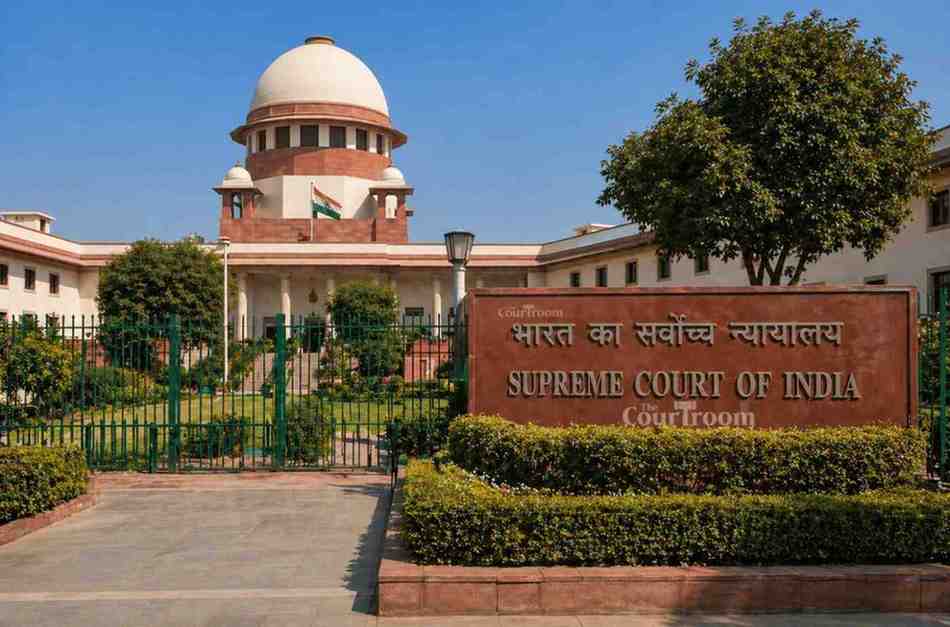
The reserved judgment timeline HC framework changed fundamentally on 29 May 2026, when the Supreme Court issued binding directions on all High Courts governing the pronouncement of reserved verdicts.
Decided in Pila Pahan @ Peela Pahan v. State of Jharkhand (2026 INSC 604), the guidelines carry the authority of Article 142 and are operative from the date of judgment.
For practising lawyers and in-house counsel, these directions create enforceable timelines — and, critically, structured remedies — where previously there was largely silence.
Reserved Judgment Timeline HC: Background
The case arose from Writ Petition (Criminal) No. 169 of 2025, filed by Pila Pahan @ Peela Pahan and others against the State of Jharkhand.
It was heard along with W.P.(Crl.) No. 252/2025 and W.P.(C) Nos. 489/2025, 482/2025, 492/2025, 519/2025, 506/2025, and 508/2025 — a cluster of matters raising connected concerns.
- The Bench comprised Chief Justice of India Surya Kant (the 53rd CJI, sworn in 24 November 2025) and Justice Joymalya Bagchi (serving until 22 March 2030). The judgment was authored by CJI Surya Kant.
- The pre-existing statutory backdrop engaged by the Court includes Section 353(1), Code of Criminal Procedure, 1973; Section 392, Bharatiya Nagarik Suraksha Sanhita, 2023; and Order XX Rule 1, Code of Civil Procedure, 1908.
- The constitutional provisions engaged are Article 21 (right to life and personal liberty), Article 142 (complete justice), and Articles 226 and 227 (High Court jurisdiction).
What Was Decided
The Supreme Court issued comprehensive guidelines described by the Bench itself as “binding directions upon all High Courts across the country,” operative from the date of the judgment — 29 May 2026.
The guidelines address four distinct areas: procedural timelines for the pronouncement of judgments and orders; uploading of judgments; monitoring of delayed matters; and remedies available to litigants in cases of prolonged delay before High Courts.
The authority for these directions is Article 142 of the Constitution. The Court thus converted what had been a statutory aspiration under the CrPC, BNSS, and CPC into a judicially enforceable regime with structured escalation.
As of 25 June 2026 — just four days before this article’s fact-check date — the Supreme Court itself referred a litigant seeking relief to invoke these very guidelines rather than approach the Supreme Court directly, confirming they are live and operative.
Legal Analysis
The doctrinal move here is significant. By grounding the guidelines in Article 142, the Court has placed the reserved judgment timeline HC framework beyond ordinary legislative amendment.
The pre-existing provisions — Section 353(1) CrPC, Section 392 BNSS, and Order XX Rule 1 CPC — imposed timelines for pronouncement but offered litigants limited enforcement tools. The new framework fills that gap.
The engagement of Article 21 signals the Court’s view that prolonged delay in pronouncing a reserved judgment is not merely a procedural lapse but a potential deprivation of personal liberty and access to justice.
The monitoring and remedies limbs of the guidelines are especially notable: they create a graduated response mechanism, allowing litigants to seek relief within the High Court system before escalating to the Supreme Court.
The Supreme Court’s own conduct on 25 June 2026 — redirecting a petitioner to the Pila Pahan guidelines — is early evidence of how the higher court intends the framework to operate in practice.
Implications for Practice
- For litigators: The reserved judgment timeline HC guidelines are now the first port of call when a High Court bench reserves judgment and fails to pronounce within the prescribed window. Counsel should calendar judgment reservation dates and be prepared to invoke the guidelines’ monitoring and remedy mechanisms before approaching the Supreme Court.
- For in-house / GC: Matters before High Courts — particularly commercial or regulatory disputes — may now be resolved more predictably. Factoring in the new timeline framework when advising on dispute resolution strategy and settlement timing is advisable. Brief external counsel specifically on the escalation mechanism.
- For students: Pila Pahan is a landmark exercise of Article 142 jurisdiction in the administrative law of courts. It is directly relevant to courses on constitutional law, civil procedure, and criminal procedure, and offers a clean example of the Supreme Court converting a statutory aspiration into a binding, supervised obligation.
- What to watch: The guidelines are operative as of 29 May 2026 and have already been applied by the Supreme Court as of 25 June 2026. Practitioners should monitor High Court administrative orders and Chief Justice circulars implementing the directions, and watch for any challenge or review petition before the Supreme Court.
Key Citations & Primary Sources
Primary case: Pila Pahan @ Peela Pahan and others v. State of Jharkhand and another, W.P.(Crl.) No. 169/2025 (with W.P.(Crl.) No. 252/2025 and W.P.(C) Nos. 489/2025, 482/2025, 492/2025, 519/2025, 506/2025 & 508/2025), decided 29 May 2026. Citations: 2026 INSC 604 | 2026 SCO.LR 6(1)[5] | 2026 LiveLaw (SC) 571.
Statutory provisions engaged: Section 353(1), Code of Criminal Procedure, 1973 · Section 392, Bharatiya Nagarik Suraksha Sanhita, 2023 · Order XX Rule 1, Code of Civil Procedure, 1908.
Constitutional provisions: Articles 21, 142, 226, and 227 of the Constitution of India.
Primary sources: Supreme Court of India · India Code. Related: more analysis for the profession.
Last verified: 29 June 2026.
What did the Court hold in the reserved judgment timeline HC case?
In Pila Pahan @ Peela Pahan v. State of Jharkhand (2026 INSC 604, decided 29 May 2026), a Bench of CJI Surya Kant and Justice Joymalya Bagchi issued comprehensive guidelines under Article 142 of the Constitution, binding on all High Courts, governing timelines for pronouncing reserved judgments, uploading of judgments, monitoring of delayed matters, and remedies for litigants facing prolonged delays.
What does the reserved judgment timeline HC framework change for practitioners?
It converts what were previously aspirational statutory timelines under the CrPC, BNSS, and CPC into binding, judicially supervised obligations. Counsel can now invoke the guidelines’ structured remedy mechanism when a reserved judgment is unduly delayed, before escalating to the Supreme Court. The Supreme Court itself applied this approach as recently as 25 June 2026.
Which provisions does the reserved judgment timeline HC framework rely on?
The guidelines are issued under Article 142 of the Constitution. They operate against the backdrop of Section 353(1) of the Code of Criminal Procedure, 1973; Section 392 of the Bharatiya Nagarik Suraksha Sanhita, 2023; and Order XX Rule 1 of the Code of Civil Procedure, 1908. Articles 21, 226, and 227 of the Constitution are also engaged.
How should lawyers advise clients on reserved judgment timeline HC delays?
Counsel should note the date of judgment reservation, monitor the applicable timeline under the Pila Pahan guidelines, and invoke the monitoring and remedy mechanism prescribed in those guidelines if the deadline is breached. Approaching the Supreme Court directly for relief relating to a delayed High Court judgment is now a secondary step. Always verify the current status and specific timelines against the primary judgment at main.sci.gov.in.
Conclusion
The reserved judgment timeline HC framework established in Pila Pahan @ Peela Pahan v. State of Jharkhand (2026 INSC 604) is a structural change in how High Court judgment delays are governed and remedied.
Issued under Article 142 and confirmed as operative within weeks of pronouncement, these guidelines give counsel a concrete enforcement pathway — one the Supreme Court has already directed litigants to use.
Practitioners who calendar judgment reservation dates and brief clients on the escalation mechanism will be best placed to deploy this framework effectively.
Follow sharper legal analysis at The Courtroom — For the Profession.
Disclaimer: This article is for general informational and professional-awareness purposes only and does not constitute legal advice or an opinion on any matter. Always verify the current status of any judgment or provision against the primary source. The Courtroom makes no warranties as to accuracy or completeness.

