


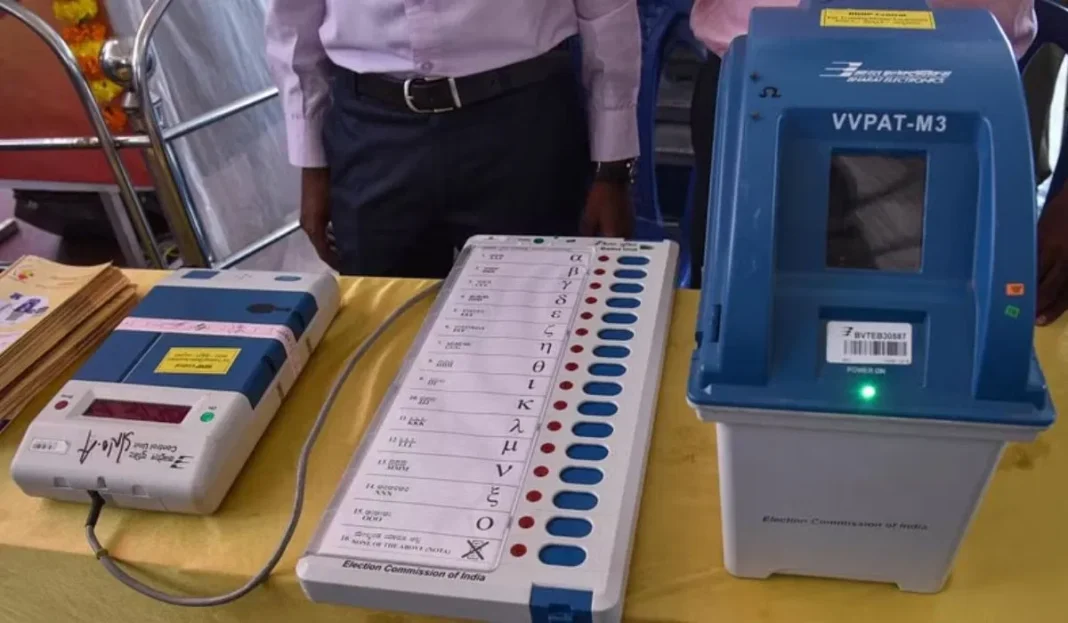
The question of how EVM VVPAT evidence India is generated, stored, and legally challenged sits at the heart of Indian electoral integrity.
Every general election produces millions of data points locked inside tamper-resistant machines. Understanding the legal architecture that governs them is no longer optional for informed citizens or practising lawyers.
EVM VVPAT Evidence India: The Background
The statutory foundation for EVMs is Section 61A of the Representation of the People Act, 1951. It authorises the Election Commission to specify constituencies where voting machines may be used.
Section 61A was inserted by a December 1988 amendment and came into force on 15 March 1989. This single provision unlocked the entire modern EVM framework that India relies on today.
- Rules 49A to 49X of the Conduct of Election Rules, 1961 govern the actual process of voting by EVM, covering everything from machine preparation to sealing after polling.
- Rules 50 to 61 and Rule 66A govern the counting of votes recorded in EVMs, providing the procedural backbone for result declaration.
- The Conduct of Election Rules, 1961 were amended in 2013 to formally allow VVPAT machines, which were first piloted in the Noksen assembly by-election in Nagaland that same year.
Read our guide to understanding Indian law for broader context.
Key Developments in EVM VVPAT Evidence India
The EVM-VVPAT system has evolved through legislative amendments, machine architecture upgrades, and the gradual expansion of VVPAT deployment across India’s vast electorate.
- Legislative authorisation (1988–89): Section 61A of the Representation of the People Act, 1951 came into force on 15 March 1989, giving the Election Commission legal authority to roll out electronic voting machines.
- VVPAT rules notified (2013): The Conduct of Election Rules, 1961 were amended to accommodate VVPATs. The Noksen by-election in Nagaland served as the first live pilot, establishing a proof of concept before nationwide deployment.
- Election petition window: Under Section 81 of the Representation of the People Act, 1951, any candidate or elector may challenge an election before the relevant High Court within forty-five days of the returned candidate’s election — making the preservation of EVM and VVPAT evidence legally time-critical.
Source: Supreme Court of India and India Code.
Legal Analysis: What EVM VVPAT Evidence India Means
The ECI-EVM system comprises three interdependent components: the Ballot Unit, the Control Unit, and the VVPAT. Each plays a distinct evidentiary role if a poll is disputed.
Votes are stored in non-rewritable memory, meaning they cannot be altered or deleted once recorded. Each microcontroller across the ballot unit, VVPAT, and chip is one-time programmable — permanently set on insertion and incapable of subsequent modification.
This architecture directly shapes what courts can and cannot examine in an election petition. The machine’s design limits the scope of tampering allegations that can be credibly advanced before a High Court.
A single EVM can record a maximum of 2,000 votes, and the system is capped at five votes per minute. These design constraints are themselves legally relevant parameters when assessing poll booth data in disputed elections.
The forty-five-day petition window under Section 81 of the Representation of the People Act, 1951 means that any party seeking to place EVM or VVPAT data before a court must move quickly. Evidence preservation and timely legal action are inseparable in this framework.
EVM VVPAT Evidence India Matters to You
- For voters: The VVPAT was introduced precisely to give voters an independent, paper-based confirmation of their vote. Its 2013 rule amendment and Noksen pilot were driven by demands for greater electoral transparency.
- For candidates and political parties: The forty-five-day window under Section 81 of the Representation of the People Act, 1951 is a hard deadline. Missing it extinguishes the right to challenge an election result, regardless of the merits.
- For lawyers: Understanding the technical architecture — non-rewritable memory, one-time programmable microcontrollers, and the three-unit system — is essential before advising a client on the viability of an election petition.
- For legal observers: The ongoing judicial and legislative evolution of VVPAT verification standards means this area of law continues to develop and warrants close monitoring.
Conclusion
EVM VVPAT evidence India is governed by a layered legal architecture that spans a 1989 statutory amendment, detailed conduct rules, a paper-trail mechanism introduced in 2013, and a strict forty-five-day window to challenge election outcomes in court.
The technical design of EVMs — non-rewritable memory, one-time programmable microcontrollers, and a three-unit system — is not merely an engineering choice. It is a legally consequential structure that shapes what courts can examine and what challenges can succeed.
Stay ahead of Indian legal developments at The Courtroom — India’s sharpest legal news platform.
Disclaimer: This article is for general informational purposes only and does not constitute legal advice. Laws and regulations are subject to change. Readers are strongly advised to consult a qualified legal professional. The Courtroom makes no warranties regarding the accuracy or completeness of this information.

