


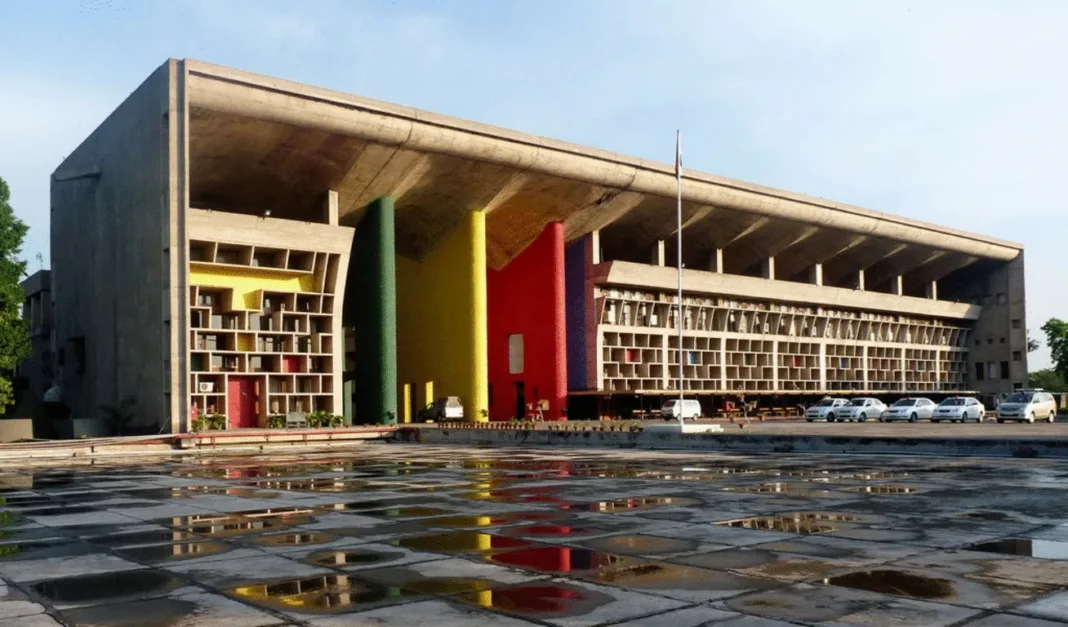
The Punjab & Haryana High Court has directed the Haryana government to extend 7th Pay Commission benefits to contractual employees of the National Health Mission, with revised pay scales effective from January 1, 2016, along with arrears and interest.
Justice Sandeep Moudgil allowed a batch of writ petitions filed by NHM workers including Staff Nurses, Pharmacists, ANMs, Lab Technicians, Computer Assistants, and Medical Social Workers, according to LiveLaw. The judgment is cited as [2026 LiveLaw (PH) 206].
Background: How We Got Here
NHM employees in Haryana have been engaged on a contractual basis, receiving fixed consolidated honoraria under a Centre-State funding arrangement with a 60:40 ratio. Their service conditions have long remained in a grey zone despite structured reforms being introduced over the years.
In 2018, the Haryana government introduced Service Bye-laws that established a structured pay regime for NHM employees — covering pay scales, increments, and allowances — with concurrence from the Finance Department, as reported by The Tribune. The 6th Pay Commission benefits had previously been extended to NHM employees on that basis.
- The State Health Society recommended extension of 7th Pay Commission benefits to NHM employees, citing their contributions during the COVID-19 pandemic, and the Chief Minister approved this proposal on January 1, 2024, according to The Tribune.
- Despite the Chief Minister’s approval, implementation did not follow, and the respondents could not demonstrate before the Court that this approval had ever been withdrawn, as per LiveLaw.
- The petitioners — identified in the lead petition as Priyawart and Others — were not seeking regularisation; they sought enforcement of the Service Bye-laws, 2018, and parity with similarly situated employees, according to LiveLaw.
The Ruling — Key Findings
Justice Moudgil found the State’s denial of 7th Pay Commission benefits to be arbitrary and unsustainable, particularly given the existence of approved Service Bye-laws, Finance Department concurrence, and the Chief Minister’s January 2024 approval.
The Court drew a direct comparison with employees of the Haryana School Shiksha Pariyojana Parishad (HSSPP), who are governed by the same SSA/HSSPP framework and had already been granted 7th Pay Commission benefits from January 1, 2016. Denying the same to NHM employees was held to be discriminatory under Article 14 of the Constitution, per LiveLaw.
Justice Moudgil held: “The action of the respondents in denying the benefits of the 7th Pay Commission to the petitioners despite approved Service Bye-laws, Finance Department concurrence, executive approval and parity maintained with employees of Haryana School Shiksha Pariyojana Parishad is unsustainable in law.”
The Court also invoked the principle of legitimate expectation, holding that the uninterrupted application of the Bye-laws over a considerable period created a reasonable expectation that existing pay structures would continue, as reported by The Tribune.
On the State’s argument that differences in funding patterns justified unequal treatment, the Court was unequivocal: “A mere reference to differences in funding patterns or the nature of schemes cannot constitute a valid or reasonable basis to deny equal treatment and sustain such distinction under Article 14 of the Constitution.”
The Court also noted the petitioners’ contractual status could not dilute their constitutional protections, stating: “The fact that the petitioners are contractual employees does not dilute their entitlement to protection against arbitrary State action.”
On the role of bureaucratic delay, Justice Moudgil observed: “Administrative delay or departmental indecision cannot be permitted to defeat a benefit which stands acknowledged and approved at the highest executive level.”
The Court also acknowledged the exceptional services rendered by NHM employees during the COVID-19 pandemic, noting they cannot be treated as detached from the State machinery, according to LiveLaw.
The specific directions issued by the Court are as follows. Pay scales are to be revised in accordance with the 7th Pay Commission with effect from January 1, 2016. Arrears are confined to the 38-month period immediately preceding the date of institution of each respective writ petition. Interest at 6% per annum is to be paid on the arrears. The State has been given 12 weeks from receipt of a certified copy of the judgment to comply, as reported by The Tribune.
Reactions & What’s Next
No post-judgment statements from State counsel or the Haryana government have been reported in the sources reviewed. The ruling, delivered on June 23, 2026, is binding on the respondent authorities, who must now initiate pay revision and arrear calculation within the 12-week window ordered by the Court.
The judgment sets a significant precedent for the treatment of NHM contractual employees across Haryana’s public health infrastructure, particularly regarding Article 14 parity claims tied to approved executive decisions.
More legal news at The Courtroom.
Which employees are covered by the Punjab & Haryana High Court’s NHM 7th Pay Commission ruling?
The ruling covers contractual employees of the National Health Mission in Haryana, including Staff Nurses, Pharmacists, ANMs, Lab Technicians, Computer Assistants, and Medical Social Workers, as reported by The Tribune.
From what date will NHM employees receive revised pay scales under the 7th Pay Commission?
The Court directed that the revised pay scales apply with effect from January 1, 2016, along with arrears limited to 38 months prior to each petitioner’s filing date and interest at 6% per annum, according to LiveLaw and The Tribune.
What is the legal citation for the Punjab & Haryana High Court’s NHM pay commission judgment?
The judgment is cited as [2026 LiveLaw (PH) 206] and was delivered by Justice Sandeep Moudgil of the Punjab & Haryana High Court, according to LiveLaw.
Why did the Court hold the denial of 7th Pay Commission benefits to be unconstitutional?
The Court held the denial arbitrary under Article 14 of the Constitution, citing approved Service Bye-laws, Finance Department concurrence, the Chief Minister’s January 2024 approval, and the parity already extended to HSSPP employees under the same framework, per LiveLaw.
Disclaimer
Disclaimer: This article is for general information only and does not constitute legal advice. Laws may change or vary by case — consult a qualified lawyer before acting. The Courtroom is not liable for any reliance on this content.

