


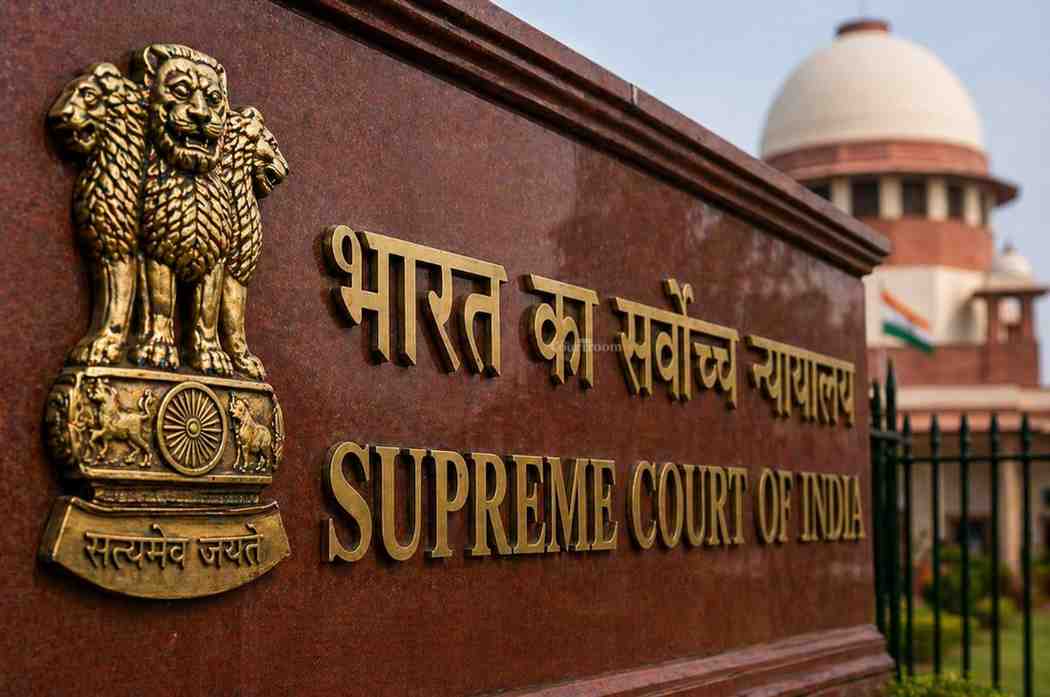
The Supreme Court of India on July 7, 2026, ruled that banks and the Indian Banks’ Association cannot blacklist advocates through the IBA Caution List for alleged professional negligence, and directed the Bar Council of India to conduct a comprehensive performance audit of its disciplinary mechanisms.
The judgment was delivered by a bench of Justices Pamidighantam Sri Narasimha and Alok Aradhe in Ajay Vijh v. Indian Banks Association & Ors. (2026 INSC 670), a 41-page ruling authored by Justice Narasimha, according to Bar & Bench.
Background: How We Got Here
Ajay Vijh was enrolled as an advocate in 1998 and served on the panel of Canara Bank. On August 8, 2015, he furnished a legal opinion regarding immovable property offered as security for a credit facility, according to LawBeat.
On July 27, 2018, Canara Bank’s regional manager issued a communication alleging Vijh’s legal opinion was erroneous — specifically, that he had failed to note that part of the mortgaged property had already been sold, exposing the bank to financial risk.
- On January 31, 2019, Canara Bank removed Vijh from its panel on grounds of negligence in title verification.
- On February 5, 2020, Vijh’s name was incorporated into the IBA Caution List (serial number 781) under the category ‘Third Party Entities Involved in Fraud’, with the remark ‘Given Wrong Legal Opinion And Negligence in Conducting Search and Bank Was Exposed to Loss and Financial Risk’, per LawTrend.
- The Allahabad High Court dismissed his writ petition as non-maintainable, holding that the IBA is not ‘State’ under Article 12 of the Constitution. The Supreme Court reversed this finding entirely.
The appeal arose out of SLP (C) No. @ Diary No. 10787/2024, also cited as 2026 LiveLaw (SC) 656, as reported by LiveLaw.
The Ruling — Key Findings
The bench set aside the Allahabad High Court’s order and declared that Vijh’s inclusion in the IBA Caution List was illegal and without jurisdiction, directing respondents to remove his name with immediate effect, according to Bar & Bench.
The Court held that disciplinary authority over advocates rests exclusively with Bar Councils under Sections 35 and 36 of the Advocates Act, 1961. It further held that inclusion in the Caution List infringed Vijh’s fundamental right to practise his profession under Article 19(1)(g) of the Constitution, per LawTrend.
The Court clarified that the IBA Caution List — governed by an RBI Circular dated March 16, 2009, issued under Section 35A of the Banking Regulation Act — is intended only for fraud, dishonesty, criminality, or serious misconduct. Mere professional negligence cannot trigger inclusion, according to LawBeat.
The bench stated plainly: “Banks have the choice of disengaging a legal professional and also to remove his/her name from the panel if the services are not up to the mark, but an action in the nature of public declaration to all other banks about the conduct, competency or incompetency of an advocate is clearly beyond their power and jurisdiction and clearly illegal.”
On institutional accountability, the Court directed the BCI to constitute a committee and undertake a comprehensive performance audit of disciplinary mechanisms administered by it and by State Bar Councils. The bench ordered BCI to file an affidavit of action proposed or taken, per LiveLaw.
The Court declared: “We direct the Bar Council of India to constitute a committee and seek an objective assessment of its duties of self-regulation of professional conduct and discipline, consider the report and file an affidavit of the action proposed/taken.”
The bench was emphatic on the broader stakes: “Independence of the legal profession is as important as independence of judiciary. In fact, their independence from the executive and the legislature is the foundation of the rule of law and democracy.”
The Court also directed BCI to institutionalise Continuing Legal Education for enrolled advocates and to constitute a committee of senior and junior lawyers along with institutional experts to examine the establishment of a National Legal Academy, modelled on the National Judicial Academy, as reported by Business Standard.
The bench added: “The right and privilege of self-regulation of the Bar, through peer review, must withstand scrutiny on the touchstones of transparency, accountability, and institutional effectiveness.”
Clarifying that the exercise is constructive rather than punitive, the Court observed: “The purpose of this exercise is not to attribute blame but to identify systemic strengths and weaknesses.”
Reactions & What’s Next
The appellant Ajay Vijh was supported by the Bar Council of India, the Ministry of Law and Justice, and Amicus Curiae Senior Advocate Maninder Singh, according to LiveLaw and LawTrend.
The matter has been listed for further directions on August 31, 2026, for the Court to review BCI’s progress on the performance audit and the National Legal Academy proposal, per Bar & Bench.
More legal news at The Courtroom.
What did the Supreme Court rule about the IBA Caution List and advocates?
The Supreme Court ruled on July 7, 2026, that banks and the IBA cannot include advocates in the Caution List merely on allegations of professional negligence. Only Bar Councils hold disciplinary authority over advocates under Sections 35 and 36 of the Advocates Act, 1961. The Court declared Ajay Vijh’s inclusion illegal and ordered his name removed immediately.
What has the Supreme Court directed the Bar Council of India to do?
The Court directed BCI to constitute a committee to conduct a comprehensive performance audit of disciplinary mechanisms administered by it and State Bar Councils, and to file an affidavit of action proposed or taken. BCI was also directed to institutionalise Continuing Legal Education and to explore the creation of a National Legal Academy. The next date for compliance review is August 31, 2026.
What is the IBA Caution List and what is it meant for?
The IBA Caution List is a mechanism established under an RBI Circular dated March 16, 2009, issued under Section 35A of the Banking Regulation Act. It is intended to alert member banks about third-party entities — including advocates, valuers, and chartered accountants — involved in fraud, dishonesty, criminality, or serious misconduct. The Supreme Court held it cannot be used to flag mere professional negligence.
Disclaimer
Disclaimer: This article is for general information only and does not constitute legal advice. Laws may change or vary by case — consult a qualified lawyer before acting. The Courtroom is not liable for any reliance on this content.

