


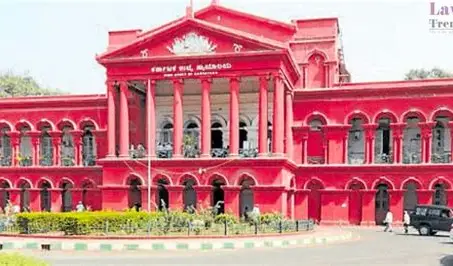
On July 17, 2026, Justice H.P. Sandesh of the Karnataka High Court dismissed a criminal revision petition filed by a Mangaluru-based businessman and upheld orders directing him to pay Rs 16 lakh towards his unmarried adult daughter’s first-year MD Dermatology fees.
The Court held that Section 20 of the Protection of Women from Domestic Violence Act, 2005 is wide enough to cover postgraduate educational expenses, and that a father’s obligation to fund his daughter’s education does not cease upon her attaining majority, according to LiveLaw.
Background: How We Got Here
The daughter, born in August 2000, had completed her MBBS with financial support from her father while her parents were still living together. After the breakdown of the marital relationship, the father refused to fund her postgraduate medical studies.
She cleared NEET PG with a rank of 11,722 and secured admission through the Karnataka Examination Authority to the MD Dermatology programme at Fr. Muller’s Institute of Medical Education and Research, Mangaluru, at an annual fee of Rs 13.87 lakh — substantially reduced from the standard private rate of Rs 75 lakh, per LawTrend.
She then moved an application before the Magistrate under Section 20(d) of the DV Act seeking Rs 16 lakh towards her first-year postgraduate medical education costs, according to Verdictum. The Trial Court and the Appellate Court both ruled in her favour. The father challenged those concurrent findings before the High Court in the case captioned VC v. VPC.
- The father argued that his daughter had already completed MBBS with his financial support and had now attained majority, making her ineligible for relief under the DV Act.
- He also contended that she received a monthly stipend of Rs 60,000 during her MD course, which sufficiently covered her living needs.
- He further argued that she should fund her postgraduate education through a bank loan rather than invoke the DV Act.
The Ruling — Key Findings
Justice H.P. Sandesh framed the core question as whether an unmarried major daughter could invoke Section 20 of the DV Act for monetary relief to pursue postgraduate education, and whether attaining majority disentitled her from such relief, as reported by Verdictum.
The Court answered both questions against the father, stating in unequivocal terms:
“Section 20 of the DV Act is for monetary relief in addition to the maintenance and the father has to meet the educational expenses of the daughter, whether it is for under graduation or post graduation.” — Justice H.P. Sandesh, Karnataka High Court.
The Court further declared: “It is the obligation of the parents to provide basic amenities, health and education, which cannot be said to be extinguished on the child attaining majority.”
Justice Sandesh distinguished the Supreme Court’s ruling in Abhilasha v. Parkash (2021), which concerned maintenance under Section 125 CrPC and the Hindu Adoptions and Maintenance Act. The Court held that those findings had no application here because the present dispute arose under the DV Act — a special enactment with a broader monetary relief framework, per Verdictum.
The Court relied instead on the Supreme Court’s 2025 decision in Neelima Choure v. Vijay Choure, which recognised a daughter’s legally enforceable right to secure educational expenses from her parents within their financial capacity, according to Verdictum.
Justice Sandesh also noted that the father — a Mangaluru-based businessman whose financial capacity was evidenced by crore-level transactions and multiple large loans — could not resist payment by pointing to the daughter’s Rs 60,000 monthly stipend. The bank loan argument was similarly rejected as without merit.
The Court further observed that the parents were living together without differences when they initially enrolled their daughter in her MBBS programme, and the father could not now refuse to bear her postgraduate expenses following the breakdown of the marriage, per LawTrend.
Reactions & What’s Next
Advocate S. Balakrishnan appeared for the petitioner-father before the Karnataka High Court. Advocate Ajay Prabhu M. represented the respondent-daughter, according to Verdictum.
With the High Court dismissing the revision petition on July 17, 2026, the concurrent orders of the Trial Court and Appellate Court directing payment of Rs 16 lakh stand confirmed. No further appellate challenge has been reported in the available sources.
The ruling is significant because it definitively places postgraduate educational expenses within the scope of Section 20(d) of the DV Act and forecloses arguments based solely on the child’s majority or the availability of alternative financing such as student loans.
Disclaimer
Disclaimer: This article is for general information only and does not constitute legal advice. Laws may change or vary by case — consult a qualified lawyer before acting. The Courtroom is not liable for any reliance on this content.

