


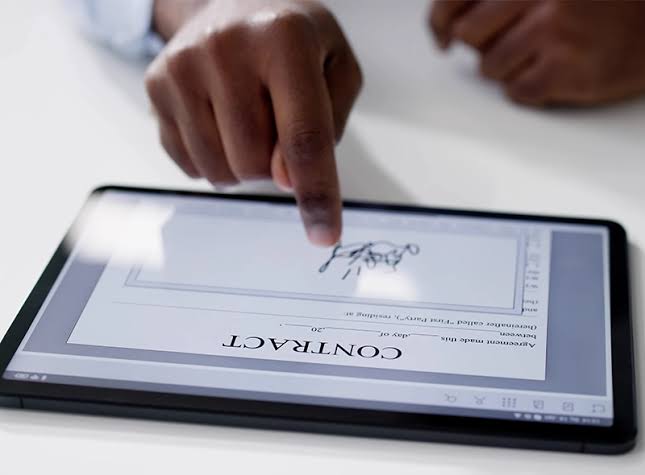
In short: AI contract e-signature India legal validity is well-supported by existing law. The Information Technology Act, 2000 and the Indian Contract Act together confirm that electronically formed and electronically signed contracts are valid and enforceable — provided basic contract principles are met and the document is not on the IT Act’s excluded list.
Key points
- Section 10A of the IT Act, 2000 states that a contract cannot be treated as unenforceable solely because electronic means were used to form it — this is the central provision covering AI-generated contracts.
- Section 5 of the IT Act makes an electronic signature legally equivalent to a handwritten signature wherever Indian law requires a signature.
- For a contract to be valid — whether AI-generated or not — it must still satisfy the basic requirements of the Indian Contract Act: offer, acceptance, consideration, and legal enforceability.
- India recognises two main categories of e-signature: certificate-based Digital Signature Certificates (DSCs) and other IT Act-notified techniques such as Aadhaar eSign and PAN eSign.
- The Controller of Certifying Authorities (CCA) under the Ministry of Electronics and Information Technology (MeitY) is the regulatory authority overseeing e-signatures in India.
- Several important documents — including wills, powers of attorney, negotiable instruments (other than cheques), and trust deeds — are excluded from the IT Act’s e-signature regime by its First Schedule.
What gives an AI-generated contract its legal standing?
When a contract is drafted or generated using an AI tool, the question of validity comes down to the same legal tests that apply to any electronically formed agreement.
Section 10A of the IT Act is the key provision. It is technology-neutral and explicitly says a contract will not be denied enforceability just because electronic means were used at any stage of its formation — including drafting, communication of offer, or acceptance.
This means the medium through which the contract was created — an AI tool, an email exchange, or an online platform — does not by itself invalidate the agreement.
The Indian Contract Act still applies
AI-generated or not, every contract must meet the fundamental requirements set out in Section 10 of the Indian Contract Act. These are: a lawful offer, acceptance of that offer, lawful consideration, parties competent to contract, free consent, and a lawful object.
An AI tool can help draft precise, well-structured contract language, but it cannot supply these legal elements on your behalf. You must ensure the agreement, once generated, genuinely reflects the intent of the parties and satisfies each of these requirements.
For a plain-language breakdown of core contract law concepts, see the Law for You guides at The Courtroom, which cover everyday legal topics in accessible terms.
What types of e-signatures are valid in India?
Indian law recognises e-signatures through two broad categories under the IT Act.
| Type | Legal basis | Examples | Best used for |
|---|---|---|---|
| Digital Signatures (PKI-based) | Section 3, IT Act, 2000 | DSC token (USB-based certificate) | High-value commercial contracts, government filings, company incorporations |
| IT Act-Notified eSign Techniques | Section 3A and Second Schedule, IT Act, 2000 | Aadhaar eSign, PAN eSign, DocSigner | Everyday business agreements, vendor contracts, employment letters |
Section 5 of the IT Act provides that wherever any law requires a signature, an electronic signature recognised under the Act is legally sufficient. Both categories above carry the same legal standing as a handwritten signature.
The technical and procedural rules governing how these signatures must be created, authenticated, and validated are set out in the Electronic Signature or Electronic Authentication Technique and Procedure Rules, 2015 (ESEATPR).
What about a simple typed name or click-to-agree?
Under Indian law, private contracts between parties do not always require any signature at all. Section 10 of the Indian Contract Act sets the conditions for validity, and a formal signature is not among them for most commercial agreements.
This means a well-drafted AI-generated contract accepted by clicking “I agree” or by conduct can, in many cases, be legally binding — so long as the Section 10 elements are present.
Which documents cannot use e-signatures?
The First Schedule to the IT Act lists documents that are expressly excluded from the Act’s electronic records and e-signature regime. These are important exceptions every founder and SME owner must know.
| Document type | Why it matters |
|---|---|
| Negotiable instruments (other than cheques) | Promissory notes, bills of exchange — must be in physical, signed form |
| Power of attorney | Must be executed as a physical instrument; e-signature is not valid |
| Trust deeds | Governed by the Indian Trust Act; physical execution required |
| Wills | Must comply with the Indian Succession Act; e-wills are not valid |
If your AI-generated document falls into any of these categories, electronic execution is not legally effective regardless of how well-drafted the contract is. You will need physical signatures, proper attestation, and in some cases registration.
Practical checklist for AI-generated contracts
If you are using an AI tool to draft and execute commercial agreements, work through these questions before relying on the document:
1. Is it on the excluded list? Check the First Schedule of the IT Act. If the document type is listed, do not rely on an e-signature.
2. Does it meet Section 10 of the Contract Act? Confirm that offer, acceptance, consideration, competent parties, free consent, and lawful object are all present and clearly reflected in the text.
3. Does the counterparty’s e-signature qualify under the IT Act? For high-value transactions, a DSC or Aadhaar eSign provides stronger evidentiary footing than a simple typed name.
4. Is stamp duty payable? E-contracts may attract stamp duty depending on the document type and the state in which it is executed. Non-payment does not void the contract but affects admissibility in evidence. Verify state-specific stamp laws before execution.
5. Do sector-specific rules apply? Certain regulated sectors — banking, insurance, securities — have their own documentation requirements. An AI-generated contract in these sectors should be reviewed by a qualified advocate before execution.
Frequently asked questions
Is an AI-generated contract legally valid in India?
Yes, in most cases. Section 10A of the IT Act, 2000 provides that a contract cannot be denied enforceability solely because electronic means were used to form it. The AI tool is simply the drafting medium; what matters is that the contract satisfies the basic requirements of the Indian Contract Act — offer, acceptance, consideration, and legal enforceability — and does not fall within the excluded categories in the First Schedule of the IT Act.
Which e-signature type should an SME use for everyday contracts?
For most commercial agreements such as vendor contracts, service agreements, and employment letters, an Aadhaar eSign or PAN eSign — both notified under Section 3A and the Second Schedule of the IT Act — is sufficient and practically convenient. For high-value transactions or documents requiring stronger legal certainty, a certificate-based Digital Signature Certificate (DSC) issued through a MeitY-authorised Certifying Authority provides the highest level of authentication under Indian law.
Can a will or power of attorney be executed using an AI-generated e-signature?
No. Wills and powers of attorney are expressly excluded from the IT Act’s e-signature regime by its First Schedule. These documents must be executed as physical instruments, with handwritten signatures, proper attestation, and — where required — registration under the applicable law. An AI tool can assist in drafting the text, but the execution must be physical and comply fully with the relevant statute.
Primary sources
- Information Technology Act, 2000 and the Indian Contract Act, 1872 — India Code (indiacode.nic.in)
- Ministry of Electronics and Information Technology (MeitY) — Controller of Certifying Authorities
- Supreme Court of India — judgments on contract and electronic evidence
Written by Editorial Team, The Courtroom · Published 2026-07-14 · Last verified 2026-07-14
This article is for general information only and is not legal advice. Laws change; verify against the primary sources cited and consult a qualified advocate for your situation.

