


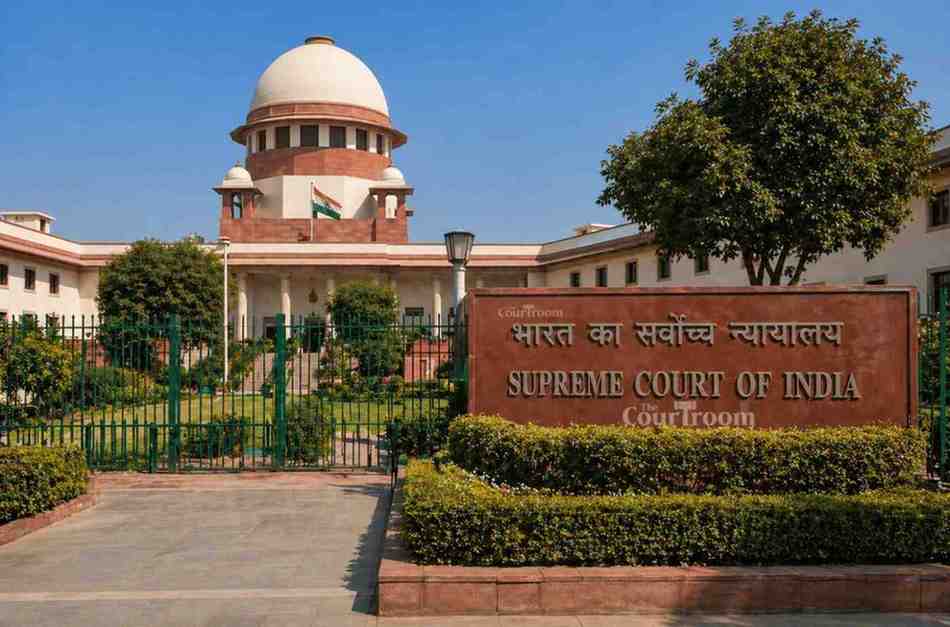
On July 1, 2026, a Supreme Court bench comprising Justice Sanjay Karol and Justice Nongmeikapam Kotiswar Singh delivered a landmark judgment laying down uniform guidelines for using Income Tax Returns (ITRs) to assess the annual income of deceased or injured motor accident victims under the Motor Vehicles Act, 1988.
The ruling, cited as 2026 INSC 661 and 2026 SCC OnLine SC 1256, resolves a long-standing inconsistency across Motor Accident Claims Tribunals (MACTs) and High Courts nationwide, according to LiveLaw.
Background: How We Got Here
The lead case, Rashmirekha Tripathy and Another v. The Branch Manager (Legal Claims), Sriram General Insurance Company Limited and Others (SLP(C) No. 27220 of 2024), arose from a fatal road accident on May 29, 2018, on the National Highway near Kaliabali Chakka, Odisha.
Manoranjan Pandey, aged 39, a proprietor of a construction business, died when a rashly driven truck struck his vehicle, according to Lawtrend.
- The MACT, Behrampur assessed the deceased’s annual income at Rs. 15 lakhs based on AY 2018–19 ITR and awarded total compensation of Rs. 2,27,00,064, applying a multiplier of 16.
- The Orissa High Court reduced the award to Rs. 1,87,75,150 by averaging two ITRs to arrive at Rs. 13,33,226 per annum and lowering the multiplier from 16 to 15, per Lawtrend.
- The Supreme Court also took up two companion appeals: Rajani & Ors. v. Mukesh & Ors. (SLP(C) No. 3088 of 2025) and Smt. Rekha & Ors. v. Dinesh Porwal & Ors. (SLP(C) No. 7735 of 2025).
Prior to this ruling, courts were sharply divided — some relying solely on the most recent ITR, others averaging two or more years — causing widely varying compensation awards for similarly situated victims, as reported by The Tribune.
Senior Advocate J.R. Midha and Advocate Salil Paul were appointed as Amicus Curiae. The Court accepted Sr. Adv. Midha’s suggestion to bifurcate the assessment approach between salaried and self-employed individuals, per LiveLaw.
The Ruling — Key Findings
Justice Sanjay Karol, authoring the judgment, held that ITRs are a crucial statutory reference point for income assessment under the Motor Vehicles Act, 1988, but that no single rigid formula can apply to all cases.
As Justice Karol stated: “In the considered view of this court, there can be no hard and fast formula for computing the annual income of a deceased person/claimant. ITRs being a statutory document are an important reference point when it comes to assessing one’s income, for the purposes of compensation under the Motor Vehicle Act.”
The Court drew a clear distinction between two categories of claimants, stating: “There must be a bifurcation made between salaried individuals and self-employed individuals when it comes to assessment of annual income.”
For salaried claimants, the Court held: “For salaried individuals, only the ITR of the previous year will be sufficient for showcasing the annual income from salary.”
The reason, the Court explained: “The financial impact of promotions is significant and may be reflected in the ITR for only that year.” Where a promotion occurred shortly before the accident and is not fully captured in the latest ITR, courts may also consider promotion letters and other corroborative financial records, per LiveLaw.
For self-employed persons and business owners, the average income disclosed in ITRs for up to the previous three years should ordinarily serve as the reference point, according to Business Standard and The Tribune.
The Court also warned against mechanical acceptance of ITR figures. The date of filing is relevant — inflated income may be declared after death or injury — and surrounding circumstances of each case must independently be considered, as reported by Business Standard.
Applying these principles to the Pandey case, the Supreme Court fixed the deceased’s annual income at Rs. 14 lakhs, taking into account the nature of the construction business. It enhanced the total compensation from Rs. 1.87 crore (Orissa High Court) to Rs. 1.97 crore, with interest at 6% per annum, per The Tribune and Orissa Post.
The judgment carries citations 2026 INSC 661, 2026 SCC OnLine SC 1256, and 2026 LiveLaw (SC) 654. The Court also referenced prior precedents on just and fair compensation, including National Insurance Co. Ltd. v. Pranay Sethi and United India Insurance Co. Ltd. v. Satinder Kaur, per the pre-verified research.
Reactions & What’s Next
The ruling is expected to bring immediate uniformity to MACT proceedings and appellate courts across India, which had previously adopted divergent standards when evaluating ITR-based income claims in motor accident cases.
The judgment is final and self-executing in terms of the guidelines laid down. The compensation enhancement in the lead case — from Rs. 1.87 crore to Rs. 1.97 crore at 6% interest — takes effect as per the Supreme Court’s direction, according to The Tribune and Orissa Post.
Insurance companies and claimants’ counsel are expected to recalibrate their approach to MACT filings in light of the bifurcated salaried versus self-employed framework now mandated by the apex court.
Disclaimer
Disclaimer: This article is for general information only and does not constitute legal advice. Laws may change or vary by case — consult a qualified lawyer before acting. The Courtroom is not liable for any reliance on this content.

