


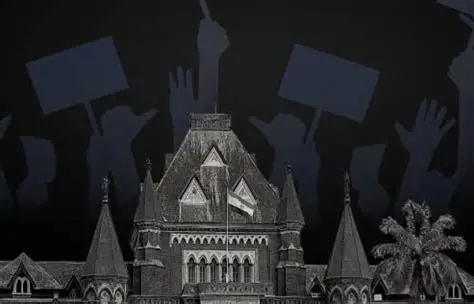
In a sharp rebuke to Mumbai Police, Justice Madhav J. Jamdar of the Bombay High Court on July 2, 2026 quashed a one-year externment order passed against Saeed Ahmad Abdul Wahid Chaudhary, 49, General Secretary of the Social Democratic Party of India (SDPI), holding that the right to protest government decisions is protected under the Constitution.
The court declared the externment proceedings “vitiated” and “mala fide,” finding no material on record showing Chaudhary’s actions caused or were likely to cause alarm, danger, or harm to persons or property, according to LiveLaw.
Background: How We Got Here
Chaudhary, a political activist whose party is registered with the Election Commission of India under Section 29A of the Representation of the People Act, 1951, organised and participated in protests between 2019 and 2024 against several Central Government decisions.
Those protests targeted the Citizenship Amendment Act (CAA), the National Register of Citizens (NRC), the Babri Masjid dispute, and the Gyanvapi mosque controversy, according to the Free Press Journal and LiveLaw.
- Five FIRs were registered against Chaudhary across police stations, predominantly under Section 188 of the Indian Penal Code — disobedience of an order by a public servant — which carries a maximum punishment of one month’s simple imprisonment.
- On December 3, 2025, the Deputy Commissioner of Police, Zone-6, Chembur, Mumbai passed Externment Order No. 472/C/43 against Chaudhary for a period of one year under Section 56(1)(a) and (b) of the Maharashtra Police Act.
- On March 27, 2026, the Divisional Commissioner, Konkan Division upheld the externment in Externment Appeal No. 188/2025, prompting Chaudhary to approach the High Court.
Chaudhary challenged both orders in Writ Petition No. 1700 of 2026 (cited as 2026 LiveLaw (Bom) 305) before a single judge bench, represented by Advocates Payoshi Roy and Ibraheem Harbat, per LiveLaw and IndiaBlooms.
The Ruling — Key Findings
Justice Jamdar quashed both the December 3, 2025 externment order and the March 27, 2026 appellate order in their entirety, holding that organising morchas, dharnas, and protests against government decisions cannot by itself justify an externment order under the Maharashtra Police Act.
The court’s written order stated: “the action taken by the State of Maharashtra of externing the petitioner, merely for opposing certain decisions of the Government of India, affects the petitioner’s fundamental right of freedom of speech and expression and also right to live with dignity.”
The judgment upheld Chaudhary’s fundamental rights under Article 19 (freedom of speech and expression) and Article 21 (right to live with dignity) of the Constitution of India, as reported by the Free Press Journal and LegalServicesIndia.
During the hearing, Justice Jamdar made strikingly direct oral observations. He asked: “What is this? All citizens are being made slaves of Indian Government… They cannot stage protests, they cannot agitate — what is all this? Now so many papers have been leaked. If people protest, you will slap cases… What is this?”
The judge further remarked: “Petitioner has just raised slogans like BJP Government Murdabad, Amit Shah Murdabad… Why citizens can’t raise such slogans? Why externment orders for such slogans?” according to LiveLaw.
Justice Jamdar also drew a sharp constitutional line on the role of the police: “Police isn’t the servants of the Chief Minister or the Prime Minister — they are public servants… I am going to impose hefty costs on your officers…”
The court found there was no material demonstrating that Chaudhary’s movements or acts caused, or were calculated to cause, alarm, danger, or harm to any persons or property — the statutory threshold required under Section 56 of the Maharashtra Police Act for passing an externment order, per LiveLaw.
Reactions & What’s Next
The bench also made oral observations about political dynamics in Maharashtra, with Justice Jamdar remarking on what he described as “horse-trading” in the state, noting that police are public servants and not partisan instruments, according to LiveLaw and The Wire.
The petitioner was represented by Advocates Payoshi Roy and Ibraheem Harbat. No further hearing date has been reported, as the writ petition was decided finally on July 2, 2026.
Disclaimer
Disclaimer: This article is for general information only and does not constitute legal advice. Laws may change or vary by case — consult a qualified lawyer before acting. The Courtroom is not liable for any reliance on this content.

