


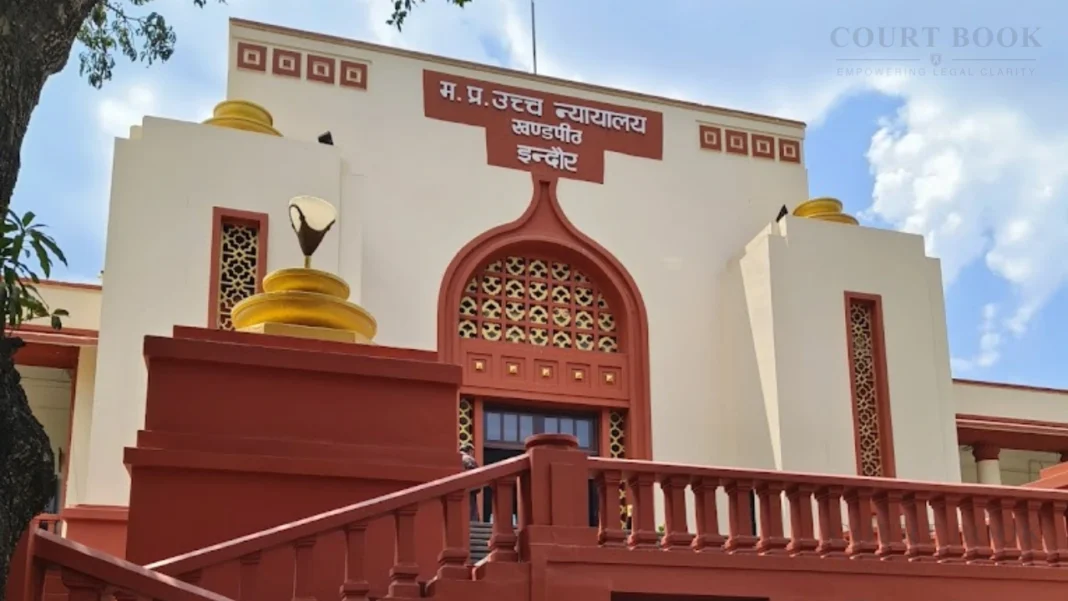
The Madhya Pradesh High Court’s Indore Bench issued notice on June 26, 2026, in a writ petition challenging Rule 18 of the MP Mineral (Prevention of Illegal Mining, Transportation, and Storage) Rules, 2022, finding a prima facie case that the rule prescribes penalties exceeding the ceiling fixed by the central Mines and Minerals (Development and Regulation) Act, 1957.
The Division Bench of Justice Vijay Kumar Shukla and Justice Alok Awasthi admitted the petition filed by Vikas Kumar Pradhan against the State of Madhya Pradesh, registered as WP-20323-2026, according to LiveLaw.
Background & Case History
The dispute arose when a mining authority imposed a fine of ₹5,22,000 on the petitioner, Vikas Kumar Pradhan, purportedly under Rule 18 of the MP Mineral (Prevention of Illegal Mining, Transportation, and Storage) Rules, 2022.
The petitioner contended that the fine crossed the maximum penalty of ₹5 lakh prescribed under Section 21(2) of the parent central legislation — the Mines and Minerals (Development and Regulation) Act, 1957 — making the demand legally unsustainable.
The 2022 Rules were framed by the State of Madhya Pradesh in exercise of powers conferred by Section 23C of the MMDR Act, 1957, and replaced the earlier Madhya Pradesh (Prevention of Illegal Mining, Transportation and Storage) Rules, 2006, according to Legitquest.
- The MP Mineral (Prevention of Illegal Mining, Transportation, and Storage) Rules, 2022 were enacted under Section 23C of the MMDR Act, 1957, replacing the 2006 Rules on the same subject.
- Rule 18 of the 2022 Rules specifically addresses penalties for illegal extraction of minerals and illegal storage of minerals or their products.
- A mining authority imposed a fine of ₹5,22,000 on the petitioner under Rule 18 — ₹22,000 above the ₹5 lakh ceiling under Section 21(2) of the MMDR Act, per LiveLaw Hindi.
- On June 26, 2026, the Indore Bench admitted WP-20323-2026 (Vikas Kumar Pradhan v State of Madhya Pradesh) and issued notice to the State.
Arguments & Submissions
The petitioner’s counsel argued before the Division Bench that the maximum penalty permissible under Section 21(2) of the parent MMDR Act is ₹5 lakh, according to LiveLaw Hindi. On that basis, the counsel submitted that Rule 18 of the 2022 Rules, to the extent it permits imposition of penalties beyond this ceiling, is ultra vires the parent legislation.
The core submission was that a subordinate state rule framed under delegated legislative authority — specifically Section 23C of the MMDR Act — cannot lawfully exceed the penalty limits expressly fixed by Parliament in the parent statute. The imposition of ₹5,22,000 was therefore characterised as arbitrary and without legal authority, as reported by LiveLaw Hindi.
No substantive counter-submissions by the State of Madhya Pradesh have been reported at this stage, as the matter is currently at the notice stage and the State is yet to file its response.
The Ruling: Key Findings
The Division Bench of Justice Vijay Kumar Shukla and Justice Alok Awasthi found a prima facie case to challenge Rule 18 of the MP Mineral Rules, 2022, according to LiveLaw Hindi. The court accordingly issued notice and admitted the writ petition for full examination.
The bench’s finding of a prima facie case signals that the court considered the petitioner’s contention — that a state rule cannot prescribe penalties higher than those permitted by the parent central act — credible and deserving of a full hearing.
No final ruling on the constitutional validity or vires of Rule 18 has been issued. The court’s order at this stage is limited to issuing notice and admitting the petition, leaving the ultimate question open for adjudication after the State files its reply.
Legal Analysis & Implications
The case engages a foundational principle of subordinate legislation: a rule made under a parent statute cannot travel beyond the limits set by that statute. Section 23C of the MMDR Act, 1957 empowers states to make rules for prevention of illegal mining, transportation, and storage — but does not expressly authorise states to prescribe penalties exceeding those in the parent Act.
Section 21(2) of the MMDR Act fixes the penalty for illegal mineral extraction. If the court ultimately holds that this ceiling binds state rules made under Section 23C, Rule 18 of the 2022 Rules would be rendered ultra vires to that extent.
The outcome could have significant implications for mining law enforcement across Madhya Pradesh, potentially affecting the quantum of penalties the State can levy under the 2022 Rules. More broadly, it fits into a wider pattern of litigation across Indian states examining how far state rule-making powers under the MMDR Act extend — a question that courts have been called upon to resolve with increasing frequency.
The distinction between a rule-making authority under Section 23C and the penalty regime under Section 21(2) is at the heart of this challenge. If the two provisions are found to operate independently, the State may argue it has independent power to set penalties; if they are read together, the ₹5 lakh ceiling under Section 21(2) would likely prevail.
Reactions & Stakeholder Response
No statements from the State of Madhya Pradesh, industry bodies, or Bar associations have been reported in connection with this petition at the current stage of proceedings. The matter remains at the notice stage, and formal responses from stakeholders are expected once the State files its counter-affidavit.
What’s Next
The matter will proceed before the Division Bench of Justice Vijay Kumar Shukla and Justice Alok Awasthi at the Indore Bench of the Madhya Pradesh High Court. The State of Madhya Pradesh is required to file its reply to the notice issued by the court.
No next hearing date has been reported in the sources available. A final ruling on the vires of Rule 18 of the MP Mineral (Prevention of Illegal Mining, Transportation, and Storage) Rules, 2022 will follow full hearing of arguments from both sides. The petition — WP-20323-2026 — will be watched closely by mining law practitioners and state governments with similar rule-making frameworks.
More legal news at The Courtroom.
Disclaimer
Disclaimer: This article is for general information only and does not constitute legal advice. Laws may change or vary by case — consult a qualified lawyer before acting. The Courtroom is not liable for any reliance on this content.

