


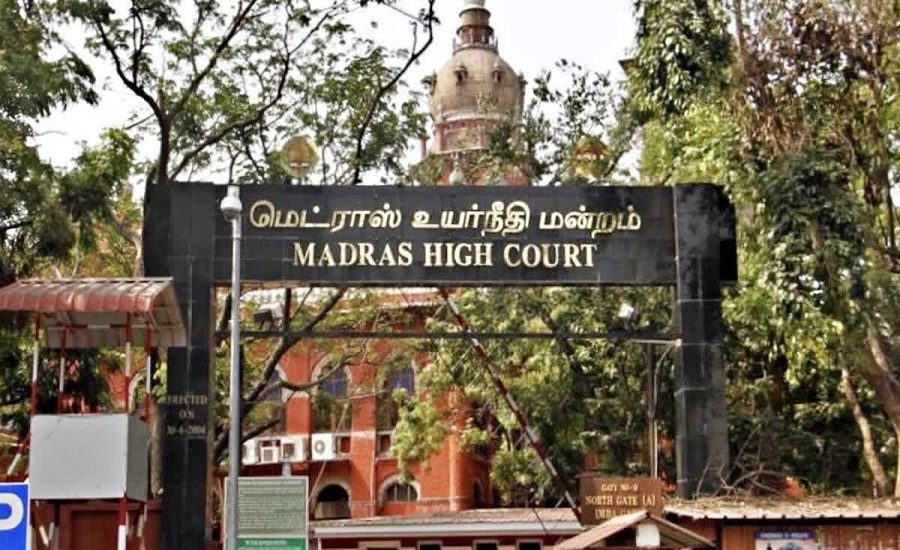
BNSS Section 348 Recall Witness Power: Madras HC Draws a Hard Line Against Prosecution Overreach
The Madras High Court, on June 24, 2026, held that the power to recall a witness under Section 348 of the Bharatiya Nagarik Suraksha Sanhita (BNSS) cannot be exercised to allow the prosecution to fill lacunae in its case or to obtain a second chance after its evidence has closed.
Justice Victoria Gowri delivered the ruling in Anbu v. State, setting aside an order of the Additional District and Sessions Judge, Kumbakonam, which had permitted the prosecution to recall its Investigating Officer after cross-examination and after the accused had been examined, according to LiveLaw.
Background & Case History
The case arose from a murder trial before the Additional District and Sessions Judge, Kumbakonam. The accused, Anbu, faced charges under Section 302 of the Indian Penal Code (IPC) in connection with the death of a person with whom he had a financial dispute.
According to LiveLaw, the prosecution alleged that Anbu had been entrusted with agricultural products worth Rs. 14,00,000 for sale. When the deceased demanded the return of the money or the goods, Anbu allegedly attacked him with a billhook and then abandoned the body in water.
The Investigating Officer was examined and subjected to cross-examination during the prosecution’s evidence stage. The defence used cross-examination to expose gaps in the investigation.
- Prosecution evidence was led and the Investigating Officer was examined and cross-examined before the trial court.
- The accused, Anbu, was subsequently examined under the relevant provisions after closure of prosecution evidence.
- The defence was on the verge of commencing its evidence when the prosecution moved an application to recall the Investigating Officer.
- The trial court allowed the recall application, prompting Anbu to file a criminal revision petition before the Madras High Court.
Arguments & Submissions
Counsel for the petitioner, Mr. P. Karthikeyan, argued before Justice Victoria Gowri that the trial judge’s order permitting the recall was mechanical, cryptic, and bereft of reasons, as reported by LiveLaw.
Mr. Karthikeyan further contended that allowing the prosecution to recall the Investigating Officer — specifically to mark call details, SIM details, and bank account records that were not exhibited during the original examination — would amount to impermissibly shoring up the prosecution’s case.
He argued that permitting the prosecution to repair weaknesses exposed during cross-examination would directly violate the accused’s right to a fair trial guaranteed under Article 21 of the Constitution of India.
The State, represented by Additional Public Prosecutor Mr. S. Ravi, countered that the trial court possessed wide powers under Section 348 BNSS to recall any witness at any stage if such recall was essential to reaching a just decision in the case, according to LiveLaw.
The Ruling: Key Findings
Justice Victoria Gowri set aside the trial court’s order and held that Section 348 BNSS cannot be invoked to fill lacunae in the prosecution’s case or to grant a second opportunity to a litigant who has been negligent in leading its evidence.
The court made its position emphatic in its judgment, as reported by SupremeToday.ai and LiveLaw:
“Section 348 BNSS is a powerful judicial instrument. It is meant to prevent failure of justice, not to confer a second innings upon a negligent litigant.” — Justice Victoria Gowri, Madras High Court
“A criminal trial is not a game of strategy between the prosecution and the defence. It is a solemn judicial search for truth.” — Justice Victoria Gowri, Madras High Court
The court found that the trial court had failed to examine whether the sought evidence was truly indispensable for a just decision, and had not recorded adequate reasons for allowing the recall, according to LiveLaw.
Critically, the court held that the phrase “at any stage” in Section 348 BNSS does not mean “at any stage without reason.” A higher degree of judicial satisfaction is required when recall is sought after the closure of prosecution evidence and the examination of the accused. The ruling carries the citation 2026 LiveLaw (Mad) 275.
Legal Analysis & Implications
Section 348 of the BNSS is the successor provision to Section 311 of the Code of Criminal Procedure (CrPC). Both vest courts with the power to summon or recall any witness at any stage of a proceeding if their evidence appears essential to the just decision of the case.
The Madras High Court’s ruling clarifies that this power, despite its wide textual scope, is not unfettered. The court’s insistence on a “higher degree of judicial satisfaction” when recall is sought at the fag end of trial introduces a graduated standard of scrutiny depending on the stage of proceedings.
The judgment is significant because it directly addresses the potential misuse of the recall power as a tool of prosecutorial strategy rather than judicial truth-seeking. Courts allowing recall without recorded reasons — particularly after cross-examination has exposed investigative gaps — risk converting a solemn criminal trial into a remedial exercise for a negligent prosecution.
By anchoring the accused’s objection in Article 21 of the Constitution, the ruling also reinforces that procedural fairness in criminal trials is a fundamental right, not merely a technical safeguard. Any order permitting recall must withstand scrutiny on that constitutional standard.
Reactions & Stakeholder Response
The petitioner’s counsel, Mr. P. Karthikeyan, had argued throughout the revision petition that the trial court’s cryptic order caused serious prejudice to the accused by allowing the prosecution to mend its case at the final stage of trial. The High Court’s judgment substantially accepts that framing, according to LiveLaw.
No formal reactions from Bar associations or civil society bodies have been reported in the verified sources at the time of publication.
What’s Next
With the Madras High Court having set aside the trial court’s recall order, the criminal trial in Anbu v. State before the Additional District and Sessions Judge, Kumbakonam, will resume without the benefit of the additional documents the prosecution had sought to introduce through the Investigating Officer.
The defence evidence stage, which was imminent at the time the recall application was filed, is now expected to proceed. No further appeals or consequential proceedings have been reported in the verified sources as of the date of the ruling.
Full coverage: LiveLaw. More legal news at The Courtroom.
Disclaimer
Disclaimer: This article is for general information only and does not constitute legal advice. Laws may change or vary by case — consult a qualified lawyer before acting. The Courtroom is not liable for any reliance on this content.

