


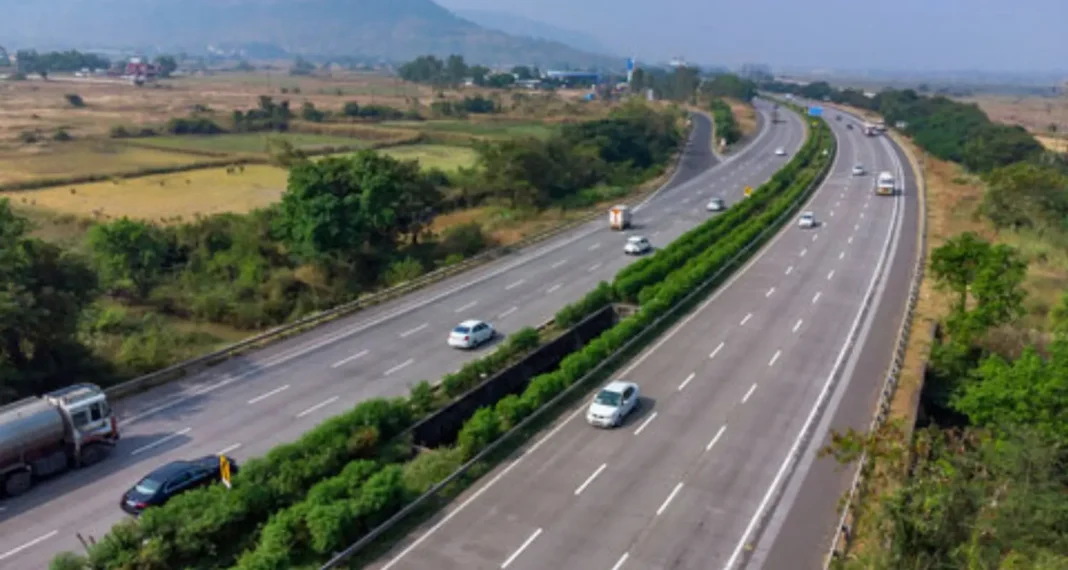
Article 21 highway safety moved from legal theory to binding constitutional obligation in November 2025, when the Supreme Court took suo motu cognisance of 34 deaths across two devastating road accidents within 24 hours of each other.
The tragedies — in Phalodi, Rajasthan, and Rangareddy, Telangana — forced India’s highest court to confront a grim reality: national highways carry approximately 30 per cent of all road fatalities while accounting for barely 2 per cent of the country’s total road length.
The result is a set of interim directions that reframe the constitutional relationship between every Indian commuter and the State — one that now carries positive duties, not mere aspirations.
Article 21 Highway Safety: The Background
On 2 November 2025, a bus carrying pilgrims rammed into a stationary trailer parked near a roadside dhaba on the Bharatmala Expressway, close to Mathoda in Phalodi district, Rajasthan. Fifteen people died.
The very next day — 3 November 2025 — a gravel-laden lorry collided head-on with a State Road Transport Corporation bus on the Mirjaguda–Khanapur road near Chevella, Rangareddy district, Telangana, while attempting to avoid a pothole on National Highway-163.
The two accidents, occurring on successive days, brought the total death toll to 34. Investigators noted multiple unauthorised dhabas and illegal encroachments along the Rajasthan highway stretch. The Telangana accident pointed squarely at poor road maintenance. Together, they revealed systemic failures that the Court found impossible to ignore.
- Both accidents occurred on or near national highways managed under the jurisdiction of MoRTH and NHAI.
- The Phalodi crash implicated unauthorised commercial structures within the highway Right of Way (ROW), a longstanding and widely reported problem across India’s highway network.
- The Rangareddy crash highlighted the lethal danger of unrepaired potholes on national highways — a driver’s emergency manoeuvre to avoid a pothole ended in a head-on fatality.
Read our guide to understanding Indian law for broader context.
Key Developments in Article 21 Highway Safety
Acting swiftly, a Division Bench of Justices J.K. Maheshwari and Atul S. Chandurkar took suo motu cognisance and issued interim directions to the Ministry of Road Transport & Highways (MoRTH) and the National Highways Authority of India (NHAI).
The Bench invoked Article 142 of the Constitution — the Court’s extraordinary power to do complete justice — to give its directions nationwide reach and immediate enforceability. Here are the five most consequential directions:
- No parking on carriageways or paved shoulders: No heavy or commercial vehicle may park or stop on any National Highway carriageway or paved shoulder except at a designated bay, lay-bye, or Wayside Amenity. This directly addresses the fatal stationary-trailer scenario that caused the Phalodi deaths.
- Immediate ban on new highway dhabas and eateries: Construction or operation of any new dhaba, eatery, or commercial structure within the Right of Way of any National Highway is prohibited with immediate effect. Commuters now have a right to highways free of fresh encroachments.
- 60-day demolition deadline for unauthorised structures: District Magistrates were directed to enforce demolition and removal of all new or existing unauthorised structures within 60 days, in accordance with The Control of National Highways (Land and Traffic) Act, 2002, and the Standard Operating Procedure dated 7 August 2025.
- No new licences for highway-adjacent commercial activity: No department, authority, or local body may grant or renew any licence for commercial operations that would place structures within the highway ROW — closing the regulatory loophole that allowed encroachments to proliferate with apparent official sanction.
- Positive State duty under Article 21: The Court declared that safety of the commuter is an integral facet of the right to live with dignity under Article 21, creating an enforceable positive obligation on the State — not a discretionary favour — to maintain safe roads.
Source: Supreme Court of India and India Code.
Legal Analysis: What Article 21 Highway Safety Means
The doctrinal significance of this ruling cannot be overstated. Article 21 — which guarantees that no person shall be deprived of life or personal liberty except according to procedure established by law — has long been interpreted expansively by Indian courts.
Prior rulings had already read into Article 21 rights such as the right to health, livelihood, and a clean environment. The Phalodi ruling now adds a concrete, infrastructure-level dimension: the right to physically safe roads as a component of the right to live with dignity.
What elevates this beyond rhetoric is the Court’s use of Article 142. By invoking this provision, the Bench ensured that its interim directions operate as binding law across every state and Union Territory, overriding any inconsistent administrative practice or local authority inaction.
The 60-day demolition mandate directed at District Magistrates is particularly sharp. It bypasses the slow churn of state-level enforcement and places personal administrative responsibility on district-level officials. Non-compliance would expose them to contempt of the Supreme Court — a potent enforcement lever that purely legislative directions rarely carry.
The prohibition on licence renewal is equally significant. It anticipates a predictable resistance strategy — where structures removed under court order are rebuilt with fresh local licences. By closing that avenue in the same ruling, the Bench demonstrates sophisticated awareness of how enforcement orders are habitually circumvented in India.
The reference to the Standard Operating Procedure of 7 August 2025 under The Control of National Highways (Land and Traffic) Act, 2002, signals that the Court is not creating new law in a vacuum — it is accelerating enforcement of a framework that already existed but was being ignored.
Why Article 21 Highway Safety Matters to You
- For every road commuter: National highways, which account for roughly 30 per cent of all road fatalities despite forming just 2 per cent of India’s road network, must now be actively made safer. The State can no longer treat highway deaths as acceptable collateral damage.
- For transport operators and truckers: Commercial vehicles are now expressly barred from stopping on carriageways or paved shoulders except at designated bays. Violations on national highways carry the risk of contempt proceedings, not merely traffic fines.
- For dhaba owners and roadside vendors near highways: Any structure within the ROW of a national highway is now under a court-ordered demolition timeline. Those operating near highways should urgently seek legal counsel to understand whether their premises fall within the ROW boundary and what options exist under The Control of National Highways (Land and Traffic) Act, 2002.
- For legal practitioners: This ruling opens a rich vein of public interest litigation. The positive-duty framing of Article 21 as applied to infrastructure maintenance — particularly pothole-related accidents of the Rangareddy type — provides a template for future PILs across states where highway maintenance is chronically poor.
What is Article 21 highway safety?
Article 21 highway safety refers to the Supreme Court’s recognition that the right to life with dignity under Article 21 of the Constitution includes a positive duty on the State to ensure safe national highways. A Division Bench of Justices J.K. Maheshwari and Atul S. Chandurkar established this principle while taking suo motu cognisance of 34 deaths in the Phalodi (Rajasthan) and Rangareddy (Telangana) highway accidents of November 2025.
How does Article 21 highway safety affect me in India?
As an Indian commuter, the ruling means you now have an enforceable constitutional right to highways free of illegal encroachments, unauthorised dhabas, and vehicles parked dangerously on carriageways. District Magistrates have been directed to demolish unauthorised structures within 60 days, and no new commercial structures may be built within the Right of Way of any national highway.
What is the legal framework for Article 21 highway safety?
The ruling is grounded in Article 21 (right to life and dignity) and Article 142 (Supreme Court’s power to do complete justice) of the Constitution of India. The Court also relied on The Control of National Highways (Land and Traffic) Act, 2002, and a Standard Operating Procedure issued on 7 August 2025, for demolition of unauthorised highway structures.
What should I do if Article 21 highway safety affects me?
If you operate a business near a national highway, you should immediately check whether your premises fall within the Right of Way boundary and consult a qualified lawyer about your rights and obligations under The Control of National Highways (Land and Traffic) Act, 2002. If you have been injured in a highway accident caused by poor road conditions or illegal obstructions, seek legal advice on filing a compensation claim. Always consult a qualified legal professional for advice specific to your situation.
Conclusion
Article 21 highway safety is no longer an academic formulation — it is a justiciable right backed by the extraordinary powers of the Supreme Court under Article 142, a 60-day enforcement clock on District Magistrates, and a nationwide ban on fresh encroachments within national highway ROWs.
The Phalodi and Rangareddy tragedies claimed 34 lives within 24 hours. The Court’s response is both a reckoning with systemic state failure and a structural reset of what commuters can constitutionally demand from their government. With national highways accounting for nearly 30 per cent of road fatalities on just 2 per cent of India’s road network, the ruling arrives not a moment too soon.
Whether the directions translate into on-ground change depends on district-level enforcement and MoRTH’s compliance posture — both of which this Court has now made its direct business to monitor.
Stay ahead of Indian legal developments at The Courtroom — India’s sharpest legal news platform.
Disclaimer: This article is for general informational purposes only and does not constitute legal advice. Laws and regulations are subject to change. Readers are strongly advised to consult a qualified legal professional. The Courtroom makes no warranties regarding the accuracy or completeness of this information.

