


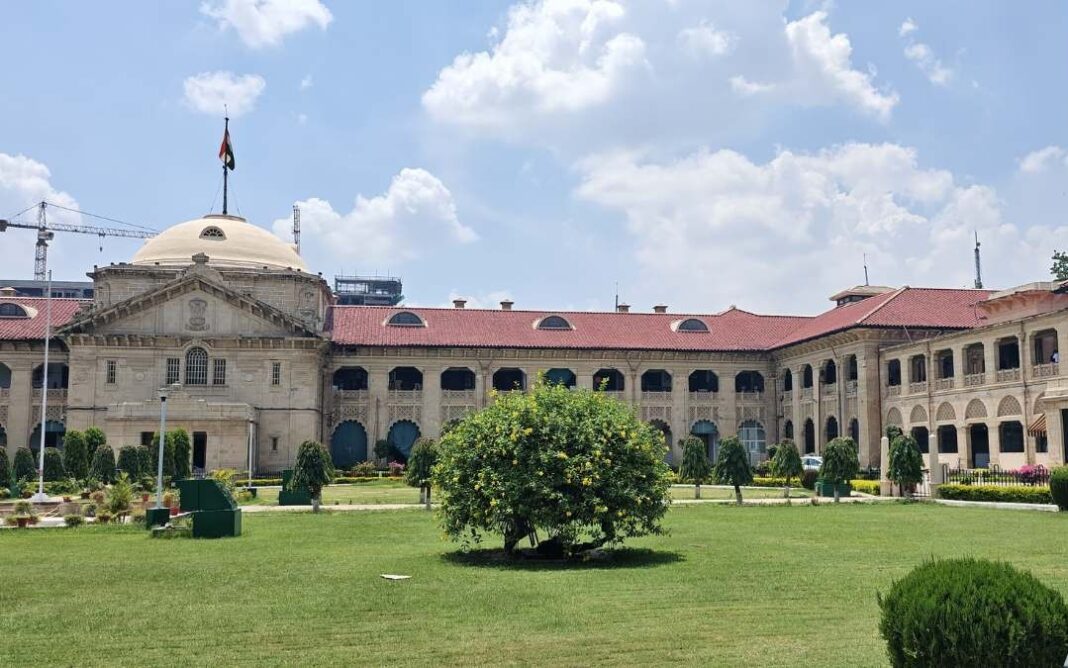
The Allahabad High Court on June 26, 2026 declared that the Uttar Pradesh Government’s orders appointing incumbent gram pradhans as administrators — issued after panchayat tenures expired — were “void and non-existent in the eyes of law,” and warned the state that re-issuing orders under an already unconstitutional provision could amount to contempt of court.
The bench of Justice Siddharth Nandan directed the state government to file a detailed affidavit on the status of the OBC Commission report and a firm timeline for conducting elections, warning that the responsible officer must appear personally in court if the affidavit is not filed by the next date of hearing, according to ANI.
Background: How We Got Here
The statutory five-year tenure of Uttar Pradesh’s three-tier panchayats expired on May 26, 2026. Rather than proceed to elections, the state government issued two orders dated May 25 and May 26, 2026, under Section 12(3-A) of the Uttar Pradesh Panchayat Raj Act, 1947, designating sitting gram pradhans as administrators to continue in office.
Petitioner Arvind Rathore challenged both orders before the Allahabad High Court, arguing that Section 12(3-A) had already been declared unconstitutional by a Division Bench of the same court in Prem Lal Patel vs State of Uttar Pradesh in the year 2000, as reported by ANI. A separate PIL filed by advocate Om Prakash Prajapati also contested the May 25 government order on identical grounds, with its next hearing listed for July 10, according to Law Trend.
- Section 12 of the UP Panchayat Raj Act limits the tenure of a gram pradhan to exactly five years from the date of oath. The panchayat tenures expired on May 26, 2026.
- On April 30, 2026, a bench of Justice Saurabh Lavania had already issued a contempt notice to the Principal Secretary, Panchayati Raj Department, seeking an affidavit on the OBC Commission formation timeline within three weeks, per LiveLaw.
- On March 17, 2026, a Division Bench of Justice Atul Sridharan and Justice Siddhartha Nandan had questioned the UP State Election Commission on its election timeline, according to UNI India.
The delay in elections stems from the state government’s failure to finalise OBC reservation, which requires a Backward Classes Commission report — itself mandated by Supreme Court directions flowing from the “Triple Test” criteria established in Vikas Kishanrao Gawali v. State of Maharashtra. Article 243E of the Constitution fixes a five-year tenure for panchayats, and Article 243K protects the autonomy of the State Election Commission.
The Ruling — Key Findings
Justice Siddharth Nandan’s bench found that the government orders of May 25 and May 26 — both issued under Section 12(3-A), a provision declared unconstitutional in 2000 — had no legal basis whatsoever. The court held that gram pradhans could not be allowed to continue as administrators under law, according to ANI.
The court described the impugned orders as “void and non-existent in the eyes of law” — the direct words of Justice Siddharth Nandan as reported by ANI — and expressed surprise that the OBC Commission, constituted pursuant to Supreme Court directions, had still not submitted its report.
The bench further directed that the Backwards Classes Commission be impleaded as a party to the proceedings, and asked the state government to place the Commission’s report on record. The State Election Commission, for its part, informed the court that electoral rolls had already been published on June 10, 2026, and that it was fully prepared to conduct elections.
The court noted that Section 12-BB of the UP Panchayat Raj Act places an obligation on the state government — in consultation with the State Election Commission — to issue an election notification, and that Section 11A(2) requires OBC seats to be reserved based on valid empirical survey data.
Reactions & What’s Next
The State Government’s Additional Chief Standing Counsel submitted before the court that elections could not be held until the OBC Commission submitted its report on reservation. The court rejected this as justification for issuing orders under a provision already struck down as unconstitutional over two decades ago.
Concerns have been raised across multiple petitions — including a contempt plea by Advocate Moti Lal Yadav — that prolonged delay could ultimately cause panchayat polls to merge with the 2027 Uttar Pradesh Assembly elections. The Lucknow vacation bench of Justice Shekhar B Saraf and Justice A K Chaudhary also heard a related PIL, according to Law Trend.
The matter before Justice Siddharth Nandan is listed for further hearing on July 13, 2026 at 2:00 PM. If the state government fails to file the required affidavit, the responsible officer has been warned to appear personally before the court, as reported by ANI.
Full coverage: ANI. More legal news at The Courtroom.
Why did the Allahabad High Court call the UP government’s administrator orders void?
The court found that both orders — dated May 25 and May 26, 2026 — were issued under Section 12(3-A) of the UP Panchayat Raj Act, 1947, a provision that a Division Bench of the Allahabad High Court had already declared unconstitutional in the year 2000 in Prem Lal Patel vs State of Uttar Pradesh. Justice Siddharth Nandan held that orders issued under an unconstitutional provision are void and non-existent in the eyes of law.
Why have UP’s gram panchayat elections not been held despite tenures expiring in May 2026?
The state government has argued that elections cannot be held until the OBC Commission submits its backward classes reservation report, as required by Supreme Court directions. The State Election Commission, however, told the court it published electoral rolls on June 10, 2026, and is fully prepared to conduct polls. The Allahabad HC expressed surprise that the Commission had still not submitted its report.
What has the Allahabad High Court directed the UP government to do next?
The court directed the state government to file a detailed affidavit disclosing the status of the OBC Commission report and a concrete timeline for conducting elections. It also ordered that the Backwards Classes Commission be impleaded as a party. If the affidavit is not filed, the responsible officer must appear personally before the court at the next hearing on July 13, 2026 at 2:00 PM.
Disclaimer
Disclaimer: This article is for general information only and does not constitute legal advice. Laws may change or vary by case — consult a qualified lawyer before acting. The Courtroom is not liable for any reliance on this content.

