


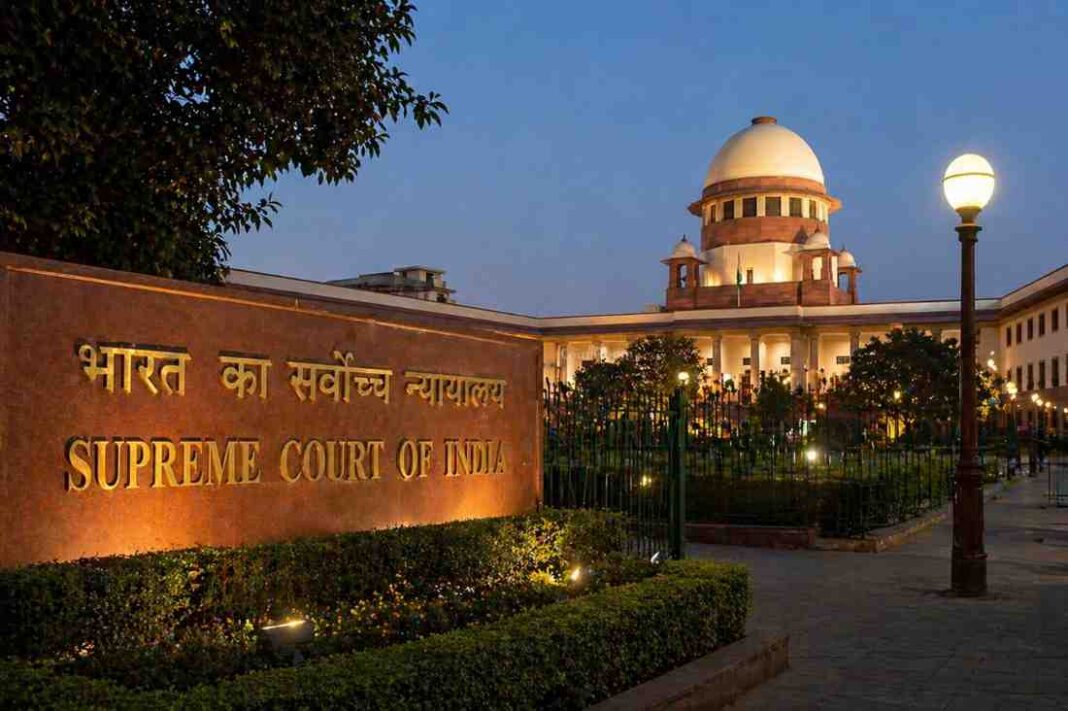
The NEET-UG 2026 CBT debate reached a decisive turn on June 1, 2026, when the Supreme Court of India refused to direct the National Testing Agency (NTA) to conduct the upcoming re-examination in Computer-Based Test mode.
A bench of Justices P.S. Narasimha and Aravind Kumar heard the matter and posted it for the next hearing on July 27, 2026, effectively ensuring the re-test scheduled for June 21 will proceed in the existing pen-and-paper format, according to LiveLaw.
Background: NEET-UG 2026 Paper Leak and the CBT Demand
The NEET-UG 2026 original examination was conducted on May 3, 2026, in pen-and-paper mode. Over 22.7 lakh aspirants appeared across 551 cities in India and 14 cities abroad at more than 5,400 centres, per Medical Dialogues.
Allegations of a paper leak emerged almost immediately after the exam. The Rajasthan Police SOG reportedly found a ‘guess paper’ containing more than 100 questions similar to those in the actual exam, triggering a national controversy.
- On May 12, 2026, the NTA cancelled the NEET-UG 2026 examination held on May 3, citing the paper leak allegations. The CBI was brought in to conduct an independent investigation.
- On May 25, 2026, the Supreme Court termed it ‘sad’ that the NTA had not learned lessons from the earlier 2024 NEET paper leak, and sought responses from the Centre, NTA, and CBI, as reported by Deccan Chronicle.
- On May 29, 2026, the Supreme Court underscored the urgent need for structural reforms within the NTA, setting the stage for a flurry of writ petitions.
The writ petition that came up on June 1 was filed by RJD MP Sudhakar Singh, social activist Anubhav Garg, Dr Dhruv Chauhan (IMA National Spokesperson), and political leader Harisharan Devgan, according to Medical Dialogues. The case is titled Sudhakar Singh v. Union of India.
The petition was tagged with other pleas before the Court seeking broader NTA reforms, including those filed by the Federation of All India Medical Association (FAIMA) and the United Doctors Front, per LawBeat.
What the Court Said
During the June 1 hearing, the petitioner’s counsel narrowed the prayer to a single demand, stating: “Today I am not pressing any other prayer. It should be CBT.”
Justice P.S. Narasimha was unequivocal in response. According to PTI as cited by Deccan Chronicle, the judge observed: “There is no question of conducting the re-examination in CBT mode. They (the NTA) are already having too many problems.”
The bench further noted that similar petitions had already been dismissed by the Court in the past. As reported by LiveLaw, Justice Narasimha also acknowledged the logistical pressures currently facing the NTA as a key reason for not intervening at this stage.
The bench stated: “We have dismissed similar petitions. We will keep it pending and hear it after vacations with other pending petitions.” Justice Narasimha also remarked: “We will keep it after vacation.”
With no interim relief granted, the June 21 re-examination will proceed in pen-and-paper mode as originally scheduled by the NTA.
Separately, the NTA filed an affidavit before the Supreme Court informing it of future plans. The affidavit stated: “The HLCE has specifically recommended transition of NEET (UG) from PPT to CBT mode, along with the introduction of multi-session and multi-stage testing.” The NTA confirmed it is ready to conduct NEET-UG in CBT mode from the 2027 examination cycle, after consultation with the Ministry of Health and Family Welfare, per Medical Dialogues.
What It Means for You
For the 22.7 lakh-plus students who appeared for the cancelled May 3 exam, the ruling confirms they must prepare for a traditional pen-and-paper re-examination on June 21, 2026 — with no last-minute format change.
The Court’s decision to adjourn the broader NTA reform petitions to July 27 means structural questions — including the transition to CBT — will be examined in detail after the summer vacation. The NTA’s own affidavit signals that CBT is on the horizon, but only from 2027 at the earliest.
The CBI investigation into the alleged NEET-UG 2026 paper leak continues in parallel, and its findings could shape the outcome of the broader reform petitions pending before the Supreme Court.
Read more at The Courtroom. Original report: LiveLaw.
Will the NEET-UG 2026 re-exam be held in CBT mode?
No. The Supreme Court on June 1, 2026 declined to direct the NTA to conduct the re-examination in CBT mode. The re-test will proceed in pen-and-paper format on June 21, 2026, as originally scheduled.
Why was the original NEET-UG 2026 exam cancelled?
The NTA cancelled the May 3, 2026 exam on May 12 following allegations of a paper leak. The Rajasthan Police SOG reportedly found a ‘guess paper’ with over 100 questions matching the actual exam. The CBI is currently investigating the matter.
When will NEET-UG shift to CBT mode?
According to an affidavit filed by the NTA before the Supreme Court, the NTA’s High-Level Committee of Experts (HLCE) has recommended transitioning NEET-UG to CBT mode. The NTA stated it is ready to implement this from the 2027 examination cycle, after consultation with the Ministry of Health and Family Welfare.
Final Thoughts on NEET-UG 2026 CBT and the Road Ahead
The Supreme Court’s refusal to mandate CBT mode for the June 21 re-exam closes the door on immediate format relief for students, even as the NTA’s own affidavit acknowledges CBT as the future of NEET-UG from 2027 onwards.
With the CBI probe ongoing and broader NTA reform petitions listed for July 27, the NEET-UG 2026 saga is far from over — and its outcomes could redefine how India conducts its most critical medical entrance examination.
Stay updated at The Courtroom.
Disclaimer
Disclaimer: This article is for general information only and does not constitute legal advice. Laws may change or vary by case — consult a qualified lawyer before acting. The Courtroom is not liable for any reliance on this content.

