


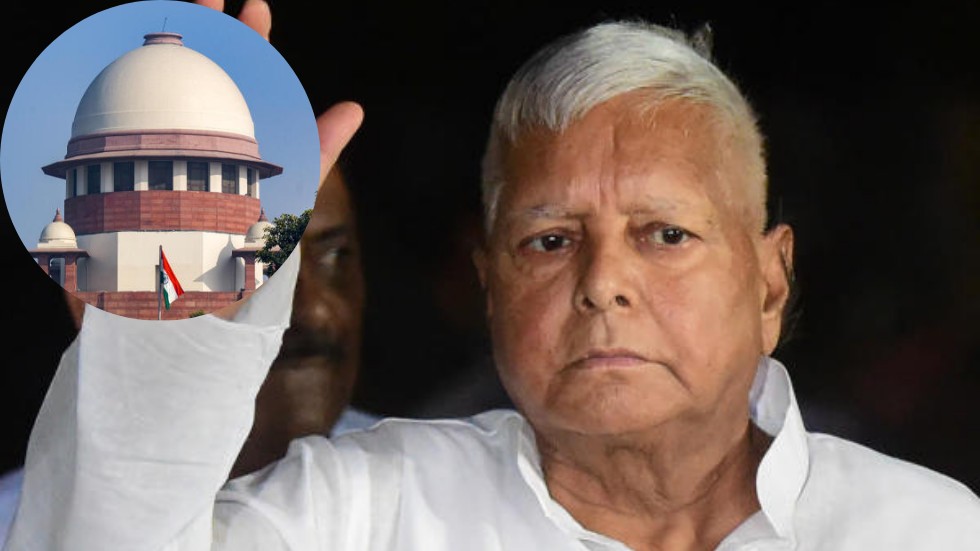
Lalu Prasad Yadav Fodder Scam Bail: Supreme Court Declines to Interfere
On July 14, 2026, the Supreme Court of India refused to cancel the bail granted to RJD chief Lalu Prasad Yadav in the Deoghar treasury fodder scam case, upholding the Jharkhand High Court’s July 12, 2019 order that had suspended his sentence.
A bench of Justices MM Sundresh and PB Varale disposed of the State of Jharkhand’s Special Leave Petition, while directing the Jharkhand High Court to expedite disposal of the pending criminal appeals — preferably within six months, according to LiveLaw.
Background: How We Got Here
The Deoghar treasury case concerns the fraudulent withdrawal of approximately ₹89.27 lakh from Bihar’s animal husbandry department between 1991 and 1994 — a period when Lalu Prasad Yadav served as Chief Minister of Bihar, per Bar & Bench and LawBeat.
On December 23, 2017, a Special CBI Court in Ranchi convicted Lalu Prasad Yadav. He was subsequently sentenced to 3.5 years’ imprisonment on January 6, 2018, as reported by LawBeat.
- The Jharkhand High Court suspended his sentence and granted bail on July 12, 2019, finding that he had served more than half of his 3.5-year term and applying a uniform yardstick used for similarly placed convicts, according to LiveLaw.
- CBI and the State of Jharkhand challenged the High Court’s order before the Supreme Court, which issued notice in the matter in February 2020, per Bar & Bench.
- The challenge was registered as SLP(Crl) No. 1550/2020 — The State of Jharkhand versus Lalu Prasad @ Lalu Prasad Yadav and connected matters — and remained pending until the July 14, 2026 ruling, per LiveLaw.
The charges in the Deoghar case include offences under Sections 120B, 420, 467, 468, 471, and 477(A) of the Indian Penal Code, as well as Sections 13(1)(c) and 13(1)(d) of the Prevention of Corruption Act, according to Bar & Bench.
The Deoghar case is one of several fodder scam matters — connected to unlawful withdrawals from the Chaibasa, Deoghar, Dumka, and Doranda treasuries — in which Lalu Prasad Yadav has faced conviction.
The Ruling — Key Findings
The bench of Justices MM Sundresh and PB Varale declined to disturb the sentence suspension, emphasising the significant passage of time since the High Court’s 2019 order.
The Court stated: “We are not inclined to interfere in the impugned order (granting bail). The appeal is of the year 2018.” It further observed: “Upon hearing the learned counsels, we are not inclined to interfere with the order particularly since seven years have elapsed since then.”
Disposing of the petition, the bench recorded: “It will only be appropriate to request the High Court to expedite the hearing of the appeal, preferably within 6 months. Disposed of. The legal issue is kept open.”
Crucially, the Supreme Court explicitly kept open the underlying legal question on the merits of the sentence suspension, meaning the High Court’s eventual decision on the pending criminal appeals will address the issue afresh, as reported by Bar & Bench.
The central legal dispute concerned Section 427 of the Code of Criminal Procedure, which governs whether sentences in separate trials run concurrently or consecutively for the purpose of computing the 50% threshold for bail eligibility, per LawBeat and Bar & Bench.
Reactions & What’s Next
ASG SV Raju, appearing for the CBI and State of Jharkhand, had pressed for cancellation of the High Court’s bail order, arguing that it incorrectly calculated sentence completion. He contended: “The High Court says he has undergone half of the sentence without considering that this is not a concurrent sentence.”
Senior Advocate Kapil Sibal, appearing for Lalu Prasad Yadav, opposed the plea, arguing that the High Court exercised proper judicial discretion: “The judge has applied a uniform yardstick. It’s the discretion of the judge.” Sibal further submitted that the question of concurrent versus consecutive sentences arises only at the final stage, according to LiveLaw and Bar & Bench.
With the SLP now disposed of, the matter returns to the Jharkhand High Court, which has been urged to resolve the pending criminal appeals — filed as far back as 2018 — within six months. Lalu Prasad Yadav’s bail remains in force in the meantime.
More legal news at The Courtroom.
What was the Supreme Court’s order in the Lalu Prasad Yadav fodder scam bail case on July 14, 2026?
The Supreme Court bench of Justices MM Sundresh and PB Varale declined to interfere with the Jharkhand High Court’s July 2019 order suspending Lalu Prasad Yadav’s sentence and granting him bail in the Deoghar treasury case. The Court disposed of the State of Jharkhand’s SLP and directed the High Court to decide the pending criminal appeals preferably within six months, while keeping the underlying legal issue open.
What was Lalu Prasad Yadav’s sentence in the Deoghar fodder scam case?
Lalu Prasad Yadav was convicted by a Special CBI Court in Ranchi on December 23, 2017, and sentenced to 3.5 years’ imprisonment on January 6, 2018, for his role in the fraudulent withdrawal of approximately ₹89.27 lakh from the Deoghar Treasury between 1991 and 1994, when he was Chief Minister of Bihar.
What was the key legal dispute regarding Section 427 CrPC in this case?
The CBI and State of Jharkhand argued that the Jharkhand High Court wrongly computed whether Lalu Prasad had served 50% of his total sentence. ASG SV Raju contended that sentences in separate trials cannot automatically run concurrently under Section 427 CrPC, meaning the High Court’s 50% calculation was incorrect. The Supreme Court left this legal issue expressly open for the High Court to decide.
Disclaimer
Disclaimer: This article is for general information only and does not constitute legal advice. Laws may change or vary by case — consult a qualified lawyer before acting. The Courtroom is not liable for any reliance on this content.

