


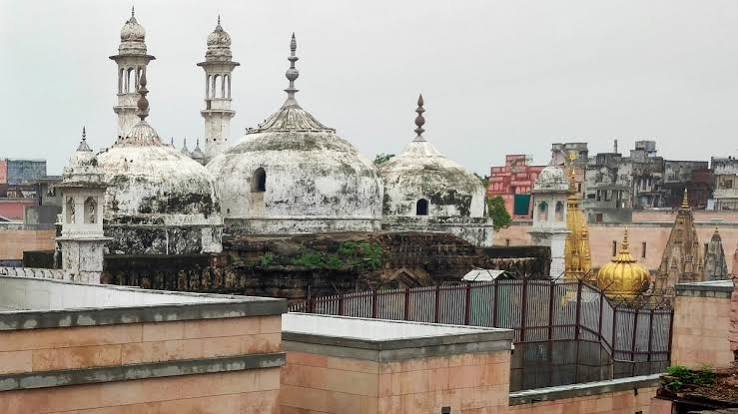
In a significant development reported on July 13, 2026, parties on both sides of the Gyanvapi, Mathura, and Sambhal temple-mosque disputes have declined the Supreme Court’s proposal to resolve the matters through mediation, opting instead for regular judicial adjudication.
According to India Legal Live, both Hindu and Muslim parties involved in all three high-profile cases are “choosing instead to pursue adjudication through the regular judicial process,” effectively shutting the door on an out-of-court settlement under the Supreme Court’s flagship mediation initiative.
Background: How We Got Here
The Supreme Court had referred all three disputes — the Gyanvapi mosque dispute in Varanasi, the Sri Krishna Janmabhoomi-Shahi Eidgah dispute in Mathura, and the Shahi Jama Masjid dispute in Sambhal — to a Special Lok Adalat under the SAMADHAN SAMAROH initiative, as reported by India TV News and NewsX.
The court also issued notices to both Hindu and Muslim parties in all three cases as part of a pre-Lok Adalat conciliation process, with conciliation efforts in lower courts commencing on April 21, 2026, per India TV News.
- The SAMADHAN SAMAROH — formally titled ‘Supreme Court Action for Mediated Adjudication and Disputes Harmonization Across Nation’ — was launched on April 21, 2026, to mark the Supreme Court’s 75th anniversary, with a Special Lok Adalat scheduled for August 21–23, 2026, at the Supreme Court premises.
- The first conciliation round in the Mathura dispute failed on July 5, 2026, when no representative from the Muslim side appeared before Additional District and Sessions Judge Surendra Prasad, according to Apna Post and NewsX.
- A pre-conciliation hearing in the Gyanvapi case was separately scheduled in Varanasi for July 14, 2026, ahead of the August Lok Adalat, per India TV News.
The Sambhal dispute carries its own charged history. The Shahi Jama Masjid case arose after a civil court-ordered survey of the mosque triggered communal violence in November 2025, resulting in multiple deaths.
All three disputes are also linked to the broader constitutional challenge pending before the Supreme Court over the validity of the Places of Worship (Special Provisions) Act, 1991 — particularly Sections 3 and 4, which bar the conversion or alteration of the religious character of places of worship as they stood on August 15, 1947.
The Ruling — Key Findings
As of July 13, 2026, parties to all three disputes have formally declined the Supreme Court’s mediation proposal under the SAMADHAN SAMAROH framework, according to India Legal Live. The three cases will not proceed through the Special Lok Adalat route.
India Legal Live reported the parties as “choosing instead to pursue adjudication through the regular judicial process” — a formulation that applies equally to both the Hindu and Muslim sides across all three disputes.
The refusal means the most politically sensitive cases referred under SAMADHAN SAMAROH will now be resolved exclusively through standard court proceedings. The Supreme Court continues to examine the broader constitutional questions raised in the matters, including the applicability of the Places of Worship Act, 1991, as reported by India TV News and NewsX.
The Mathura pre-conciliation effort had already signalled the trajectory on July 5, 2026, when the failure of Muslim representatives to appear before Additional District and Sessions Judge Surendra Prasad rendered the first round inconclusive, per Apna Post.
Reactions & What’s Next
No separate statements from counsel or parties have been confirmed in the available sources beyond the reported decision to opt for regular adjudication. The refusal by all sides — across communal lines — is itself notable, signalling that neither the Hindu nor Muslim parties in any of the three disputes saw mediation as a viable path at this stage.
A pre-conciliation hearing for the Gyanvapi dispute was scheduled in Varanasi on July 14, 2026, according to India TV News, though the broader outcome of that hearing must now be read in the context of the parties having already declined the mediation framework.
The Special Lok Adalat under SAMADHAN SAMAROH remains scheduled for August 21–23, 2026, at the Supreme Court premises, per the Supreme Court’s official website — but the Gyanvapi, Mathura, and Sambhal disputes are unlikely to feature on that docket given the parties’ decision, as reported by India Legal Live.
More legal news at The Courtroom.
What is SAMADHAN SAMAROH and why were these disputes referred to it?
SAMADHAN SAMAROH stands for ‘Supreme Court Action for Mediated Adjudication and Disputes Harmonization Across Nation.’ It is a Supreme Court initiative launched on April 21, 2026, organised partly to mark the court’s 75th anniversary, aimed at promoting amicable settlement of suitable pending cases. The Gyanvapi, Mathura, and Sambhal disputes were among the high-profile matters referred to its Special Lok Adalat, scheduled for August 21–23, 2026, according to the Supreme Court’s official website and NewsX.
Why did the Mathura conciliation round fail on July 5, 2026?
According to Apna Post and NewsX, the first pre-Lok Adalat conciliation hearing in the Mathura Sri Krishna Janmabhoomi-Shahi Eidgah dispute was held before Additional District and Sessions Judge Surendra Prasad on July 5, 2026. While the Hindu side appeared, no representative from the Muslim side was present, causing the round to fail without any progress.
What is the relevance of the Places of Worship (Special Provisions) Act, 1991 to these cases?
The Places of Worship (Special Provisions) Act, 1991 — specifically Sections 3 and 4 — bars the conversion or alteration of the religious character of places of worship as they existed on August 15, 1947. The constitutional validity of the Act is separately pending before the Supreme Court, and all three disputes — Gyanvapi, Mathura, and Sambhal — are connected to that broader legal question, as reported by India TV News and NewsX.
Disclaimer
Disclaimer: This article is for general information only and does not constitute legal advice. Laws may change or vary by case — consult a qualified lawyer before acting. The Courtroom is not liable for any reliance on this content.

