


The Supreme Court Collegium’s judicial appointments spanning HP, MP, Punjab Haryana, and Karnataka mark a significant push to address bench vacancies across India’s High Courts.
In a sweeping move, the Collegium approved twelve proposals in a single sitting, according to LawChakra. The resolutions were publicly announced on June 3, 2026, following the meeting held the previous day.
Background: Collegium Judicial Appointments HP MP Punjab Haryana
The Supreme Court Collegium, headed by Chief Justice of India Surya Kant, convened on June 2, 2026, and approved twelve judicial appointment proposals across four High Courts, per India Legal Live.
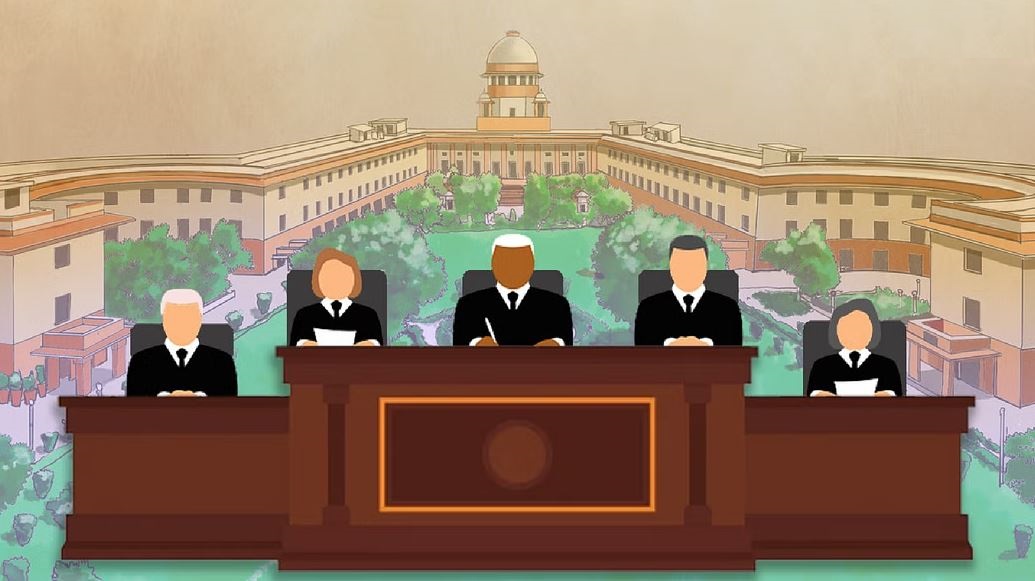
The five-member Collegium comprises Justice BV Nagarathna, Justice JK Maheshwari, Justice Vikram Nath, and Justice MM Sundresh alongside CJI Surya Kant.
Judicial appointments to High Courts are governed by Article 217 of the Constitution of India and processed through the Memorandum of Procedure, which requires initiation by the concerned High Court Chief Justice, state government consultation, Union Law Ministry review, and final Presidential notification.
The context for these appointments is acute. As reported by India Legal Live and The Chenab Times, the Himachal Pradesh High Court was functioning with only 12 judges against a sanctioned strength of 17, including the Chief Justice — a shortfall of five positions.
- Six advocates were recommended for elevation to the Karnataka High Court bench, covering a significant portion of that court’s vacancies.
- Three judicial officers were recommended for the Himachal Pradesh High Court, which would raise its working strength from 12 to 15 judges if accepted.
- One advocate, Amit Lahoti, was recommended for the Madhya Pradesh High Court, and two additional judges of the Punjab and Haryana High Court were recommended for confirmation as permanent judges.
What the Court Said
The Collegium issued formal resolutions following its June 2, 2026 sitting. According to LiveLaw and Bar & Bench, the six Karnataka High Court recommendees are Raghavendra Seetharam Srivatsa, Hema Kulkarni, Subramanya Rangarao, Thadagavadi Prakash Vivekananda, Bakkeswara Pramod, and Hombe Gowda Shanthi Bhushan — all advocates.
On the Madhya Pradesh appointment, the Collegium’s official statement read: “The Supreme Court Collegium in its meeting held on 2nd June, 2026 has approved the proposal for appointment of Shri Amit Lahoti, Advocate as a Judge of the High Court of Madhya Pradesh.”
For Himachal Pradesh, the Collegium stated: “The Supreme Court Collegium in its meeting held on 2nd June, 2026 has approved the proposal for appointment of the following Judicial Officers as Judges of the High Court of Himachal Pradesh: (i) Shri Chirag Bhanu Singh, (ii) Shri Bhupesh Sharma, and (iii) Shri Yogesh Jaswal.”
Separately, as reported by The Tribune and India Legal Live, Justice Harmeet Singh Grewal and Justice Deepinder Singh Nalwa — both additional judges of the Punjab and Haryana High Court since February 17, 2025 — were recommended for confirmation as permanent judges.
All twelve resolutions have been forwarded to the Central Government for final consideration and will be notified by the President of India, per LawChakra and India Legal Live.
What It Means for You
These collegium judicial appointments for HP, MP, Punjab Haryana, and Karnataka directly affect litigants by moving courts closer to full operational strength, potentially reducing case backlogs and hearing delays.
The Himachal Pradesh appointments are particularly significant: if the Centre accepts the three recommendations, HP High Court’s bench will grow from 12 to 15 judges, narrowing its vacancy gap from five to two, as noted by The Tribune and The Chenab Times.
For the Punjab and Haryana High Court, the confirmation of Justices Grewal and Nalwa as permanent judges provides long-term judicial stability, bringing certainty to their tenure after serving as additional judges since February 17, 2025.
Read more at The Courtroom. Original report: The Hawk.
How many judicial appointments did the Supreme Court Collegium approve on June 2, 2026?
The Supreme Court Collegium approved twelve judicial appointment proposals in its June 2, 2026 meeting, covering four High Courts: Karnataka, Madhya Pradesh, Himachal Pradesh, and Punjab and Haryana, according to LawChakra.
Who are the three judicial officers recommended for the Himachal Pradesh High Court?
The three judicial officers recommended for the Himachal Pradesh High Court are Chirag Bhanu Singh, Bhupesh Sharma, and Yogesh Jaswal, as per the official Collegium resolution reported by The Hawk, India Legal Live, and The Chenab Times.
What is the current sanctioned strength of the Himachal Pradesh High Court, and how many judges are working?
The Himachal Pradesh High Court has a sanctioned strength of 17 judges including the Chief Justice, but was functioning with only 12 judges at the time of these recommendations — a shortfall of five positions, per India Legal Live and The Chenab Times. If the three new appointments are accepted, the working strength will rise to 15.
Final Thoughts on Collegium Judicial Appointments HP MP Punjab Haryana
The Supreme Court Collegium’s June 2, 2026 resolutions represent one of the broader single-sitting rounds of High Court judicial appointments this year, spanning Karnataka, Madhya Pradesh, Himachal Pradesh, and Punjab and Haryana simultaneously.
With Presidential notification still pending, the twelve appointments will become effective only after the Central Government processes the recommendations under the Memorandum of Procedure and Article 217 of the Constitution of India.
Stay updated at The Courtroom.
Disclaimer
Disclaimer: This article is for general information only and does not constitute legal advice. Laws may change or vary by case — consult a qualified lawyer before acting. The Courtroom is not liable for any reliance on this content.

