


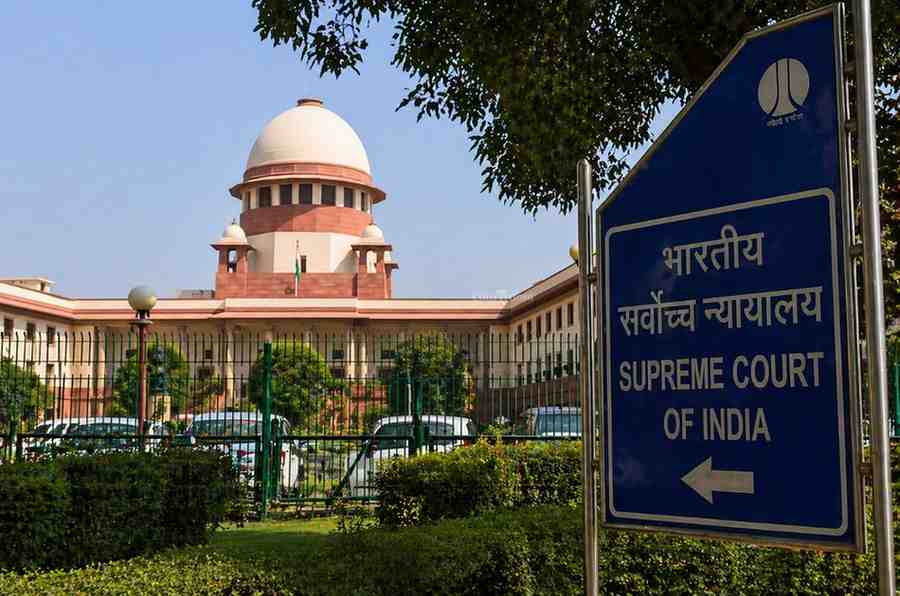
On June 22, 2026, the Supreme Court of India refused to entertain a writ petition filed by Arvind Malhotra — a judicial officer from Himachal Pradesh — seeking a direction to the High Court Collegium to consider his name for elevation to the Himachal Pradesh High Court.
The bench of Justices BV Nagarathna and Joymalya Bagchi held that no judicial direction can compel a collegium to consider any specific candidate for elevation, according to LiveLaw.
Background: How We Got Here
Arvind Malhotra is presently serving as Principal Judge, Family Court, Dharamshala, Kangra district, Himachal Pradesh. His battle for elevation to the High Court stretches back several years and involves multiple rounds of litigation before the Supreme Court.
The petition before the court was registered as Diary No. 36875/2026, filed under Article 32 of the Constitution of India, per LiveLaw and ETV Bharat.
- On December 6, 2022, both Chirag Bhanu Singh and Arvind Malhotra were first recommended by the then HP High Court Collegium for elevation to the bench, per SCC Online.
- On January 4, 2024, the Supreme Court Collegium resolved to remit the proposals of both Chirag Bhanu Singh and Malhotra for reconsideration to the Chief Justice of the Himachal Pradesh High Court, per SCC Online.
- In September 2024, a bench of Justices Hrishikesh Roy and Prashant Kumar Mishra directed the HP High Court Collegium to collectively reconsider the elevation of both Malhotra and Chirag Bhanu Singh, according to LiveLaw and SCC Online.
- In September 2025, Malhotra was called for an interaction by the HC Collegium and asked to submit certain documents, as reported by Bar & Bench.
- On June 3, 2026, the Supreme Court Collegium — led by Chief Justice of India Surya Kant — recommended the elevation of Chirag Bhanu Singh, Bhupesh Sharma, and Yogesh Jaswal to the HP High Court, per LiveLaw and Bar & Bench.
Malhotra alleged that all three recommended officers were junior to him in service and that his seniority and merit had been ignored, according to Tribune India and Bar & Bench. The Himachal Pradesh High Court has been functioning with only 12 judges against a sanctioned strength of 17, including the Chief Justice, per Tribune India.
The Ruling — Key Findings
The bench of Justices BV Nagarathna and Joymalya Bagchi declined to entertain the writ petition, holding that collegium decisions on judicial appointments reflect the subjective satisfaction of the collegium and are beyond the scope of judicial review, as reported by Bar & Bench.
Justice Nagarathna stated plainly: “Can on the judicial side the Supreme Court say to the collegium you do this, you do that, you consider his name? It can’t be done. It is beyond the scope of the jurisdiction.”
The bench also cautioned against pulling back the curtain on collegium proceedings, observing: “We don’t want to open a Pandora’s box with regard to the proceedings of the High Court Collegium and the Supreme Court Collegium at this stage.”
On the question of seniority, the bench was unambiguous, stating: “Merely because you are a senior does not mean you will be recommended. Once collegium discusses, we cannot intervene. There is secrecy involved also.”
Justice Bagchi further observed that since the HC Collegium’s recommendation had already been approved and superseded by the SC Collegium’s own recommendation of June 3, 2026, the petitioner could not challenge the HC Collegium’s decision at that stage, according to LiveLaw and ETV Bharat.
The bench also made clear that collegium deliberations cannot be disclosed on demand: “We cannot issue any direction to disclose the recommendation vis-à-vis the petitioner, to the petitioner. It cannot be like an RTI,” the bench held, per LiveLaw.
On the question of Malhotra’s future prospects, Justice Nagarathna offered a note of measured reassurance: “Please wait, let’s see what the (HC) collegium there will do. There may not be any rejection of your candidature.”
The bench noted he has ten years of service remaining and that his candidature may have only been deferred, not permanently rejected, per Bar & Bench and ETV Bharat.
Reactions & What’s Next
Senior Advocate Balbir Singh, appearing for Malhotra, argued that in September 2024 the Supreme Court had directed the HC Collegium to collectively reconsider Malhotra’s name, and that this direction had not been complied with in respect of the petitioner, according to LiveLaw and Tribune India.
He contended that Malhotra had been called for an interaction in September 2025 and asked to submit documents, but was then bypassed when the recommendations were finalised in June 2026 — forming the central factual grievance before the bench.
The petition was ultimately disposed of after Senior Advocate Balbir Singh submitted that the petitioner would not press the writ petition under Article 32. The bench granted liberty to Malhotra to seek appropriate remedies before the High Court on the administrative or judicial side, per ETV Bharat, Law Trend, and Tribune India.
No further date has been set in the Supreme Court. The matter now rests with whatever steps Malhotra may choose to take before the Himachal Pradesh High Court.
Full coverage: LiveLaw. More legal news at The Courtroom.
Who is Arvind Malhotra, and why did he approach the Supreme Court?
Arvind Malhotra is the Principal Judge, Family Court, Dharamshala, Kangra district, Himachal Pradesh. He filed a writ petition under Article 32 of the Constitution before the Supreme Court after the SC Collegium, on June 3, 2026, recommended three judicial officers he claimed were junior to him — Chirag Bhanu Singh, Bhupesh Sharma, and Yogesh Jaswal — for elevation to the Himachal Pradesh High Court, bypassing him.
Can the Supreme Court direct the High Court Collegium to consider a specific judicial officer for elevation?
No. The Supreme Court bench of Justices BV Nagarathna and Joymalya Bagchi held on June 22, 2026, that no judicial direction can be issued to the High Court Collegium to consider a specific candidate’s name for elevation. The bench held that such decisions reflect the subjective satisfaction of the collegium and are beyond the scope of judicial review, per LiveLaw and Bar & Bench.
Does seniority guarantee elevation to the High Court?
No. The Supreme Court explicitly held that mere seniority does not entitle a judicial officer to be recommended for elevation. Recommendations depend on the subjective satisfaction of the collegium, and seniority is only one of several factors considered, as reported by Bar & Bench and Law Trend.
What is the current sanctioned strength of the Himachal Pradesh High Court?
The Himachal Pradesh High Court has a sanctioned strength of 17 judges, including the Chief Justice. As of the date of the hearing, it was functioning with only 12 judges, per Tribune India.
Disclaimer
Disclaimer: This article is for general information only and does not constitute legal advice. Laws may change or vary by case — consult a qualified lawyer before acting. The Courtroom is not liable for any reliance on this content.

