


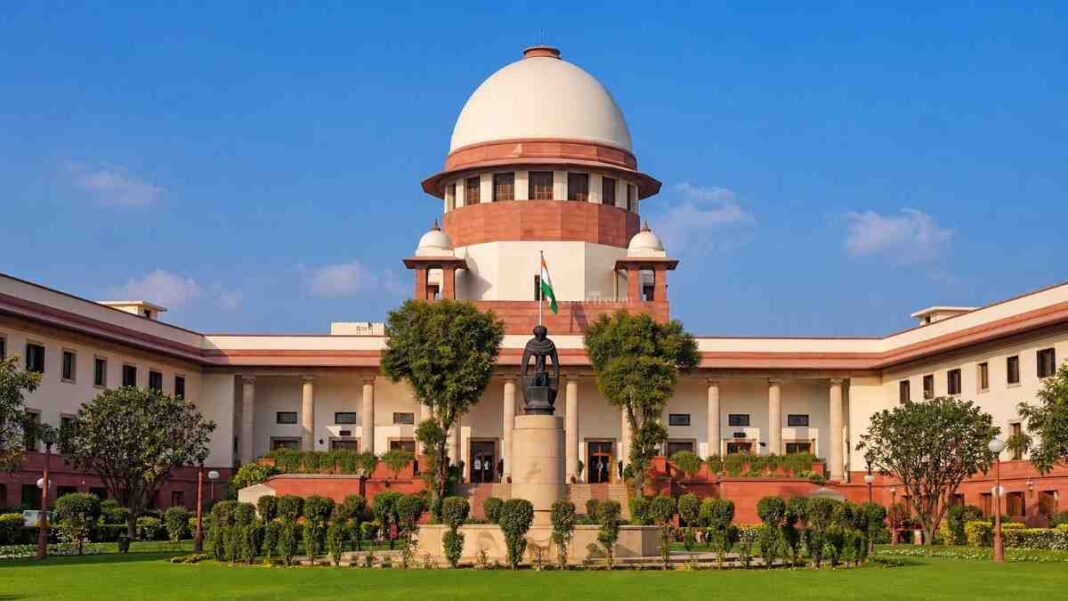
The AIIMS contempt DNA paternity controversy erupted on June 5, 2026, when the Supreme Court of India issued a contempt notice to Dr Nikhil Tandon, Acting Director of AIIMS, New Delhi.
According to LiveLaw, the notice was triggered by Dr Tandon’s failure to personally file an affidavit that the Court had specifically directed on April 16, 2026.
Background: AIIMS Contempt DNA Paternity Case
The dispute at the heart of this controversy is a matrimonial case in which the Supreme Court ordered a DNA test to determine the paternity of a child born to the parties, as reported by India Legal.
AIIMS had initially informed the Court that the official responsible for carrying out the DNA test had retired, making it initially impossible to conduct the test, according to Business Standard.
- On April 16, 2026, the Supreme Court specifically directed the Director of AIIMS to personally furnish an explanation by affidavit and impleaded the Director in the case, per India Legal and Telangana Today.
- Instead of the Director, an affidavit was filed by Nishant Kumar, Deputy Secretary at AIIMS, New Delhi, who claimed to be an authorised officer — a move the Court flatly rejected, per IANS and Deccan Chronicle.
- AIIMS counsel informed the Court on May 27, 2026, that there was no permanent Director at AIIMS, as the previous Director had demitted office approximately two to three weeks earlier, with Dr Nikhil Tandon serving in an acting capacity, per India Legal and IANS.
Dr Tandon’s justification for not filing the affidavit personally was that he was holding the post only in a temporary, acting capacity — an explanation the bench, comprising Justice Ahsanuddin Amanullah and Justice R Mahadevan, found wholly unacceptable, per Business Standard.
The Department of Forensic Medicine and Toxicology, AIIMS, had separately submitted a DNA analysis report confirming that the named individual was the biological father of the child, according to India Legal and IANS. In light of this finding, the Court disposed of pending miscellaneous applications on the merits.
What the Court Said
The bench of Justice Ahsanuddin Amanullah and Justice R Mahadevan did not mince words. Per Business Standard and IANS, the Court declared it was “not only surprised but shocked” at AIIMS’s response.
The Court made its position on public-office responsibility unambiguous, stating: “Any person who is on a post, either in substantive capacity or in acting capacity, has to take responsibility and perform the duty of the post held by him/her in whatever capacity it may be.”
The bench further observed that the direction had been precise and personal, leaving no room for delegation: “We had specifically sought explanation to be furnished by the Director, AIIMS and it is not within the discretion of any person to submit his/her explanation by authorising someone else to do the same.”
Reaching a prima facie conclusion, the Court declared: “Accordingly, in the court’s tentative view, the present Acting Director, AIIMS, New Delhi, has committed contempt.”
Dr Nikhil Tandon was accordingly impleaded as party respondent no. 4, per Business Standard and Telangana Today. The Court ordered: “He shall be personally present along with his explanation on the next date of listing, i.e., 07.07.2026 at 12: Noon.”
The Court also directed that the original DNA report be handed over to the petitioner’s counsel for onward transmission to the petitioner, and that copies be supplied to all parties, per IANS and India Legal. The petitioner’s counsel was further directed to place the DNA report before the concerned High Court to proceed with the underlying matrimonial dispute.
What It Means for You
This ruling sends a sharp message to all public-sector institutions: a court-directed affidavit cannot be delegated to a subordinate officer, regardless of whether the head of the institution holds the post on a substantive or acting basis.
For litigants in matrimonial and paternity disputes, the case also underscores the weight the Supreme Court places on timely compliance by expert bodies such as AIIMS when ordered to conduct forensic examinations.
Legal professionals and institutional administrators must note that the Court treats acting appointments with the same weight as permanent ones where compliance with judicial orders is concerned.
Read more at The Courtroom. Original report: LiveLaw.
Who is the AIIMS Acting Director served with a contempt notice in this DNA paternity case?
Dr Nikhil Tandon, Acting Director of AIIMS, New Delhi, was served with the contempt notice by the Supreme Court on June 5, 2026, for failing to personally file a court-directed affidavit in a matrimonial DNA paternity dispute, according to LiveLaw and Business Standard.
Why did the Supreme Court reject AIIMS’s explanation in the contempt DNA paternity matter?
AIIMS argued that Dr Tandon held the post only in an acting capacity and that a Deputy Secretary, Nishant Kumar, was authorised to file the affidavit. The Court rejected this, holding that any person occupying a public post — in substantive or acting capacity — must personally discharge the duties attached to that office, per India Legal and IANS.
What is the next date in the AIIMS contempt DNA paternity case?
Dr Nikhil Tandon has been directed to appear personally before the Supreme Court on July 7, 2026 at 12 noon along with his explanation, per the order of the bench of Justice Ahsanuddin Amanullah and Justice R Mahadevan, as reported by India Legal and IANS.
Final Thoughts on AIIMS Contempt DNA Paternity
The Supreme Court’s contempt notice in the AIIMS contempt DNA paternity case reaffirms that acting appointments carry full institutional accountability, and that judicial directions addressed to a named office-holder cannot be sidestepped through delegation to subordinates.
With Dr Nikhil Tandon required to appear personally on July 7, 2026, the outcome of this proceeding will be closely watched by public institutions and legal observers alike.
Stay updated at The Courtroom.
Disclaimer
Disclaimer: This article is for general information only and does not constitute legal advice. Laws may change or vary by case — consult a qualified lawyer before acting. The Courtroom is not liable for any reliance on this content.

