


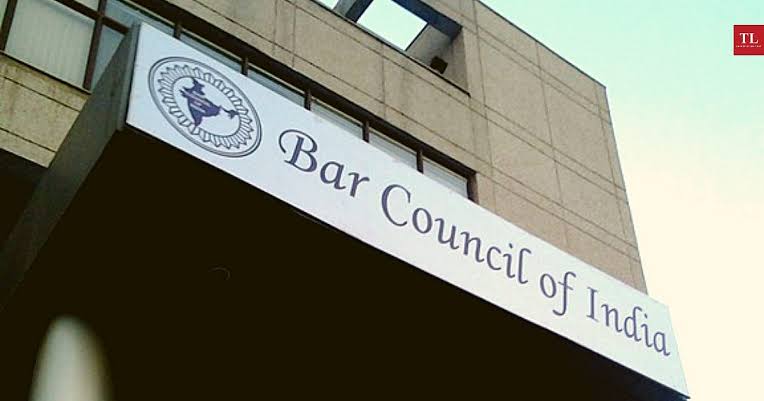
The Bar Council of India (BCI) has circulated the draft Advocates (Amendment) Bill, 2026 for public consultation, describing it as a “historic profession-first reform” and one of the most comprehensive attempts to modernise the statutory framework governing the Indian legal profession since the Advocates Act, 1961 was enacted.
In a circular dated 18 July 2026, BCI Chairman and Senior Advocate Manan Kumar Mishra said the draft was prepared by the Ministry of Law and Justice after consultation with the BCI, State Bar Councils, Senior Advocates of the Supreme Court and High Courts, Vice-Chancellors and Deans of law universities, and other stakeholders. All suggestions must reach the BCI at draftadvact2026bill@gmail.com on or before 3:00 PM on 31 July 2026 — inputs received after the deadline will not be considered.
The BCI has clarified that the draft will acquire statutory force only after completion of the legislative process.
Strike Penalties and Government Nominees Dropped From the 2025 Draft
Addressing the concerns that derailed the earlier 2025 draft Bill, the BCI confirmed that three controversial provisions have been deleted: the clauses prescribing punishment and disciplinary proceedings for strikes by advocates, the provision for disciplinary action against office-bearers of Bar Associations, and the proposed ₹5 lakh fine on advocates in serious disciplinary cases.
Significantly, the provisions for inclusion of Central Government nominees in the Bar Council of India and State Bar Councils — a key flashpoint with the legal fraternity — have also been dropped entirely. The circular notes that the Government revised the draft after deliberations with the Union Law Minister and representations from the coordination committee of Delhi Bar Associations and Bar bodies in Uttar Pradesh, Himachal Pradesh and other states.
Enrolment Fee Fixed at ₹18,000 Plus ₹4,500 — With a Concession for SC/ST and Disabled Candidates
In the backdrop of the Supreme Court’s ruling in Gaurav Kumar v. Union of India, (2025) 1 SCC 641 — which capped enrolment charges at ₹750 for general candidates under the existing Section 24(1)(f) — and directions in Pankaj Sinha v. Bar Council of India to revise the fee for inflation, the draft proposes a statutory enrolment fee of ₹18,000 payable to the State Bar Council and ₹4,500 to the Bar Council of India.
Eligible candidates from the Scheduled Castes, Scheduled Tribes and persons with benchmark disabilities who are unable to pay due to their financial condition would pay only one-fourth of the prescribed fee. Any future revision can be made by the BCI only in consultation with the Central Government.
Foreign Lawyers Barred From Indian Courts; Arbitration Window Opens
The draft substitutes Section 47 to codify a strict reciprocity regime. Foreign lawyers and foreign law firms will not be permitted to appear before the Supreme Court, High Courts, District or Taluka courts, tribunals or statutory authorities, or to practise Indian law. The sole exception is appearance before an arbitral tribunal in an international commercial arbitration where the substantive law of the dispute is foreign — a move the BCI says is aimed at reclaiming arbitration work lost to hubs like Singapore and Hong Kong.
The draft also omits the proviso to Section 24(1)(a) that allowed nationals of other countries to enrol in India, after the Delhi High Court directed enrolment of a Korean citizen under the existing provision. Enrolment as an advocate would now be founded squarely on Indian citizenship, and registration of a foreign lawyer will not amount to enrolment on a State roll. Rules governing foreign lawyers must be framed with prior Central Government approval.
Law Firms Get Statutory Recognition for the First Time
A new Chapter IIIA (Sections 28A and 28B) requires every law firm operating in India to register with a Bar Council, with the BCI maintaining a national register of law firms to be furnished annually to the Government. The BCI says the reform is intended to encourage advocates at the state, district and taluka level to form firms — not just metropolitan practices — and to strengthen smaller Indian firms.
Assured Seats for Women in State Bar Councils
The draft restructures State Bar Council composition across all three electorate categories:
- Electorate up to 5,000: 15 members — two elected seats reserved for women, plus one woman member co-opted by the BCI.
- Electorate between 5,000 and 10,000: 21 members — three elected women, plus two co-opted women advocates.
- Electorate above 10,000: 33 members — four elected women, plus three co-opted women advocates.
Co-option by the BCI, in consultation with the concerned State Bar Councils and Bar Associations, is designed to bring in unrepresented regions and accomplished women advocates who do not contest elections.
Welfare, Education and Discipline: The Other Key Changes
The draft empowers State Bar Councils and the BCI to create statutory funds and trusts for insurance, pension, medical relief, stipends for young lawyers, support for indigent advocates and advocates with disabilities, law libraries and a National Legal Academy. The Legal Education Committee expands from ten to twenty-five members, chaired by a former Chief Justice of India or former Supreme Court judge, with the Attorney General, Solicitor General, UGC and leading Vice-Chancellors on board. Professional development programmes become a statutory function, following the Supreme Court’s judgment in Ajay Vijh v. Indian Banks Association.
On the disciplinary side, State Bar Councils must refer misconduct complaints to their disciplinary committees within fifteen days, the BCI gets power to pass interim orders in serious prima facie cases, the disposal timeline under Section 36B doubles from one year to two, and Section 24C permits removal of an advocate’s name from the roll upon conviction with a sentence of two years or more. Election disputes will go to new Election Tribunals headed by former Supreme Court judges or High Court Chief Justices, whose decisions shall be final.
With the consultation window closing at 3:00 PM on 31 July 2026, State Bar Councils, Bar Associations, law universities and law firms have a narrow window to shape what could become the most consequential rewrite of the Advocates Act in over six decades.
Disclaimer: This article is for general information only and does not constitute legal advice.

