


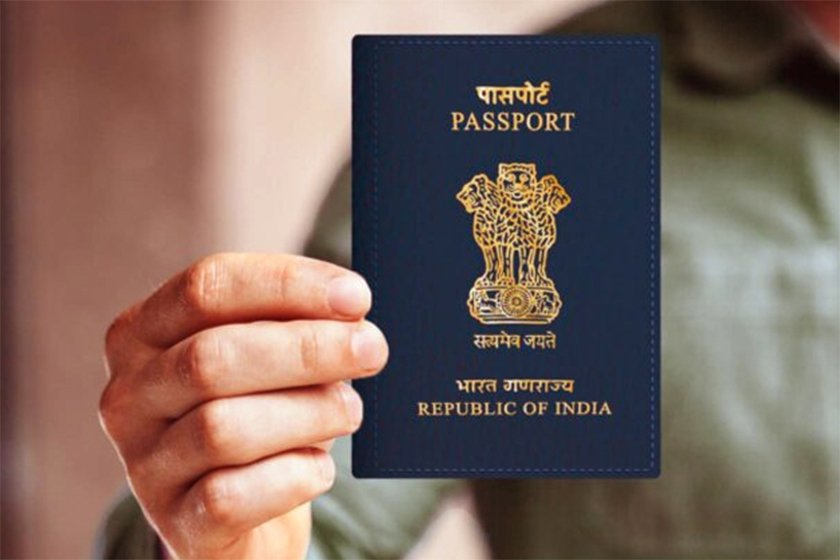
In short: Under the Bharatiya Nagarik Suraksha Sanhita, 2023 (BNSS), bail conditions BNSS passport impound rules draw a sharp line: a court can require you to surrender your passport as a bail condition, but only the Passport Authority of India can legally impound it. Police can seize — but not hold — a passport.
Key points
- The BNSS came into force on 1 July 2024, replacing the Code of Criminal Procedure, 1973 (CrPC). Bail provisions now sit in Chapter XXXV (Sections 478–485 BNSS).
- For offences punishable with seven years or more imprisonment, Section 480(3) BNSS makes three conditions mandatory when granting bail: attendance as per bond, no similar offence, and no interference with witnesses or evidence. Courts may add further conditions “in the interests of justice.”
- Passport surrender can be a bail condition, but courts must give reasons and must assess the actual flight risk in each case — it cannot be imposed automatically on every accused who holds a passport.
- Police can seize a passport under Section 106 BNSS, but they have no authority to impound or retain it — impoundment is exclusively a power of the Passport Authority under the Passports Act, 1967.
- A trial court cannot impound a passport even under the general power to impound documents produced before it, because the Passports Act is a special law that overrides the general provision.
- If conditions feel excessive, you can apply to the court that granted bail — or to the High Court or Court of Session under Section 483 BNSS — for modification or relaxation.
How did the law change when BNSS replaced CrPC?
On 1 July 2024, the Bharatiya Nagarik Suraksha Sanhita, 2023 came into force and the CrPC, 1973 ceased to apply to new cases. For most practical purposes, the bail framework survived the transition — the same conditions that courts imposed under CrPC continue to be available under BNSS.
The table below maps the sections you will encounter most often.
| Purpose | Old CrPC Section | New BNSS Section |
|---|---|---|
| Bail in bailable offences | S. 436 | S. 478 |
| Maximum undertrial detention period | S. 436A | S. 479 |
| Bail in non-bailable offences | S. 437 | S. 480 |
| Bail to appear before appellate court | S. 437A | S. 481 |
| Anticipatory bail | S. 438 | S. 482 |
| Special powers of High Court / Sessions Court | S. 439 | S. 483 |
| Amount of bond | S. 440 | S. 484 |
| Bond of accused and sureties | S. 441 | S. 485 |
What bail conditions can a court impose under BNSS?
Conditions that are mandatory for serious offences
Section 480(3) BNSS applies when the alleged offence carries imprisonment of seven years or more, or falls under specific chapters of the Bharatiya Nyaya Sanhita, 2023 covering offences against the state, offences against the human body, and property offences — or their abetment, conspiracy, or attempt.
In such cases the court must impose all three of the following: that the accused attends in accordance with the bond; that the accused does not commit a similar offence; and that the accused does not induce, threaten, or promise anything to any person acquainted with the facts of the case, or tamper with evidence.
Beyond these three, the court may add “such other conditions as it considers necessary in the interests of justice.” This is the gateway for conditions like passport surrender, movement restrictions, mandatory reporting at a police station, and surrender of travel documents.
Conditions applicable in anticipatory bail and High Court / Sessions Court bail
Anticipatory bail under Section 482 BNSS and the special powers of the High Court and Sessions Court under Section 483 BNSS carry broadly the same toolkit — attendance, no witness interference, no leaving India, surrender of passport, and any further condition the court thinks fit.
Can a court order you to surrender your passport as a bail condition?
Yes — but not automatically. The Gujarat High Court, in Krushnakant Kantilal Pancholi v. State of Gujarat, confirmed that a criminal court has the authority to direct an accused to deposit or surrender a passport when granting bail.
However, that same judgment cautions that passport surrender must not be a reflexive, one-size-fits-all condition. The court must evaluate the real risk that the accused will flee from justice if released. Where there is no genuine flight risk, imposing surrender may be unjustified.
Critically, the bail order imposing a passport-related condition must be reasoned. A court cannot simply direct surrender in a one-line order; it must explain why the condition is warranted on the facts of the particular case.
What is the difference between seizure, surrender, and impoundment?
This is one of the most commonly misunderstood areas of Indian passport and criminal law. The three actions sound similar but they have entirely different legal bases and different authorities behind them.
| Action | Who can do it | Legal basis | What it means in practice |
|---|---|---|---|
| Seizure | Police | Section 106 BNSS (formerly S. 102(1) CrPC) | Police can physically take the passport. They cannot retain or impound it. |
| Court-directed surrender | Criminal court (as bail condition) | Sections 480, 482, 483 BNSS | Accused must deposit the passport with the court or as directed; the passport is held, not cancelled. |
| Impoundment | Passport Authority of India only | Section 10(3), Passports Act, 1967 | Only the Passport Authority can formally impound a passport under the conditions set out in the Passports Act. |
A trial court cannot impound a passport even under the general power that allows it to impound documents produced before it. That general provision in BNSS (and the corresponding provision in the old CrPC) does not extend to passports, because passport impoundment is specifically and exclusively governed by the Passports Act, 1967 — a special law that prevails over the general procedural code.
How do you get a bail condition relaxed or modified?
If you believe a bail condition — including a passport surrender requirement — is excessive or unjustified, you have two main routes.
First, you can apply to the same court that granted bail and show why the condition is disproportionate to the actual risk in your case. Point to the absence of a genuine flight risk, the length of time you have already complied, or a pressing need (such as medical travel) that requires temporary return of the passport.
Second, under Section 483 BNSS, the High Court or Court of Session has the power to grant bail or modify conditions even where a lower court has already imposed them. If the trial court refuses your modification application, this is your next step.
In either application, the best approach is to address the court’s original concern head-on — courts are more likely to relax a condition when you show that the underlying risk has been adequately addressed by other means.
For accessible guides to bail applications and other criminal procedure steps, visit our Law for You hub, where we break down complex procedures in plain language for students and the public.
Frequently asked questions
Can the police keep my passport after arresting me under BNSS?
No. Under Section 106 BNSS, the police can seize your passport during an investigation, but they do not have the legal authority to retain or impound it. Impoundment is exclusively the power of the Passport Authority of India under the Passports Act, 1967. If police are holding your passport beyond what is needed for the immediate investigation, you can challenge this through the appropriate court.
Is passport surrender mandatory for every person granted bail in a serious case?
No. Courts must assess the real risk of the accused fleeing from justice in each individual case. It is not appropriate to automatically impose passport surrender on every accused who possesses a passport. The condition must be justified on the specific facts, and the bail order must explain why the condition is needed.
Which court can modify or remove a bail condition under BNSS?
You can apply to the court that originally granted bail to modify or remove a condition. If that court refuses, you can approach the High Court or the Court of Session, which have special powers under Section 483 BNSS to grant bail or modify conditions in any case. File a reasoned application showing why the condition is disproportionate or why the risk it was meant to address no longer exists.
Primary sources
- Bharatiya Nagarik Suraksha Sanhita, 2023 — India Code (indiacode.nic.in): the full text of Chapter XXXV (bail provisions, Sections 478–485).
- Passports Act, 1967 — India Code (indiacode.nic.in): read Section 10(3) for the conditions under which a passport may be impounded by the Passport Authority.
- Supreme Court of India (sci.gov.in): for authoritative judgments on bail conditions and passport surrender in criminal proceedings.
Written by Editorial Team, The Courtroom · Last verified 2026-07-14
This article is for general information only and is not legal advice. Laws change; verify against the primary sources cited and consult a qualified advocate for your situation.

