


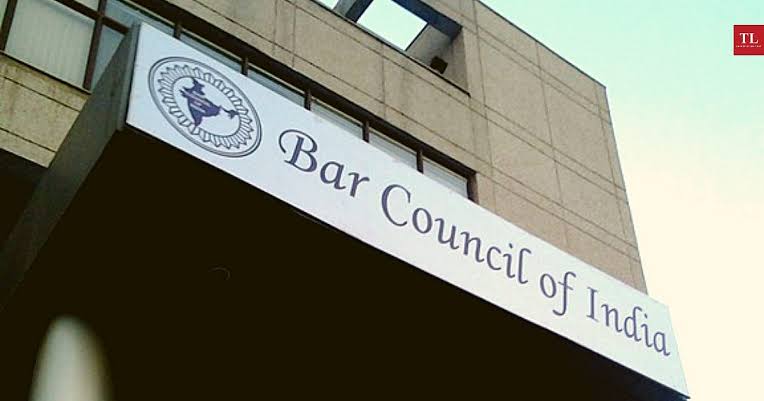
The Bar Council of India announced on July 8, 2026 that it will convene a meeting the following week to constitute expert committees tasked with implementing the Supreme Court’s landmark judgment in Ajay Vijh v. Indian Banks Association & Ors. (2026 INSC 670), delivered just a day earlier on July 7, 2026.
The Supreme Court, in that ruling, held that banks and the Indian Banks’ Association cannot place advocates on a ‘Caution List’ based solely on allegations of professional negligence — a power it found belonged exclusively to the Bar Councils under the Advocates Act, 1961, according to ANI News.
Background: How We Got Here
The case traces its origins to 2015, when Canara Bank alleged that advocate Ajay Vijh had furnished a negligent legal opinion — one that failed to detect prior sale transactions relating to a mortgaged property. No allegation of criminal misconduct was made.
Canara Bank removed Vijh from its panel and recommended his inclusion in the IBA Caution List under the category of ‘Third Party Entities Involved in Fraud’, according to Business Standard. The Allahabad High Court had initially held that a writ petition was not maintainable against the IBA, treating it as a non-State body.
The Supreme Court reserved judgment on April 29, 2026, per LiveLaw, before delivering its decision on July 7, 2026. The bench comprised Justice P S Narasimha, who authored the judgment, and Justice Alok Aradhe.
- The case is cited as 2026 INSC 670 and also as 2026 LiveLaw (SC) 656, confirming its status as a binding precedent.
- The Supreme Court reversed the Allahabad High Court, holding that Article 226 writs do lie against bodies such as the IBA when they perform public functions.
- Statutes engaged include the Advocates Act, 1961, Article 19(1)(g) and Article 21 of the Constitution of India, and Section 35-A of the Banking Regulation Act, 1949.
The Ruling — Key Findings
The Supreme Court bench of Justices P S Narasimha and Alok Aradhe held that blacklisting advocates amounts to an impermissible encroachment upon the statutory disciplinary jurisdiction vested exclusively in Bar Councils under the Advocates Act, 1961, as reported by Business Standard.
The bench was unambiguous on the inclusion of Vijh’s name in the Caution List: “In the present case, where the allegation against the appellant pertains solely to negligence, the inclusion of his name in the Caution List is unsustainable.”
The court went further, articulating a constitutional principle: “Independence of the legal profession is as important as independence of judiciary.”
On the question of institutional reform, the bench issued two significant affirmative directions to the BCI, per caseciter.com. First, the BCI was directed to undertake a comprehensive performance audit of its disciplinary system for advocates. Second, the court directed the BCI to draw up a roadmap for a National Legal Academy for lawyers.
The bench’s words on the Academy were precise: “We direct the Bar Council of India to constitute a team of senior and junior lawyers as well as experts in the field of establishing academic institutions for considering, discussing and evolving the idea of establishing National Legal Academy (for lawyers).”
Reactions & What’s Next
BCI Chairman and Senior Advocate Manan Kumar Mishra issued a press statement welcoming the verdict and announcing the Council’s next steps, according to ANI News. The committees to be constituted next week will cover five distinct mandates.
Those mandates are: collection and analysis of disciplinary data across State Bar Councils; measures to ensure expeditious and transparent disciplinary proceedings; preparation of the framework for the proposed National Legal Academy; development of a national model for Continuing Legal Education; and identification of technological and institutional reforms.
The BCI also disclosed that it has already initiated the process of identifying suitable land, buildings and allied infrastructure for establishing the proposed National Lawyers Academy, per ANI News.
On compliance, the BCI confirmed it will place an affidavit before the Supreme Court detailing all developments, decisions and measures taken in pursuance of the judgment, within the timeline fixed by the Court.
More legal news at The Courtroom.
What did the Supreme Court hold in Ajay Vijh v. Indian Banks Association?
The Supreme Court held that banks and the IBA cannot include advocates in their ‘Caution List’ based solely on allegations of professional negligence. The court ruled that disciplinary authority over advocates is exclusively vested in Bar Councils under the Advocates Act, 1961, and that blacklisting by banks constitutes an impermissible encroachment on that jurisdiction. The judgment is cited as 2026 INSC 670.
What committees is the BCI forming to implement the Supreme Court’s judgment?
The BCI will constitute committees covering: collection and analysis of disciplinary data across State Bar Councils; measures for expeditious and transparent disciplinary proceedings; a framework for the proposed National Legal Academy; a national model for Continuing Legal Education; and identification of technological and institutional reforms, according to ANI News.
Who authored the Supreme Court judgment in Ajay Vijh v. Indian Banks Association?
The judgment was authored by Justice P S Narasimha for a bench also comprising Justice Alok Aradhe. It was delivered on July 7, 2026, per ANI News and Business Standard.
Has the BCI started groundwork for the National Legal Academy?
Yes. The BCI stated it has already initiated the process of identifying suitable land, buildings and allied infrastructure for establishing the proposed National Lawyers Academy, according to ANI News.
Disclaimer
Disclaimer: This article is for general information only and does not constitute legal advice. Laws may change or vary by case — consult a qualified lawyer before acting. The Courtroom is not liable for any reliance on this content.

