


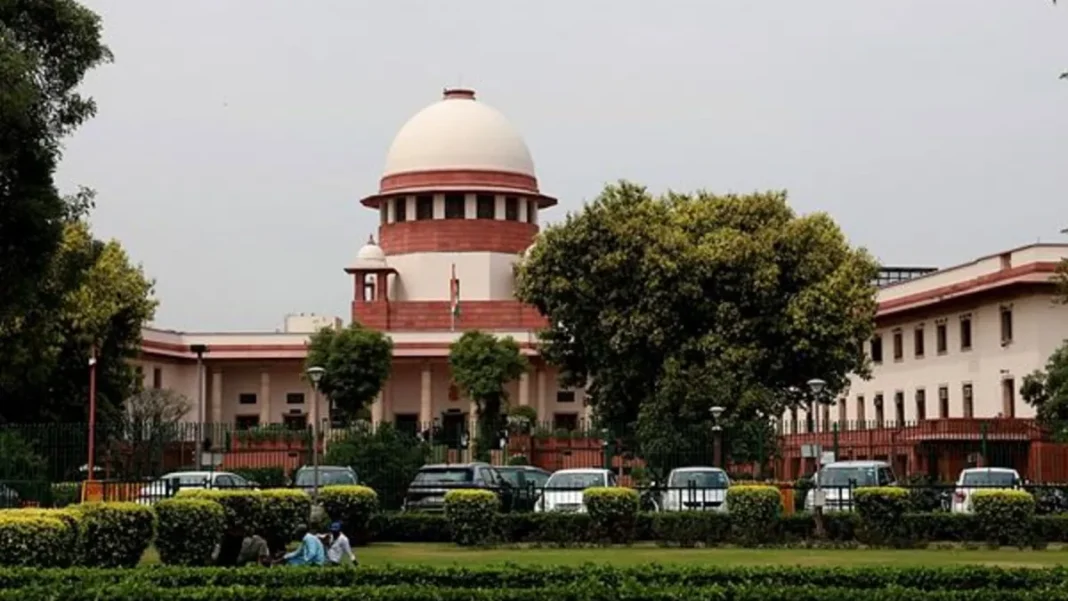
The Supreme Court of India on June 30, 2026 ordered status quo on a Karnataka High Court direction requiring Oil Marketing Companies to reconsider ethanol allocation to VINP Distilleries and Sugars Private Limited for Ethanol Supply Year 2025–26, after BPCL warned the order threatened India’s national E20 fuel programme.
A vacation bench of Justice MM Sundresh and Justice Sheel Nagu issued the status quo order while admitting a Special Leave Petition filed by Bharat Petroleum Corporation Limited, according to Bar & Bench and LiveLaw.
Background & Case History
The dispute originates from India’s Ethanol Blended Petrol Programme, under which OMCs procure ethanol from distilleries to blend with petrol, with a stated national target of 20% blending to reduce crude oil imports and cut emissions.
VINP Distilleries and Sugars Private Limited is a dedicated ethanol plant established pursuant to the National Policy on Biofuels 2018. In 2021, VINP responded to the government’s Expression of Interest proposing a 300 KLPD dedicated ethanol plant and entered into a Long-Term Offtake Agreement with OMCs, which barred it from supplying ethanol to any buyer other than BPCL, HPCL, and IOCL.
Despite having an annual production capacity of approximately 9.90 crore litres and submitting a bid of 9.26 crore litres, VINP was allotted a significantly lower quantity for ESY 2025–26, according to LiveLaw. The company filed a representation on October 27, 2025 seeking enhancement of its allocation.
- 2021: VINP Distilleries responded to government’s EOI and entered into an LTOA for a 300 KLPD dedicated ethanol plant.
- October 2025: BPCL, as industry coordinator, finalized ethanol supply contracts for ESY 2025–26, allocating approximately 1,048 crore litres among 378 suppliers against bids totalling around 1,759 crore litres.
- October 27, 2025: VINP Distilleries filed a formal representation to OMCs seeking enhancement of its ethanol allocation for ESY 2025–26.
- June 16, 2026: The Karnataka High Court issued a judgment directing BPCL, HPCL, and IOCL to consider and decide VINP’s representation, invoking Clause 6.8 of the LTOA regarding preferential allocation on a best endeavour basis.
- June 30, 2026: BPCL filed an SLP before the Supreme Court, which ordered status quo and issued notice to respondents.
Arguments & Submissions
Attorney General R Venkataramani appeared for BPCL before the Supreme Court and argued that the Karnataka High Court’s direction, if implemented, would destabilize the national policy for 20% ethanol-petrol blending, as reported by LiveLaw and Bar & Bench.
The AG contended that reopening finalized supply contracts would cause cascading disruptions across the entire ethanol supply chain. He pointed out that similar petitions were pending before multiple High Courts across India and sought liberty to file transfer petitions to consolidate those matters before the Supreme Court.
The AG forcefully questioned the Karnataka HC’s approach, arguing: “How can you pass a mandatory injunction like this?” He further submitted, “This will impact the national policy,” per LiveLaw and Bar & Bench.
Senior Advocate Siddharth Dave appeared for the respondents, including VINP Distilleries, according to LiveLaw. VINP’s position rested on Clause 6.8 of the LTOA, under which dedicated ethanol plants claimed preferential allocation on a best endeavour basis, given their exclusive supply commitment to OMCs under the agreement.
The AG subsequently clarified, post-hearing, that his submissions before the Supreme Court related solely to the quantum of ethanol supply and did not in any way challenge the blending policy itself, reaffirming the Centre’s commitment to the 20% blending target.
The Ruling: Key Findings
The Supreme Court vacation bench of Justice MM Sundresh and Justice Sheel Nagu granted interim protection to BPCL and stayed the operation of the Karnataka High Court’s June 16, 2026 direction, according to Bar & Bench and Deccan Chronicle.
The bench passed the following order: “Issue notice. List on reopening. Till the next date of hearing, there shall be status quo.”
The court also questioned BPCL’s decision to approach the Supreme Court directly, with Justice MM Sundresh asking: “Why not approach division bench?” — indicating the bench was alive to procedural propriety even while granting interim relief, per LiveLaw and Bar & Bench.
The court issued formal notice to the respondents and listed the matter for hearing on the reopening of courts after the vacation period.
Legal Analysis & Implications
The case engages the National Policy on Biofuels 2018 and the Long-Term Offtake Agreement framework — specifically Clauses 6.2, 6.7, and 6.8 — which govern annual procurement variations and preferential allocation obligations toward dedicated ethanol plants, as cited by the Attorney General and reported by LiveLaw Biz.
Clause 6.8 of the LTOA, on which VINP relied before the Karnataka HC, provides for allocation on a best endeavour basis for dedicated ethanol plants, which are contractually prohibited from supplying to any buyer other than OMCs under the LTOA’s exclusivity terms.
The Supreme Court’s status quo order effectively preserves the finalized ESY 2025–26 supply arrangements — covering approximately 1,048 crore litres across 378 suppliers — pending a full hearing, as reported by Bar & Bench. Any judicial interference with this allocation at this stage risked creating a precedent that could invite parallel challenges from numerous other suppliers.
With similar petitions reportedly pending before multiple High Courts, the AG’s request for transfer petitions signals that the Centre may seek to have all such disputes adjudicated uniformly by the Supreme Court, preventing inconsistent rulings that could further disrupt the ethanol supply chain nationally.
Reactions & Stakeholder Response
Following the hearing, Attorney General R Venkataramani publicly clarified that the government’s challenge was confined strictly to the quantum of allocation and not to the E20 blending policy, according to the sources cited. This clarification was significant, given the case had attracted attention as a potential setback to India’s energy transition goals.
No formal statement from VINP Distilleries or its counsel was reported in the available sources post-hearing, and no Bar Council or industry association response has been reported at the time of publication.
What’s Next
The Supreme Court has listed the matter for hearing on the reopening of courts following the vacation period. No specific next-hearing date beyond that reference has been reported in the available sources.
The Attorney General has sought liberty to file transfer petitions to consolidate similar ethanol allocation disputes pending before multiple High Courts into a single proceeding before the Supreme Court, which could significantly expand the scope and impact of the final ruling, according to LiveLaw and Bar & Bench.
More legal news at The Courtroom.
Disclaimer
Disclaimer: This article is for general information only and does not constitute legal advice. Laws may change or vary by case — consult a qualified lawyer before acting. The Courtroom is not liable for any reliance on this content.

