


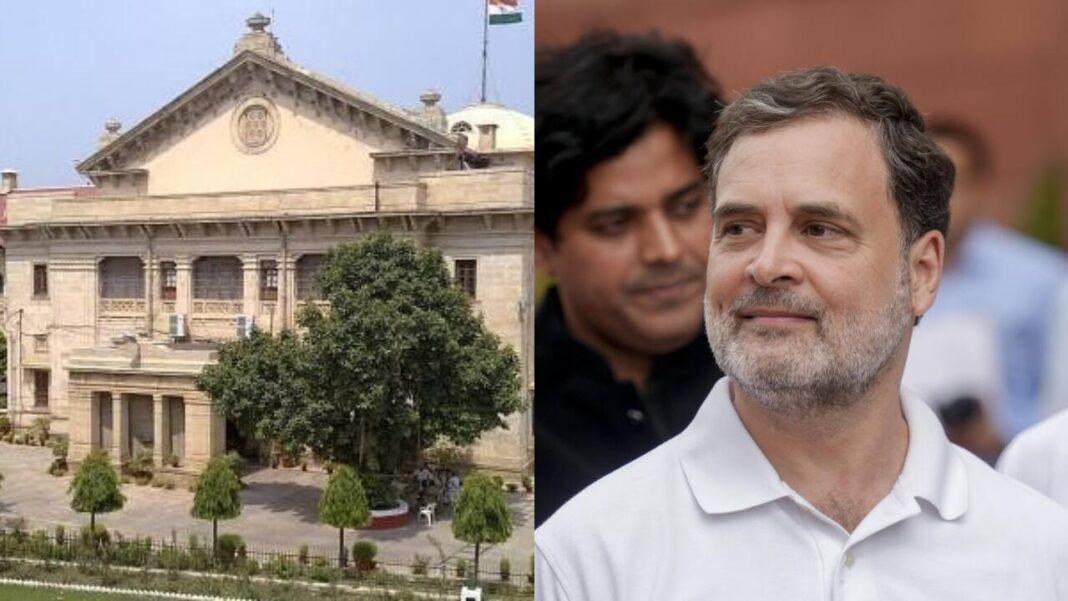
Introduction to the Rahul Gandhi Citizenship FIR
The Rahul Gandhi citizenship FIR has ignited a constitutional firestorm after Justice Subhash Vidyarthi of the Allahabad High Court set aside a Lucknow court’s refusal to register a complaint — marking a historic first against a sitting Leader of Opposition.
The order directs the concerned magistrate to reconsider the Section 156(3) CrPC application, triggering an urgent national debate on Article 102(1)(d) of the Constitution of India and the Citizenship Act, 1955.
Rahul Gandhi Citizenship FIR: What the Law Says
The Rahul Gandhi citizenship FIR rests on three intersecting legal pillars — all of which carry serious consequences for any sitting Member of Parliament.
The petitioner alleged that Rahul Gandhi held British citizenship, which, if proven, would trigger disqualification under Article 102(1)(d) read with Section 9 of the Citizenship Act, 1955.
- Article 102(1)(d), Constitution of India: Disqualifies any person from being a Member of Parliament if they hold citizenship of a foreign state, either voluntarily acquired or by operation of law.
- Section 9, Citizenship Act, 1955: Provides that a citizen of India who voluntarily acquires citizenship of another country ceases to be an Indian citizen with immediate effect.
- Section 156(3), CrPC: Empowers a Magistrate to direct the police to investigate a cognisable offence; Justice Vidyarthi’s order restored this power after the Lucknow court declined to exercise it.
- Deferred Operation of Dictated Judgment: The Allahabad HC practice of dictating an operative order in open court while deferring the signed, detailed judgment — the subject of a key constitutional question raised in this case.
For more on Indian law, read our Law for You guide.
How the Rahul Gandhi Citizenship FIR Affects Constitutional Practice in India
Beyond the political spectacle, this Rahul Gandhi citizenship FIR case raises five procedural and constitutional questions that will reshape how courts, Parliament, and Election Commission interact.
- Can a sitting MP be disqualified mid-term under Article 102(1)(d)? Yes — Article 102(1)(d) applies at the time of both election and during tenure. If foreign citizenship is established, disqualification operates automatically, not by judicial decree alone, subject to the Speaker or the President’s determination under Article 103.
- Does a Magistrate have discretion to refuse a Section 156(3) CrPC application without recording reasons? The Allahabad HC order strongly implies no — the Lucknow court’s bare refusal was held legally unsustainable, reinforcing the Supreme Court’s position in Priyanka Srivastava v. State of U.P. (2015).
- What evidentiary threshold applies to foreign citizenship claims against an MP? The HC did not adjudicate guilt but held the complaint prima facie disclosed cognisable allegations — a critical distinction for future election-law FIR petitions.
- Is the ‘deferred operation of a dictated judgment’ procedurally valid? This Allahabad HC practice — where an oral order is passed in court before a written judgment is delivered — is now squarely before constitutional scrutiny, as the defence argued the order’s legal force was uncertain until formally signed.
- What is the role of the Leader of Opposition’s office in immunity from criminal process? Indian law confers no blanket immunity on the Leader of Opposition from ordinary criminal proceedings, unlike constitutional posts such as the President under Article 361.
Per the Supreme Court of India and India Code, voluntary acquisition of foreign citizenship under Section 9 of the Citizenship Act, 1955 terminates Indian citizenship by operation of law, irrespective of any court declaration.
Key Facts About the Rahul Gandhi Citizenship FIR Every Indian Must Know
The Rahul Gandhi citizenship FIR order by Justice Subhash Vidyarthi is not a finding of guilt — it is a direction to a Magistrate to apply its judicial mind afresh to the Section 156(3) CrPC application.
This distinction is constitutionally vital: an HC direction to reconsider does not amount to ordering an FIR. The Magistrate retains discretion to refuse, provided cogent reasons are recorded.
Critics of the petition argue it is politically motivated and that documentary evidence of Rahul Gandhi’s British citizenship is absent. Supporters contend that the citizenship question deserves judicial scrutiny irrespective of political affiliation, especially given Article 102’s categorical language.
This is also believed to be the first time an Indian High Court has intervened in a Section 156(3) CrPC application specifically targeting a Leader of Opposition over citizenship — setting a significant procedural precedent.
What is the Rahul Gandhi citizenship FIR case about?
The Rahul Gandhi citizenship FIR case arises from a petition before the Allahabad High Court, where Justice Subhash Vidyarthi set aside a Lucknow court’s refusal to entertain a Section 156(3) CrPC application. The complaint alleges that Rahul Gandhi held British citizenship, potentially triggering disqualification under Article 102(1)(d) of the Constitution of India.
Is the Rahul Gandhi citizenship FIR legally enforceable in India?
The Allahabad HC order is legally binding insofar as it directs the Lucknow Magistrate to reconsider the Section 156(3) CrPC application with reasons. However, it does not automatically register an FIR. Under Section 9 of the Citizenship Act, 1955, and Article 102(1)(d) of the Constitution, actual disqualification would require a separate determination by the Speaker or the President under Article 103.
How does the Rahul Gandhi citizenship FIR affect MP disqualification law?
If an FIR is ultimately registered and foreign citizenship is judicially established, Article 102(1)(d) mandates that the MP ceases to be qualified for Parliament membership. The case may prompt Parliament or the Election Commission to create clearer guidelines for citizenship verification of candidates and sitting MPs — a gap the current legal framework does not adequately address.
Which court handles the Rahul Gandhi citizenship FIR and related disqualification questions?
The Allahabad High Court has jurisdiction over the Section 156(3) CrPC proceedings that gave rise to the Rahul Gandhi citizenship FIR order. However, MP disqualification under Article 102 is decided by the President of India under Article 103, acting on the Election Commission’s opinion. Any constitutional challenge to such disqualification would lie before the Supreme Court of India under Article 32 or Article 136.
Final Thoughts on the Rahul Gandhi Citizenship FIR
The Rahul Gandhi citizenship FIR is essential knowledge for every Indian who cares about constitutional law and parliamentary democracy. Justice Vidyarthi’s order has opened five distinct constitutional fault lines — on Article 102 disqualification, Section 156(3) CrPC procedure, the evidentiary bar for citizenship claims, the deferred-judgment practice of the Allahabad HC, and the absence of immunity for the Leader of Opposition.
Regardless of political outcome, this case will leave a lasting mark on election law, citizenship jurisprudence, and the relationship between India’s judiciary and Parliament. Watch this space for every development as it unfolds.
Stay updated at The Courtroom — India’s trusted legal news source.
Disclaimer
Disclaimer: This article is intended for general informational and educational purposes only and does not constitute legal advice. The information provided herein is not a substitute for professional legal counsel. Laws and regulations are subject to change, and their application may vary depending on specific facts and circumstances. Readers are strongly advised to consult a qualified legal professional before taking any action based on the information contained in this article. The Courtroom and its contributors make no representations or warranties of any kind, express or implied, regarding the accuracy, completeness, or suitability of the information provided. The Courtroom shall not be held liable for any loss, damage, or legal consequences arising from reliance on this content.

