


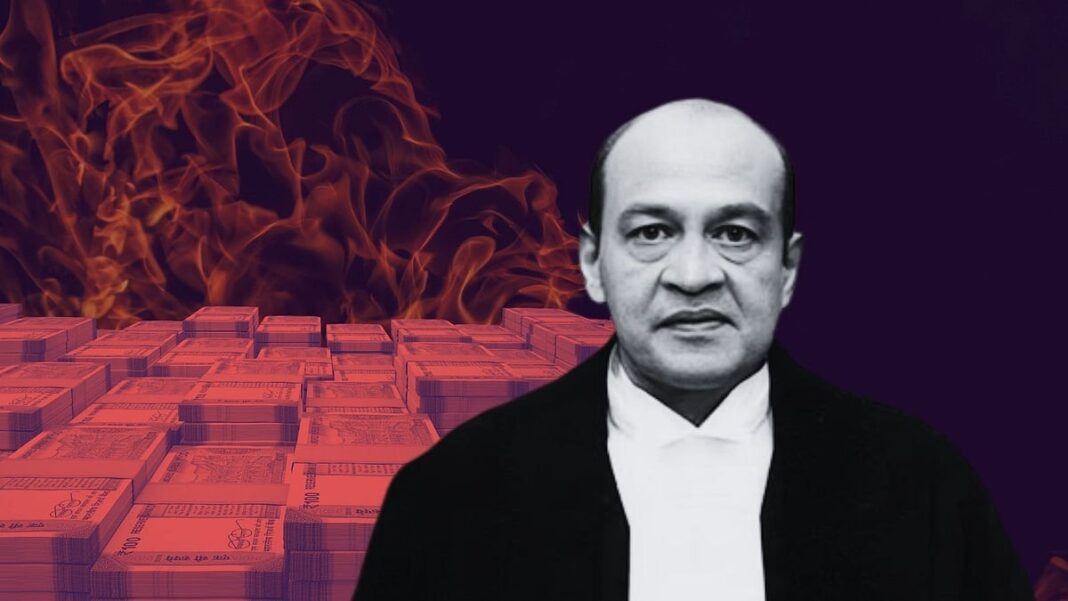
Introduction to Judicial Accountability India 2026
Judicial accountability India 2026 became the defining legal conversation of the year when Justice Yashwant Varma of the Allahabad High Court resigned on 9 April 2026, just as a parliamentary inquiry into serious allegations against him was nearing its conclusion.
The case began in March 2025 when a fire at Justice Varma’s official residence in Delhi led to the discovery of large amounts of burnt cash. What followed was a sequence of constitutional events that has shaken public trust in the higher judiciary and forced a national reckoning with how India holds its judges accountable.
For ordinary citizens, law students, and legal professionals alike, this moment is not just about one judge. It is about whether India’s legal architecture is strong enough to deliver real accountability — or whether resignation can always be used as a constitutional escape hatch.
Judicial Accountability India 2026: What the Law Says
Understanding judicial accountability India 2026 begins with the Constitution and the Judges (Inquiry) Act, 1968 — the twin pillars that govern how a judge can be removed from office in this country.
Article 124(4) of the Constitution lays down that a Supreme Court judge can only be removed by the President after a parliamentary address supported by a special majority, strictly on grounds of “proved misbehaviour or incapacity.” Under Article 218, the same procedure applies to High Court judges. The Judges (Inquiry) Act, 1968, enacted under Article 124(5), operationalises this process through a formal committee-led investigation.
- Article 124(4): Removal requires “proved misbehaviour or incapacity” — these terms are not defined in the Constitution itself and have been shaped through judicial interpretation over decades.
- The Judges (Inquiry) Act, 1968, Section 3: A removal motion in the Lok Sabha requires signatures from at least 100 members; in the Rajya Sabha, at least 50 members must sign. The Speaker or Chairman then decides whether to admit the motion.
- Three-Member Inquiry Committee: Once a motion is admitted, a committee comprising a Supreme Court judge, a High Court Chief Justice, and a distinguished jurist is constituted under Section 3(2) of the Act to investigate the charges.
- Special Parliamentary Majority: For a judge to be removed, the motion must pass each House of Parliament by an absolute majority of total membership and at least a two-thirds majority of members present and voting — all in the same session.
For more on Indian law, read our Law for You guide.
How Judicial Accountability India 2026 Affects You in Practice
The Justice Varma case makes judicial accountability India 2026 deeply personal for every citizen who relies on courts for justice. Here is how the system works — and where it has failed — in practice.
- Hard Truth 1 — Resignation Kills the Inquiry: When Justice Varma resigned on 9 April 2026, the parliamentary impeachment process effectively stopped. A judge must be in office for removal proceedings to continue. The inquiry committee under the Judges (Inquiry) Act, 1968 was on the verge of concluding its work when the resignation was submitted, leaving the allegations formally unresolved.
- Hard Truth 2 — The Resigned Judge May Keep Benefits: By stepping down before a formal removal order, a resigning judge retains pension and post-retirement benefits that would otherwise be forfeited upon a successful impeachment by Parliament. This distinction strikes at the heart of public confidence in the accountability framework.
- Hard Truth 3 — No Judge Has Ever Been Successfully Removed: Despite several impeachment attempts — including those against Justice V. Ramaswami, Justice Soumitra Sen, and Justice P.D. Dinakaran — not a single judge of a superior court has ever been removed through the constitutional process. In each case, the proceedings either failed in Parliament or were preempted by resignation.
- Hard Truth 4 — The “Constitutional Escape Valve” Is a Recurring Pattern: This is the third time in independent India that a High Court judge facing parliamentary removal proceedings has resigned to forestall the process. Each resignation has exposed the same legal gap — and none has prompted a legislative fix. Scholars now call resignation a “strategic exit” that delivers procedural closure without institutional accountability.
- Hard Truth 5 — In-House Inquiries Lack Statutory Teeth: The in-house committee process used by the Supreme Court — while capable of producing damning findings — is not backed by statute. It cannot administer oaths, compel cross-examination, or produce a legally binding outcome. It is separate from, and cannot replace, a committee constituted under the Judges (Inquiry) Act, 1968.
- Hard Truth 6 — India Has No Post-Resignation Accountability Path: The Indian constitutional framework, unlike some other jurisdictions, has no mechanism for continuing an inquiry after a judge resigns purely to arrive at a formal finding for the public record. In the United States, impeachment proceedings can in certain cases continue post-resignation to determine disqualification from future public office. India has no equivalent provision.
- Hard Truth 7 — After Resignation, Criminal Law May Apply: Once a judge resigns, judicial immunity no longer applies. This means Justice Varma, as a private citizen, could theoretically face scrutiny under ordinary criminal law in connection with the allegations. However, no formal criminal proceedings had been announced as of his resignation date, leaving this avenue uncertain.
Per the Supreme Court of India and India Code, the Judges (Inquiry) Act, 1968 — enacted under Article 124(5) of the Constitution — remains the only statutory mechanism for investigating and proving misbehaviour or incapacity of a sitting judge of the superior judiciary.
Key Facts About Judicial Accountability India 2026 Every Indian Must Know
Judicial accountability India 2026 is not an abstract legal concept — it is the bedrock of democratic governance. When judges are insulated from real consequences, every citizen who walks into a courtroom seeking justice is affected.
The Justice Varma episode has sparked urgent calls from constitutional scholars, bar associations, and civil society for structural reforms. These include barring judges from resigning after a removal motion is admitted, creating a permanent independent judicial oversight body akin to a National Judicial Commission, mandating asset disclosure for all superior court judges, and legislating a clear definition of “misbehaviour” under Article 124(4) as proposed in the Judicial Standards and Accountability Bill, 2010. Until such reforms are enacted, the accountability gap will remain open — and the pattern of unresolved allegations will continue.
How can a High Court judge be removed in India?
A High Court judge can be removed under Article 218 read with Article 124(4) of the Constitution and the Judges (Inquiry) Act, 1968. The process begins with a removal motion signed by at least 100 Lok Sabha or 50 Rajya Sabha members. If admitted by the Speaker or Chairman, a three-member inquiry committee is formed under Section 3(2) of the 1968 Act to investigate charges of “proved misbehaviour or incapacity.” If the committee finds the charges proved, both Houses of Parliament must pass the motion by a special majority before the President issues a removal order. In practice, no Indian judge has ever been successfully removed through this process.
What happens after a judge resigns amid corruption allegations?
When a judge resigns during impeachment proceedings, the formal parliamentary process is halted because removal under Article 124(4) can only operate against a sitting judge. The resigned judge typically retains pension and post-retirement benefits they would have forfeited upon parliamentary removal. Judicial immunity also ceases upon resignation, which means ordinary criminal law could theoretically apply to the individual. However, India currently lacks a constitutional mechanism to continue an inquiry post-resignation for the purpose of placing accountability on the public record — a gap legal scholars have criticised as a structural flaw in the system of judicial accountability India 2026 now urgently needs to address.
Is judicial accountability in India legally enforceable?
Judicial accountability India 2026 is governed by a combination of constitutional provisions and statutory law. Article 124(4) of the Constitution and the Judges (Inquiry) Act, 1968 (enacted under Article 124(5)) provide the legal framework. While these provisions are enforceable in the sense that they can compel parliamentary inquiry, the process is notoriously difficult to complete. The special majority requirement under Article 124(4), combined with the absence of any bar on resignation during proceedings, means that full enforcement has never occurred in India’s post-independence history. Judicial accountability is legally available but practically elusive.
Which court or body handles judicial accountability cases in India?
There is no single dedicated court or body for judicial accountability in India. The Judges (Inquiry) Act, 1968 places the investigation in the hands of a three-member committee — comprising a Supreme Court judge, a High Court Chief Justice, and a distinguished jurist — constituted by the Lok Sabha Speaker or Rajya Sabha Chairman. The Supreme Court of India exercises supervisory jurisdiction over the higher judiciary and the collegium system governs appointments. Proposals for a permanent independent National Judicial Commission to handle accountability matters have been debated but not yet enacted into law.
Final Thoughts on Judicial Accountability India 2026
Judicial accountability India 2026 is essential knowledge for every Indian. The Justice Varma case has laid bare a constitutional gap that allows serious allegations against judges to go formally unresolved when resignation is used as a strategic exit before proceedings conclude. Real reform — whether through amending the Judges (Inquiry) Act, 1968, defining “misbehaviour” in statute, or creating a permanent oversight body — is no longer optional; it is a democratic necessity.
Stay updated at The Courtroom — India’s trusted legal news source.
Disclaimer
Disclaimer: This article is intended for general informational and educational purposes only and does not constitute legal advice. The information provided herein is not a substitute for professional legal counsel. Laws and regulations are subject to change, and their application may vary depending on specific facts and circumstances. Readers are strongly advised to consult a qualified legal professional before taking any action based on the information contained in this article. The Courtroom and its contributors make no representations or warranties of any kind, express or implied, regarding the accuracy, completeness, or suitability of the information provided. The Courtroom shall not be held liable for any loss, damage, or legal consequences arising from reliance on this content.

